
About This Book
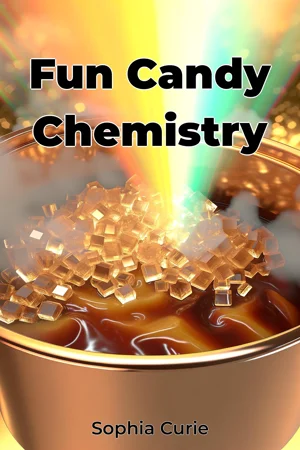
"Fun Candy Chemistry" transforms the familiar world of candy-making into a laboratory of scientific discovery, where each sweet creation demonstrates fundamental principles of chemistry and physics. This comprehensive guide bridges the gap between kitchen confectionery and scientific understanding, revealing how molecular interactions and precise temperature control create the treats we enjoy. The book explores three core areas: sugar crystallization dynamics, phase transitions in candy-making, and the role of molecular structures in confectionery. These topics form the foundation for understanding both basic candy-making and advanced confectionery techniques, making complex chemistry accessible through practical application. The historical context begins with 18th-century sugar processing techniques and progresses through the industrial revolution's impact on candy manufacturing, providing readers with essential background on how scientific understanding has refined candy-making methods. Basic chemistry concepts are introduced gradually, requiring only high-school level science knowledge. The central thesis demonstrates that candy-making is an ideal medium for understanding chemical reactions and physical transformations in everyday life. The book argues that mastering the scientific principles behind confectionery leads to more consistent results and enables creative innovation in candy-making. Content is structured in three main sections. The first introduces fundamental concepts of molecular behavior and sugar chemistry. The second explores specific candy types as case studies in chemical reactions, examining how different temperatures and ingredients affect final products. The third section applies this knowledge to troubleshooting common candy-making problems and developing new recipes. Research presented includes data from food science laboratories, thermal imaging of sugar solutions, and microscopic crystal formation studies. The book incorporates both historical confectionery documents and modern food science research, providing a comprehensive view of the field. The work connects chemistry, physics, and food science, while incorporating elements of history and industrial engineering. These interdisciplinary links demonstrate how scientific principles apply across various fields and enhance understanding of candy-making processes. The book's unique approach lies in its hands-on experimental method, treating the kitchen as a laboratory where readers conduct controlled experiments with edible results. Each chapter includes practical experiments that demonstrate scientific principles through candy-making. Written in an instructional yet conversational style, the text balances technical accuracy with accessibility, using clear analogies and visual aids to explain complex concepts. This approach makes the material suitable for both home candy makers and students interested in food science. The target audience includes science educators, culinary students, serious home candy makers, and food industry professionals seeking deeper understanding of confectionery processes. The book serves both as a practical guide and an educational resource. Following conventions of both science writing and cookbooks, each chapter includes theoretical background, practical applications, and experimental procedures. Detailed diagrams, chemical equations, and step-by-step photographs support the text. The scope covers fundamental aspects of candy chemistry while acknowledging that certain specialized industrial processes fall outside its purview. Focus remains on principles and techniques applicable in both home and small-scale professional settings. Practical applications include troubleshooting common candy-making issues, developing new recipes, and understanding how to adapt existing recipes for different conditions. The book addresses current debates in food science, including the role of artificial sweeteners and the impact of different sugar types on crystallization. Through this systematic exploration of candy chemistry, readers gain both theoretical knowledge and practical skills, enabling them to approach candy-making with scientific precision and creative confidence.
"Fun Candy Chemistry" transforms the familiar world of candy-making into a laboratory of scientific discovery, where each sweet creation demonstrates fundamental principles of chemistry and physics. This comprehensive guide bridges the gap between kitchen confectionery and scientific understanding, revealing how molecular interactions and precise temperature control create the treats we enjoy. The book explores three core areas: sugar crystallization dynamics, phase transitions in candy-making, and the role of molecular structures in confectionery. These topics form the foundation for understanding both basic candy-making and advanced confectionery techniques, making complex chemistry accessible through practical application. The historical context begins with 18th-century sugar processing techniques and progresses through the industrial revolution's impact on candy manufacturing, providing readers with essential background on how scientific understanding has refined candy-making methods. Basic chemistry concepts are introduced gradually, requiring only high-school level science knowledge. The central thesis demonstrates that candy-making is an ideal medium for understanding chemical reactions and physical transformations in everyday life. The book argues that mastering the scientific principles behind confectionery leads to more consistent results and enables creative innovation in candy-making. Content is structured in three main sections. The first introduces fundamental concepts of molecular behavior and sugar chemistry. The second explores specific candy types as case studies in chemical reactions, examining how different temperatures and ingredients affect final products. The third section applies this knowledge to troubleshooting common candy-making problems and developing new recipes. Research presented includes data from food science laboratories, thermal imaging of sugar solutions, and microscopic crystal formation studies. The book incorporates both historical confectionery documents and modern food science research, providing a comprehensive view of the field. The work connects chemistry, physics, and food science, while incorporating elements of history and industrial engineering. These interdisciplinary links demonstrate how scientific principles apply across various fields and enhance understanding of candy-making processes. The book's unique approach lies in its hands-on experimental method, treating the kitchen as a laboratory where readers conduct controlled experiments with edible results. Each chapter includes practical experiments that demonstrate scientific principles through candy-making. Written in an instructional yet conversational style, the text balances technical accuracy with accessibility, using clear analogies and visual aids to explain complex concepts. This approach makes the material suitable for both home candy makers and students interested in food science. The target audience includes science educators, culinary students, serious home candy makers, and food industry professionals seeking deeper understanding of confectionery processes. The book serves both as a practical guide and an educational resource. Following conventions of both science writing and cookbooks, each chapter includes theoretical background, practical applications, and experimental procedures. Detailed diagrams, chemical equations, and step-by-step photographs support the text. The scope covers fundamental aspects of candy chemistry while acknowledging that certain specialized industrial processes fall outside its purview. Focus remains on principles and techniques applicable in both home and small-scale professional settings. Practical applications include troubleshooting common candy-making issues, developing new recipes, and understanding how to adapt existing recipes for different conditions. The book addresses current debates in food science, including the role of artificial sweeteners and the impact of different sugar types on crystallization. Through this systematic exploration of candy chemistry, readers gain both theoretical knowledge and practical skills, enabling them to approach candy-making with scientific precision and creative confidence.
"Fun Candy Chemistry" transforms the everyday art of candy-making into an engaging scientific exploration, revealing how chemistry and physics principles create our favorite sweet treats. This unique guide bridges the gap between kitchen crafting and scientific understanding, demonstrating how molecular interactions, precise temperature control, and sugar crystallization work together in confectionery creation. The book cleverly uses the kitchen as a laboratory, where each candy-making session becomes an edible experiment in scientific discovery. The text progresses systematically through three main sections, beginning with fundamental concepts of molecular behavior and sugar chemistry, then exploring specific candy types as case studies in chemical reactions, and finally applying this knowledge to troubleshooting and recipe development. Along the way, readers discover fascinating insights into how different temperatures affect sugar solutions and how crystal formation impacts texture, all explained through clear analogies and practical demonstrations that require only high-school level science knowledge. What sets this book apart is its hands-on experimental approach, combining historical context from 18th-century sugar processing through modern food science research. Whether you're a culinary student, science educator, or serious home candy maker, the book's instructional yet conversational style makes complex chemistry accessible through practical application. Each chapter includes controlled experiments with edible results, ensuring readers gain both theoretical knowledge and practical skills for approaching candy-making with scientific precision.
Book Details
ISBN
9788233943875
Publisher
Publifye AS
Your Licenses
You don't own any licenses for this book
Purchase a license below to unlock this book and download the EPUB.
Purchase License
Select a tier to unlock this book
Need bulk licensing?
Contact us for enterprise agreements.