
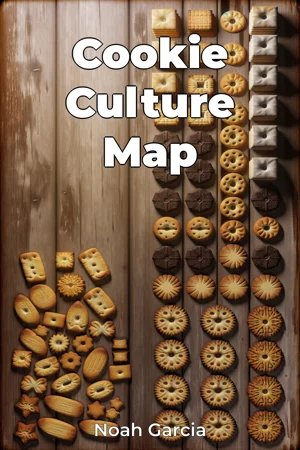
About This Book
"Cookie Culture Map" unravels the intricate tapestry of global cookie traditions through meticulous research spanning five centuries of culinary documentation. From ancient Persian sugar wafers to modern Japanese matcha shortbreads, this comprehensive guide charts the evolution, migration, and transformation of cookies across continents and cultures. The book presents three core themes: the anthropological significance of cookie recipes as cultural artifacts, the cross-pollination of baking techniques across geographical boundaries, and the preservation of culinary heritage through documented recipe collections. Drawing from over 200 historical cookbooks and manuscripts, including previously untranslated works, the text establishes cookies as markers of cultural exchange and social development. Central to the work is the argument that cookie recipes serve as reliable indicators of trade routes, migration patterns, and cultural adaptation. The book demonstrates how ingredient availability, religious dietary laws, and social customs have shaped regional cookie varieties, while also revealing unexpected connections between seemingly disparate culinary traditions. The content is structured in three main sections. The first explores foundational cookie types and their geographical origins, supported by archaeological evidence and historical records. The second section examines recipe evolution through detailed case studies, such as the transformation of Dutch speculaas into Pennsylvania Dutch springerle. The final section analyzes modern recipe preservation methods and the impact of digital documentation on traditional baking practices. Research methodology combines archival cookbook analysis, food chemistry studies, and oral histories from traditional bakers across 40 countries. The book features detailed illustrations of historical baking equipment, ingredient maps, and recipe timelines, providing readers with visual references for understanding technical developments in cookie-making methods. The work connects multiple disciplines, including food science, cultural anthropology, and economic history. It reveals how cookie trade influenced maritime routes, how wartime rationing sparked recipe innovations, and how religious festivities shaped cookie customs. These intersections provide context for understanding broader historical patterns through the lens of cookie culture. Written in an accessible academic style, the text balances scholarly research with practical insights for food enthusiasts, historians, and professional bakers. Each chapter includes authenticated historical recipes adapted for modern kitchens, complete with technical notes and cultural context. The target audience includes food historians, professional bakers, culinary students, and serious home bakers interested in understanding the technical and cultural foundations of global cookie traditions. The book addresses debates surrounding recipe authentication methods and the impact of industrialization on traditional baking practices. Within the food writing genre, the book distinguishes itself through its systematic approach to recipe documentation and cross-cultural analysis. It maintains academic rigor while providing practical applications for contemporary baking. The scope encompasses both well-documented European traditions and lesser-known Asian and African cookie customs, though it acknowledges limitations in regions with primarily oral culinary traditions. Practical applications include techniques for recipe adaptation, understanding ingredient substitutions across cultures, and methods for preserving family recipes. The work addresses current discussions about cultural appropriation in food writing and the role of traditional recipes in maintaining cultural identity. The book's significance lies in its contribution to understanding how simple sweet treats serve as vectors for cultural exchange and historical documentation, providing insights into both culinary techniques and human migration patterns through carefully researched, factual analysis.
"Cookie Culture Map" unravels the intricate tapestry of global cookie traditions through meticulous research spanning five centuries of culinary documentation. From ancient Persian sugar wafers to modern Japanese matcha shortbreads, this comprehensive guide charts the evolution, migration, and transformation of cookies across continents and cultures. The book presents three core themes: the anthropological significance of cookie recipes as cultural artifacts, the cross-pollination of baking techniques across geographical boundaries, and the preservation of culinary heritage through documented recipe collections. Drawing from over 200 historical cookbooks and manuscripts, including previously untranslated works, the text establishes cookies as markers of cultural exchange and social development. Central to the work is the argument that cookie recipes serve as reliable indicators of trade routes, migration patterns, and cultural adaptation. The book demonstrates how ingredient availability, religious dietary laws, and social customs have shaped regional cookie varieties, while also revealing unexpected connections between seemingly disparate culinary traditions. The content is structured in three main sections. The first explores foundational cookie types and their geographical origins, supported by archaeological evidence and historical records. The second section examines recipe evolution through detailed case studies, such as the transformation of Dutch speculaas into Pennsylvania Dutch springerle. The final section analyzes modern recipe preservation methods and the impact of digital documentation on traditional baking practices. Research methodology combines archival cookbook analysis, food chemistry studies, and oral histories from traditional bakers across 40 countries. The book features detailed illustrations of historical baking equipment, ingredient maps, and recipe timelines, providing readers with visual references for understanding technical developments in cookie-making methods. The work connects multiple disciplines, including food science, cultural anthropology, and economic history. It reveals how cookie trade influenced maritime routes, how wartime rationing sparked recipe innovations, and how religious festivities shaped cookie customs. These intersections provide context for understanding broader historical patterns through the lens of cookie culture. Written in an accessible academic style, the text balances scholarly research with practical insights for food enthusiasts, historians, and professional bakers. Each chapter includes authenticated historical recipes adapted for modern kitchens, complete with technical notes and cultural context. The target audience includes food historians, professional bakers, culinary students, and serious home bakers interested in understanding the technical and cultural foundations of global cookie traditions. The book addresses debates surrounding recipe authentication methods and the impact of industrialization on traditional baking practices. Within the food writing genre, the book distinguishes itself through its systematic approach to recipe documentation and cross-cultural analysis. It maintains academic rigor while providing practical applications for contemporary baking. The scope encompasses both well-documented European traditions and lesser-known Asian and African cookie customs, though it acknowledges limitations in regions with primarily oral culinary traditions. Practical applications include techniques for recipe adaptation, understanding ingredient substitutions across cultures, and methods for preserving family recipes. The work addresses current discussions about cultural appropriation in food writing and the role of traditional recipes in maintaining cultural identity. The book's significance lies in its contribution to understanding how simple sweet treats serve as vectors for cultural exchange and historical documentation, providing insights into both culinary techniques and human migration patterns through carefully researched, factual analysis.
"Cookie Culture Map" presents a fascinating exploration of global cookie traditions spanning five centuries, revealing how these beloved treats serve as powerful indicators of cultural exchange, migration patterns, and social development. Through meticulous research drawing from over 200 historical cookbooks and manuscripts, the book illuminates the unexpected connections between seemingly distinct culinary traditions, from ancient Persian sugar wafers to contemporary Japanese matcha shortbreads. The book's unique approach combines food science, cultural anthropology, and economic history to demonstrate how cookies have shaped and been shaped by human history. A particularly intriguing revelation is how cookie trade influenced maritime routes and how wartime rationing led to innovative recipe adaptations. The research methodology impressively weaves together archival cookbook analysis, food chemistry studies, and oral histories from traditional bakers across 40 countries. Structured in three comprehensive sections, the book first establishes foundational cookie types and their geographical origins, then examines recipe evolution through detailed case studies, and finally explores modern preservation methods. Each chapter thoughtfully balances scholarly research with practical applications, featuring authenticated historical recipes adapted for modern kitchens. This systematic approach to documenting and analyzing cookie traditions makes the book an invaluable resource for food historians, professional bakers, and culinary enthusiasts alike, while maintaining an accessible writing style that engages readers in the rich tapestry of global cookie culture.
Book Details
ISBN
9788233943813
Publisher
Publifye AS
Your Licenses
You don't own any licenses for this book
Purchase a license below to unlock this book and download the EPUB.
Purchase License
Select a tier to unlock this book
Need bulk licensing?
Contact us for enterprise agreements.