
About This Book
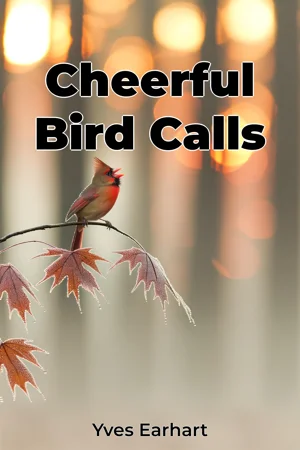
"Cheerful Bird Calls" opens with a fundamental question that has intrigued scientists and nature enthusiasts for centuries: How do birds use their sophisticated vocal abilities to navigate their complex social world? This comprehensive guide examines the intricate language of avian communication, combining recent ornithological research with practical field observations to help readers understand and identify common bird songs. The book presents three core themes: the biological mechanics of bird vocalization, the purpose and patterns of different call types, and the environmental factors that influence avian communication. These topics are explored through detailed analysis of sonograms, field recordings, and behavioral studies from leading research institutions across North America and Europe. Drawing from decades of ornithological research, the text establishes how bird songs evolved from primitive calls to the diverse acoustic signals observed today. Readers are introduced to essential concepts in bioacoustics and sound analysis, providing the foundation needed to comprehend more advanced topics. The book argues that understanding bird vocalizations is crucial for both conservation efforts and our broader knowledge of animal communication systems. The content is structured in three main sections. The first explores the physical production of bird songs, including detailed examinations of the syrinx and neural control mechanisms. The second section catalogs and analyzes common song patterns, focusing on twenty frequently encountered North American species. The final section investigates how environmental changes, including habitat fragmentation and noise pollution, affect bird communication. Research evidence is drawn from multiple sources, including long-term population studies, laboratory analyses of vocal learning, and field recordings from various ecosystems. The book features sonographic analyses, seasonal variation data, and comparative studies across species, supported by an online database of recorded calls. The work connects ornithology with neuroscience, evolutionary biology, and environmental science, demonstrating how bird songs serve as indicators of ecosystem health and climate change impacts. These interdisciplinary links help readers understand the broader implications of avian communication research. Written in an accessible academic style, the book maintains scientific rigor while ensuring concepts are comprehensible to readers with basic biology knowledge. It serves both as a reference for ornithologists and a practical guide for birdwatchers, citizen scientists, and nature enthusiasts. The text addresses current debates in the field, including discussions about the impact of artificial light on dawn choruses and the effects of urban noise on song adaptation. It also examines emerging research on regional dialects in bird populations and their significance for species conservation. Practical applications include techniques for bird identification by sound, guidelines for conducting citizen science projects, and methods for monitoring local bird populations. The book provides protocols for recording and analyzing bird songs using readily available technology, making scientific observation accessible to amateur naturalists. The scope focuses primarily on songbirds of North America, with additional examples from other regions to illustrate specific points. While comprehensive in its treatment of common species, it acknowledges limitations in covering all global varieties. This work stands out for its integration of traditional field observation methods with modern digital analysis techniques, providing readers with both time-tested wisdom and cutting-edge research findings. It represents a significant contribution to our understanding of avian communication while offering practical tools for field observation and species conservation.
"Cheerful Bird Calls" opens with a fundamental question that has intrigued scientists and nature enthusiasts for centuries: How do birds use their sophisticated vocal abilities to navigate their complex social world? This comprehensive guide examines the intricate language of avian communication, combining recent ornithological research with practical field observations to help readers understand and identify common bird songs. The book presents three core themes: the biological mechanics of bird vocalization, the purpose and patterns of different call types, and the environmental factors that influence avian communication. These topics are explored through detailed analysis of sonograms, field recordings, and behavioral studies from leading research institutions across North America and Europe. Drawing from decades of ornithological research, the text establishes how bird songs evolved from primitive calls to the diverse acoustic signals observed today. Readers are introduced to essential concepts in bioacoustics and sound analysis, providing the foundation needed to comprehend more advanced topics. The book argues that understanding bird vocalizations is crucial for both conservation efforts and our broader knowledge of animal communication systems. The content is structured in three main sections. The first explores the physical production of bird songs, including detailed examinations of the syrinx and neural control mechanisms. The second section catalogs and analyzes common song patterns, focusing on twenty frequently encountered North American species. The final section investigates how environmental changes, including habitat fragmentation and noise pollution, affect bird communication. Research evidence is drawn from multiple sources, including long-term population studies, laboratory analyses of vocal learning, and field recordings from various ecosystems. The book features sonographic analyses, seasonal variation data, and comparative studies across species, supported by an online database of recorded calls. The work connects ornithology with neuroscience, evolutionary biology, and environmental science, demonstrating how bird songs serve as indicators of ecosystem health and climate change impacts. These interdisciplinary links help readers understand the broader implications of avian communication research. Written in an accessible academic style, the book maintains scientific rigor while ensuring concepts are comprehensible to readers with basic biology knowledge. It serves both as a reference for ornithologists and a practical guide for birdwatchers, citizen scientists, and nature enthusiasts. The text addresses current debates in the field, including discussions about the impact of artificial light on dawn choruses and the effects of urban noise on song adaptation. It also examines emerging research on regional dialects in bird populations and their significance for species conservation. Practical applications include techniques for bird identification by sound, guidelines for conducting citizen science projects, and methods for monitoring local bird populations. The book provides protocols for recording and analyzing bird songs using readily available technology, making scientific observation accessible to amateur naturalists. The scope focuses primarily on songbirds of North America, with additional examples from other regions to illustrate specific points. While comprehensive in its treatment of common species, it acknowledges limitations in covering all global varieties. This work stands out for its integration of traditional field observation methods with modern digital analysis techniques, providing readers with both time-tested wisdom and cutting-edge research findings. It represents a significant contribution to our understanding of avian communication while offering practical tools for field observation and species conservation.
"Cheerful Bird Calls" explores the fascinating world of avian communication, delving into how birds use their remarkable vocal abilities to navigate their social environment. This comprehensive guide bridges the gap between scientific research and practical field observation, offering readers a deep dive into the mechanics, purposes, and environmental influences of bird vocalizations. The book uniquely combines traditional ornithological knowledge with modern bioacoustic analysis, making complex concepts accessible to both scientists and amateur naturalists. Through three main sections, the book progressively builds understanding from the fundamental mechanics of sound production in birds to the intricate patterns of common song types, culminating in an examination of environmental impacts on avian communication. Readers discover how the avian syrinx functions, explore the vocal patterns of twenty North American species, and learn how habitat changes affect bird songs. The integration of sonogram analysis and field recordings provides practical tools for readers to engage directly with bird song identification and analysis. What sets this work apart is its interdisciplinary approach, connecting ornithology with broader scientific fields while maintaining accessibility for general readers. The book serves multiple audiences by combining rigorous scientific research with practical applications for bird watching and citizen science. Its examination of current issues, such as urban noise impacts and regional dialects, demonstrates the crucial role of bird vocalizations in understanding ecosystem health and conservation challenges.
Book Details
ISBN
9788233943714
Publisher
Publifye AS
Your Licenses
You don't own any licenses for this book
Purchase a license below to unlock this book and download the EPUB.
Purchase License
Select a tier to unlock this book
Need bulk licensing?
Contact us for enterprise agreements.