
About This Book
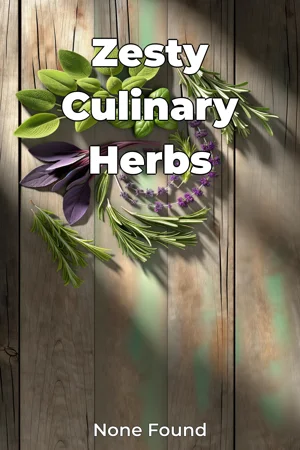
"Zesty Culinary Herbs" explores the intricate relationship between traditional herbs and global culinary heritage, revealing how these botanical elements have shaped cooking traditions across civilizations. Through extensive interviews with renowned chefs and consultation with botanical experts, this comprehensive guide bridges the gap between garden and kitchen, science and culture. The book examines three primary themes: the botanical classification and growth patterns of common culinary herbs, their historical and cultural significance across different societies, and their practical applications in contemporary cuisine. Each section integrates insights from professional chefs, ethnobotanists, and food historians to provide a multi-faceted understanding of these essential ingredients. Opening with a detailed exploration of twenty fundamental cooking herbs, from basil to zaatar, the text provides both scientific analysis and cultural context. The first section details growing conditions, chemical properties, and nutritional benefits, supported by research from botanical institutions and agricultural studies. The second section traces these herbs' historical journeys through trade routes and cultural exchanges, incorporating archaeological findings and historical records. Professional chefs, including Michel Roux Jr. and Alice Waters, contribute their expertise throughout the book, offering practical insights into herb usage and sharing signature recipes that demonstrate traditional and innovative applications. Their contributions are complemented by ethnographic research documenting how different cultures have integrated these herbs into their culinary identities. The book's central argument posits that understanding herbs' botanical properties and cultural significance leads to more informed and creative cooking. This thesis is supported by case studies from various culinary traditions, laboratory analyses of flavor compounds, and documented cooking experiments. Interdisciplinary connections link botany, chemistry, and anthropology, creating a comprehensive framework for understanding herbs' roles in human culture. The text includes detailed photographs, botanical illustrations, and chemical composition charts, making complex information accessible to home cooks and culinary professionals alike. The writing maintains a balanced approach between academic rigor and practical application, using clear, precise language to convey technical information while remaining engaging and applicable. Each chapter concludes with practical applications, including preservation techniques, flavor pairing guides, and seasonal usage recommendations. This work serves multiple audiences: professional chefs seeking deeper knowledge of their ingredients, home cooks interested in expanding their culinary repertoire, and food scholars studying cultural foodways. The content is structured to allow readers to either read sequentially or reference specific sections as needed. The research draws from peer-reviewed botanical studies, archived chef interviews, and field research in traditional cooking communities. Special attention is paid to sustainable harvesting practices and the impact of climate change on herb cultivation, addressing current environmental concerns in the culinary world. While focused primarily on cooking herbs, the book acknowledges limitations in scope by specifically excluding medicinal herbs and focusing on species commonly used in cooking. It addresses ongoing debates about standardization in herb classification and naming conventions across different culinary traditions. The text concludes with a practical reference section featuring seasonal availability charts, storage guidelines, and basic recipes that demonstrate fundamental herb-cooking techniques, making it a valuable resource for both professional and home kitchens.
"Zesty Culinary Herbs" explores the intricate relationship between traditional herbs and global culinary heritage, revealing how these botanical elements have shaped cooking traditions across civilizations. Through extensive interviews with renowned chefs and consultation with botanical experts, this comprehensive guide bridges the gap between garden and kitchen, science and culture. The book examines three primary themes: the botanical classification and growth patterns of common culinary herbs, their historical and cultural significance across different societies, and their practical applications in contemporary cuisine. Each section integrates insights from professional chefs, ethnobotanists, and food historians to provide a multi-faceted understanding of these essential ingredients. Opening with a detailed exploration of twenty fundamental cooking herbs, from basil to zaatar, the text provides both scientific analysis and cultural context. The first section details growing conditions, chemical properties, and nutritional benefits, supported by research from botanical institutions and agricultural studies. The second section traces these herbs' historical journeys through trade routes and cultural exchanges, incorporating archaeological findings and historical records. Professional chefs, including Michel Roux Jr. and Alice Waters, contribute their expertise throughout the book, offering practical insights into herb usage and sharing signature recipes that demonstrate traditional and innovative applications. Their contributions are complemented by ethnographic research documenting how different cultures have integrated these herbs into their culinary identities. The book's central argument posits that understanding herbs' botanical properties and cultural significance leads to more informed and creative cooking. This thesis is supported by case studies from various culinary traditions, laboratory analyses of flavor compounds, and documented cooking experiments. Interdisciplinary connections link botany, chemistry, and anthropology, creating a comprehensive framework for understanding herbs' roles in human culture. The text includes detailed photographs, botanical illustrations, and chemical composition charts, making complex information accessible to home cooks and culinary professionals alike. The writing maintains a balanced approach between academic rigor and practical application, using clear, precise language to convey technical information while remaining engaging and applicable. Each chapter concludes with practical applications, including preservation techniques, flavor pairing guides, and seasonal usage recommendations. This work serves multiple audiences: professional chefs seeking deeper knowledge of their ingredients, home cooks interested in expanding their culinary repertoire, and food scholars studying cultural foodways. The content is structured to allow readers to either read sequentially or reference specific sections as needed. The research draws from peer-reviewed botanical studies, archived chef interviews, and field research in traditional cooking communities. Special attention is paid to sustainable harvesting practices and the impact of climate change on herb cultivation, addressing current environmental concerns in the culinary world. While focused primarily on cooking herbs, the book acknowledges limitations in scope by specifically excluding medicinal herbs and focusing on species commonly used in cooking. It addresses ongoing debates about standardization in herb classification and naming conventions across different culinary traditions. The text concludes with a practical reference section featuring seasonal availability charts, storage guidelines, and basic recipes that demonstrate fundamental herb-cooking techniques, making it a valuable resource for both professional and home kitchens.
"Zesty Culinary Herbs" offers a captivating exploration of how botanical elements have shaped global cooking traditions, masterfully weaving together scientific knowledge, cultural heritage, and practical culinary applications. This comprehensive guide bridges the gap between botanical science and kitchen craft, featuring insights from renowned chefs like Michel Roux Jr. and Alice Waters, alongside contributions from ethnobotanists and food historians. The book's journey begins with an in-depth examination of twenty essential cooking herbs, detailing their botanical characteristics, growth patterns, and nutritional properties. It then evolves into a fascinating historical narrative, tracing how these herbs have traveled through ancient trade routes and influenced various culinary traditions worldwide. Through detailed case studies and documented cooking experiments, readers discover how understanding both the scientific properties and cultural significance of herbs can enhance their cooking creativity. What sets this work apart is its interdisciplinary approach, combining botanical research, chef expertise, and cultural anthropology to create a thorough understanding of culinary herbs. The book maintains accessibility while delivering complex information through clear language, detailed photographs, and practical applications. Whether you're a professional chef seeking deeper ingredient knowledge or a home cook looking to expand your culinary horizons, the inclusion of seasonal availability charts, storage guidelines, and fundamental herb-cooking techniques makes this an invaluable resource for anyone interested in the intersection of food science and cultural traditions.
Book Details
ISBN
9788233943691
Publisher
Publifye AS
Your Licenses
You don't own any licenses for this book
Purchase a license below to unlock this book and download the EPUB.
Purchase License
Select a tier to unlock this book
Need bulk licensing?
Contact us for enterprise agreements.