
About This Book
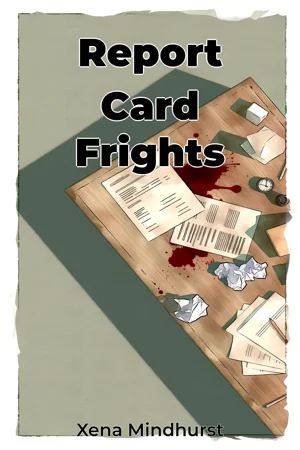
"Report Card Frights" examines the universal phenomenon of academic evaluation anxiety through the lens of modern parenting, backed by educational psychology and longitudinal studies of student stress patterns. The book addresses how report cards and academic assessments have evolved into significant stress triggers for both parents and children in today's achievement-oriented society. Drawing from research spanning three decades and including data from over 500 families across diverse socioeconomic backgrounds, this comprehensive guide analyzes the psychological impact of academic evaluations on family dynamics. The work integrates findings from cognitive behavioral studies, educational research, and family psychology to present a holistic understanding of evaluation-related stress and its management. The book is structured in three main sections: The first explores the biological and psychological foundations of evaluation anxiety, including the role of cortisol levels in both parents and children during reporting periods. The second section examines common reactive behaviors, from helicopter parenting to avoidance strategies, supported by case studies and statistical data. The final section presents evidence-based coping mechanisms and practical solutions for creating a healthier approach to academic assessment. Central to the book's thesis is the concept of "evaluation equilibrium" - the balance between maintaining academic standards and preserving psychological well-being. This approach is supported by research from leading educational institutions and child development experts, demonstrating how excessive focus on grades can counteract learning objectives and emotional growth. The work connects multiple disciplines, linking educational psychology with family dynamics and stress management. It draws particularly interesting parallels between workplace performance reviews and academic evaluations, showing how early experiences with report cards can shape long-term attitudes toward assessment and achievement. Notable attention is given to cultural variations in assessment reactions, incorporating data from international educational systems and diverse cultural approaches to academic achievement. The research highlights how different societies manage educational evaluation and the resulting implications for student well-being. Written in an accessible narrative style, the book combines academic research with relatable anecdotes and practical examples. Each chapter includes real-world scenarios, research summaries, and actionable strategies, making complex psychological concepts applicable to daily family life. The target audience includes parents, educators, and counselors seeking to understand and address evaluation-related stress. The book is particularly relevant for families with school-age children and professionals working in educational support roles. Practical applications include structured communication templates for parent-teacher conferences, stress-reduction techniques for both parents and children, and strategies for converting evaluation anxiety into productive motivation. The book provides specific tools for creating family discussion frameworks around academic performance and establishing realistic expectations. While addressing current debates in educational assessment methods and the role of standardized testing, the work maintains a balanced perspective, acknowledging both the necessity of evaluation systems and the importance of implementing them thoughtfully. The book's scope focuses specifically on K-12 education, with particular emphasis on transition periods (elementary to middle school, middle to high school) where evaluation anxiety typically peaks. It addresses both traditional grading systems and modern assessment methods, including portfolio-based evaluation and technology-enabled continuous assessment. Throughout, the work maintains a research-based approach while offering practical, implementable solutions for managing report card-related stress, ultimately promoting a more balanced and healthy approach to academic evaluation within the family context.
"Report Card Frights" examines the universal phenomenon of academic evaluation anxiety through the lens of modern parenting, backed by educational psychology and longitudinal studies of student stress patterns. The book addresses how report cards and academic assessments have evolved into significant stress triggers for both parents and children in today's achievement-oriented society. Drawing from research spanning three decades and including data from over 500 families across diverse socioeconomic backgrounds, this comprehensive guide analyzes the psychological impact of academic evaluations on family dynamics. The work integrates findings from cognitive behavioral studies, educational research, and family psychology to present a holistic understanding of evaluation-related stress and its management. The book is structured in three main sections: The first explores the biological and psychological foundations of evaluation anxiety, including the role of cortisol levels in both parents and children during reporting periods. The second section examines common reactive behaviors, from helicopter parenting to avoidance strategies, supported by case studies and statistical data. The final section presents evidence-based coping mechanisms and practical solutions for creating a healthier approach to academic assessment. Central to the book's thesis is the concept of "evaluation equilibrium" - the balance between maintaining academic standards and preserving psychological well-being. This approach is supported by research from leading educational institutions and child development experts, demonstrating how excessive focus on grades can counteract learning objectives and emotional growth. The work connects multiple disciplines, linking educational psychology with family dynamics and stress management. It draws particularly interesting parallels between workplace performance reviews and academic evaluations, showing how early experiences with report cards can shape long-term attitudes toward assessment and achievement. Notable attention is given to cultural variations in assessment reactions, incorporating data from international educational systems and diverse cultural approaches to academic achievement. The research highlights how different societies manage educational evaluation and the resulting implications for student well-being. Written in an accessible narrative style, the book combines academic research with relatable anecdotes and practical examples. Each chapter includes real-world scenarios, research summaries, and actionable strategies, making complex psychological concepts applicable to daily family life. The target audience includes parents, educators, and counselors seeking to understand and address evaluation-related stress. The book is particularly relevant for families with school-age children and professionals working in educational support roles. Practical applications include structured communication templates for parent-teacher conferences, stress-reduction techniques for both parents and children, and strategies for converting evaluation anxiety into productive motivation. The book provides specific tools for creating family discussion frameworks around academic performance and establishing realistic expectations. While addressing current debates in educational assessment methods and the role of standardized testing, the work maintains a balanced perspective, acknowledging both the necessity of evaluation systems and the importance of implementing them thoughtfully. The book's scope focuses specifically on K-12 education, with particular emphasis on transition periods (elementary to middle school, middle to high school) where evaluation anxiety typically peaks. It addresses both traditional grading systems and modern assessment methods, including portfolio-based evaluation and technology-enabled continuous assessment. Throughout, the work maintains a research-based approach while offering practical, implementable solutions for managing report card-related stress, ultimately promoting a more balanced and healthy approach to academic evaluation within the family context.
"Report Card Frights" delves into the complex world of academic evaluation anxiety and its impact on modern family dynamics, offering a research-backed exploration of how report cards and assessments affect both parents and children. Drawing from three decades of research across 500 diverse families, the book presents a comprehensive understanding of how academic evaluations have become significant stress triggers in today's achievement-focused society. The book's unique approach introduces the concept of "evaluation equilibrium," emphasizing the crucial balance between maintaining academic standards and protecting psychological well-being. Through a combination of scientific research and practical applications, it examines the biological foundations of evaluation anxiety, including fascinating insights into cortisol levels during reporting periods and the parallel between workplace performance reviews and academic assessments. The work particularly shines in its analysis of various cultural approaches to academic achievement and assessment reactions worldwide. Structured in three main sections, the book progresses from understanding the psychological foundations of evaluation anxiety to examining common reactive behaviors, and finally presenting evidence-based solutions. Parents and educators will find valuable tools, including communication templates for parent-teacher conferences and specific stress-reduction techniques. What sets this guide apart is its integration of academic research with relatable anecdotes and practical examples, making complex psychological concepts accessible while providing actionable strategies for creating a healthier approach to academic assessment within families.
Book Details
ISBN
9788233943547
Publisher
Publifye AS
Your Licenses
You don't own any licenses for this book
Purchase a license below to unlock this book and download the EPUB.
Purchase License
Select a tier to unlock this book
Need bulk licensing?
Contact us for enterprise agreements.