
About This Book
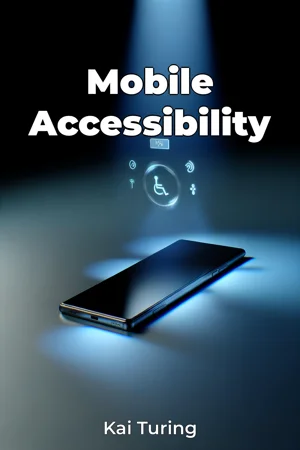
"Mobile Accessibility" examines the intersection of smartphone technology and assistive features, revealing how modern devices are becoming powerful tools for independence and connectivity among people with diverse abilities. The book presents three core themes: the evolution of mobile accessibility features, the impact of universal design in smartphone development, and the role of artificial intelligence in creating adaptive interfaces. These topics form the foundation for understanding how technology bridges communication gaps and enhances daily functionality for users with various disabilities. The historical context begins with early mobile phones' limited accessibility options, tracking the progression to today's sophisticated systems that incorporate voice control, screen readers, and haptic feedback. The book provides essential background on disability rights movements and their influence on technological development, alongside basic principles of human-computer interaction. Central to the work is the argument that accessible smartphone design benefits all users, not just those with disabilities. This universal design approach has led to innovations that improve device usability across the entire user spectrum, from predictive text to voice assistants. The content is structured in three main sections. The first explores current accessibility features across major mobile platforms, including detailed analyses of iOS and Android implementations. The second section examines the development process of accessible applications, featuring case studies and technical guidelines. The final section projects future developments in mobile accessibility, including emerging technologies like brain-computer interfaces and advanced haptic systems. The book draws on extensive research, including user studies, technical documentation, and interviews with both developers and users. It incorporates data from major technology companies' accessibility labs and independent research institutions, providing evidence-based insights into feature effectiveness and user adoption rates. Interdisciplinary connections link mobile accessibility to cognitive psychology, exploring how different users process information, and to social justice, examining how technology access affects educational and employment opportunities. The book also connects to industrial design, demonstrating how physical device features impact accessibility. The work stands out through its practical approach, offering concrete examples and solutions rather than theoretical frameworks alone. It includes detailed tutorials, code examples, and design patterns that developers can implement immediately. Written in a technical yet accessible style, the book balances detailed explanations with clear, practical examples. Complex concepts are broken down into manageable components, making the content accessible to both technical and non-technical readers. The primary audience includes software developers, UX designers, and technology professionals involved in mobile development. Secondary audiences include disability advocates, educational technologists, and anyone interested in inclusive technology design. The scope covers current mobile platforms and technologies, with intentional focus on mainstream devices rather than specialized assistive technology. While comprehensive in its coverage of software accessibility, it acknowledges the continuing evolution of hardware solutions. Practical applications include guidance for developers implementing accessibility features, strategies for organizations ensuring digital inclusion, and tips for users maximizing their devices' capabilities. The book addresses ongoing debates about standardization versus innovation in accessibility features, and the balance between automated and customizable solutions. It presents various perspectives while maintaining focus on evidence-based best practices. Throughout, the work maintains a clear focus on practical implementation and real-world impact, providing readers with actionable insights and technical knowledge to advance mobile accessibility in their own work and understanding.
"Mobile Accessibility" examines the intersection of smartphone technology and assistive features, revealing how modern devices are becoming powerful tools for independence and connectivity among people with diverse abilities. The book presents three core themes: the evolution of mobile accessibility features, the impact of universal design in smartphone development, and the role of artificial intelligence in creating adaptive interfaces. These topics form the foundation for understanding how technology bridges communication gaps and enhances daily functionality for users with various disabilities. The historical context begins with early mobile phones' limited accessibility options, tracking the progression to today's sophisticated systems that incorporate voice control, screen readers, and haptic feedback. The book provides essential background on disability rights movements and their influence on technological development, alongside basic principles of human-computer interaction. Central to the work is the argument that accessible smartphone design benefits all users, not just those with disabilities. This universal design approach has led to innovations that improve device usability across the entire user spectrum, from predictive text to voice assistants. The content is structured in three main sections. The first explores current accessibility features across major mobile platforms, including detailed analyses of iOS and Android implementations. The second section examines the development process of accessible applications, featuring case studies and technical guidelines. The final section projects future developments in mobile accessibility, including emerging technologies like brain-computer interfaces and advanced haptic systems. The book draws on extensive research, including user studies, technical documentation, and interviews with both developers and users. It incorporates data from major technology companies' accessibility labs and independent research institutions, providing evidence-based insights into feature effectiveness and user adoption rates. Interdisciplinary connections link mobile accessibility to cognitive psychology, exploring how different users process information, and to social justice, examining how technology access affects educational and employment opportunities. The book also connects to industrial design, demonstrating how physical device features impact accessibility. The work stands out through its practical approach, offering concrete examples and solutions rather than theoretical frameworks alone. It includes detailed tutorials, code examples, and design patterns that developers can implement immediately. Written in a technical yet accessible style, the book balances detailed explanations with clear, practical examples. Complex concepts are broken down into manageable components, making the content accessible to both technical and non-technical readers. The primary audience includes software developers, UX designers, and technology professionals involved in mobile development. Secondary audiences include disability advocates, educational technologists, and anyone interested in inclusive technology design. The scope covers current mobile platforms and technologies, with intentional focus on mainstream devices rather than specialized assistive technology. While comprehensive in its coverage of software accessibility, it acknowledges the continuing evolution of hardware solutions. Practical applications include guidance for developers implementing accessibility features, strategies for organizations ensuring digital inclusion, and tips for users maximizing their devices' capabilities. The book addresses ongoing debates about standardization versus innovation in accessibility features, and the balance between automated and customizable solutions. It presents various perspectives while maintaining focus on evidence-based best practices. Throughout, the work maintains a clear focus on practical implementation and real-world impact, providing readers with actionable insights and technical knowledge to advance mobile accessibility in their own work and understanding.
"Mobile Accessibility" presents a comprehensive exploration of how smartphone technology and assistive features intersect to create powerful tools for independence and connectivity. This timely work examines the evolution from basic mobile phones to today's sophisticated devices, highlighting how universal design principles and artificial intelligence have revolutionized digital inclusion for users of all abilities. The book masterfully weaves together technical insights and practical applications across three main sections: current accessibility features in major mobile platforms, the development process for accessible applications, and future technological horizons. By incorporating real-world case studies and evidence-based research from major technology companies' accessibility labs, it offers concrete solutions rather than just theoretical frameworks. Notable insights include how features like voice control and haptic feedback have transformed from specialized tools into mainstream conveniences, and how predictive text technologies originally designed for accessibility now benefit all users. What sets this book apart is its balanced approach to both technical and human aspects of mobile accessibility, making it invaluable for software developers, UX designers, and technology professionals. Through detailed tutorials, code examples, and design patterns, readers gain practical knowledge they can implement immediately. The content progresses logically from current technologies to future possibilities, including emerging innovations like brain-computer interfaces, while maintaining a clear focus on real-world applications and impact.
Book Details
ISBN
9788233943530
Publisher
Publifye AS
Your Licenses
You don't own any licenses for this book
Purchase a license below to unlock this book and download the EPUB.
Purchase License
Select a tier to unlock this book
Need bulk licensing?
Contact us for enterprise agreements.