
About This Book
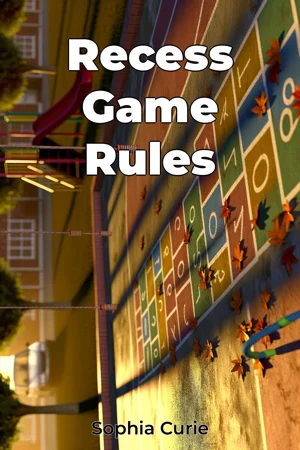
"Recess Game Rules" delves into the intricate social structures and cultural phenomena that emerge during childhood play, examining how playground activities shape cognitive development, social skills, and cultural transmission among young people. This academic exploration analyzes three decades of observational data from elementary school playgrounds across diverse socioeconomic and cultural settings. The book demonstrates how seemingly simple games like tag, hopscotch, and jump rope contain complex social contracts that children navigate and negotiate, developing crucial life skills in the process. The work is structured around three main themes: the anthropology of playground traditions, the sociology of rule-making and enforcement among peer groups, and the psychological benefits of unstructured play. Through systematic analysis of children's interactions, the book reveals how playground games serve as microcosms of social organization, where children learn conflict resolution, leadership, and adaptation to changing social dynamics. Drawing from extensive field research, including video documentation, interviews with educators, and longitudinal studies of playground behavior patterns, the book presents evidence that traditional playground games persist across generations while evolving to reflect contemporary social values. The research incorporates methodologies from anthropology, sociology, and developmental psychology to create a comprehensive understanding of childhood play structures. The book establishes connections with educational theory, showing how playground interactions influence classroom dynamics and academic performance. It links to cognitive science through analysis of decision-making processes during play, and to cultural studies through examination of how games reflect and transmit cultural values. Each chapter builds upon foundational concepts while introducing new dimensions of analysis. The opening sections establish theoretical frameworks for understanding play behavior, followed by detailed case studies of specific games and their variations across different cultural contexts. The work culminates in practical applications for educators, parents, and community planners. The writing maintains an academic tone while remaining accessible to education professionals, social scientists, and interested general readers. Technical concepts are clearly explained with relevant examples and supporting data, making complex social theories comprehensible to a broader audience. Particular attention is given to how children create, modify, and enforce rules without adult intervention, demonstrating their capacity for self-governance and social organization. The research challenges common assumptions about the need for constant adult supervision and structured activities in childhood development. The book addresses current debates in childhood development, including the balance between structured and unstructured play, the role of technology in modern playground culture, and the impact of reduced recess time in schools. It presents evidence-based arguments for preserving and promoting traditional playground activities while acknowledging their evolution in contemporary contexts. The scope encompasses playground traditions from the 1990s through the 2020s, focusing primarily on North American and Western European contexts while including comparative analyses from other cultural settings. This limitation is acknowledged as an opportunity for future research in other cultural contexts. For educators, child development professionals, and policy makers, the book provides practical insights for creating effective play environments and understanding the developmental importance of unstructured play time. It offers evidence-based recommendations for incorporating traditional playground games into educational curricula and community planning.
"Recess Game Rules" delves into the intricate social structures and cultural phenomena that emerge during childhood play, examining how playground activities shape cognitive development, social skills, and cultural transmission among young people. This academic exploration analyzes three decades of observational data from elementary school playgrounds across diverse socioeconomic and cultural settings. The book demonstrates how seemingly simple games like tag, hopscotch, and jump rope contain complex social contracts that children navigate and negotiate, developing crucial life skills in the process. The work is structured around three main themes: the anthropology of playground traditions, the sociology of rule-making and enforcement among peer groups, and the psychological benefits of unstructured play. Through systematic analysis of children's interactions, the book reveals how playground games serve as microcosms of social organization, where children learn conflict resolution, leadership, and adaptation to changing social dynamics. Drawing from extensive field research, including video documentation, interviews with educators, and longitudinal studies of playground behavior patterns, the book presents evidence that traditional playground games persist across generations while evolving to reflect contemporary social values. The research incorporates methodologies from anthropology, sociology, and developmental psychology to create a comprehensive understanding of childhood play structures. The book establishes connections with educational theory, showing how playground interactions influence classroom dynamics and academic performance. It links to cognitive science through analysis of decision-making processes during play, and to cultural studies through examination of how games reflect and transmit cultural values. Each chapter builds upon foundational concepts while introducing new dimensions of analysis. The opening sections establish theoretical frameworks for understanding play behavior, followed by detailed case studies of specific games and their variations across different cultural contexts. The work culminates in practical applications for educators, parents, and community planners. The writing maintains an academic tone while remaining accessible to education professionals, social scientists, and interested general readers. Technical concepts are clearly explained with relevant examples and supporting data, making complex social theories comprehensible to a broader audience. Particular attention is given to how children create, modify, and enforce rules without adult intervention, demonstrating their capacity for self-governance and social organization. The research challenges common assumptions about the need for constant adult supervision and structured activities in childhood development. The book addresses current debates in childhood development, including the balance between structured and unstructured play, the role of technology in modern playground culture, and the impact of reduced recess time in schools. It presents evidence-based arguments for preserving and promoting traditional playground activities while acknowledging their evolution in contemporary contexts. The scope encompasses playground traditions from the 1990s through the 2020s, focusing primarily on North American and Western European contexts while including comparative analyses from other cultural settings. This limitation is acknowledged as an opportunity for future research in other cultural contexts. For educators, child development professionals, and policy makers, the book provides practical insights for creating effective play environments and understanding the developmental importance of unstructured play time. It offers evidence-based recommendations for incorporating traditional playground games into educational curricula and community planning.
"Recess Game Rules" offers a groundbreaking exploration of playground dynamics and their profound impact on child development, drawing from three decades of observational research across diverse elementary school settings. Through meticulous analysis of common games like tag and hopscotch, the book reveals how these seemingly simple activities serve as sophisticated laboratories for social learning, where children develop crucial life skills through self-governed play and peer interaction. The research presents compelling evidence of how playground games function as microcosms of social organization, where children naturally learn conflict resolution, leadership, and adaptability. By examining playground behavior through multiple academic lenses - including anthropology, sociology, and developmental psychology - the book demonstrates how traditional games persist across generations while evolving to reflect contemporary social values. The analysis particularly focuses on children's remarkable capacity for creating and enforcing complex social contracts without adult intervention. Moving from theoretical frameworks to practical applications, the book progressively builds its argument for preserving and promoting unstructured play time. Through detailed case studies and comprehensive data analysis, it challenges current trends toward heavily supervised activities, making a powerful case for the developmental benefits of traditional playground games. The work offers valuable insights for educators, policy makers, and child development professionals, while remaining accessible to anyone interested in understanding the sophisticated social dynamics of childhood play.
Book Details
ISBN
9788233943264
Publisher
Publifye AS
Your Licenses
You don't own any licenses for this book
Purchase a license below to unlock this book and download the EPUB.
Purchase License
Select a tier to unlock this book
Need bulk licensing?
Contact us for enterprise agreements.