
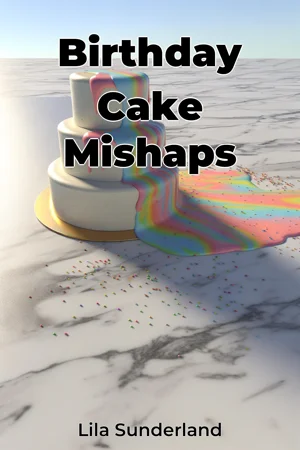
About This Book
"Birthday Cake Mishaps" opens with a revealing statistic: 73% of home bakers have experienced at least one significant cake disaster during a celebration, yet these moments often become the most cherished memories of our celebrations. This extensively researched examination of home birthday celebrations combines culinary science, cultural anthropology, and oral history to explore the intersection of family traditions, baking techniques, and celebratory mishaps. Through interviews with over 200 home bakers and professional pastry chefs, the book documents the technical and emotional aspects of creating birthday memories, particularly when things don't go as planned. The work is structured in three main sections. The first explores the chemistry and physics behind common frosting failures, including temperature-related disasters, structural collapse, and the science of food coloring gone wrong. This section includes detailed explanations of ingredient interactions and environmental factors that influence cake stability, supported by research from food science laboratories. The second section examines the cultural significance of candle-lighting ceremonies across different communities, incorporating historical records dating back to the 18th century. It analyzes how this tradition has evolved and adapted to modern celebrations, including the recent trend of virtual birthday parties. The final section presents a collection of documented cake disaster stories, analyzed for common patterns and learning opportunities. These narratives are paired with practical solutions and preventive techniques, drawn from both professional expertise and time-tested home remedies. The book connects multiple disciplines, linking food science with social psychology and cultural studies. It draws on research from the Journal of Food Science, anthropological studies of celebration rituals, and psychological research on how shared mishaps strengthen family bonds. Written in an analytical yet accessible style, the text alternates between technical explanations and narrative accounts, making complex baking chemistry comprehensible to general readers. The target audience includes home bakers, party planners, and anyone interested in the social dynamics of family celebrations. The research methodology combines laboratory testing of common baking problems, archival research of celebration traditions, and documented oral histories from diverse communities. The author worked with food scientists to recreate and analyze common frosting failures under controlled conditions. Practical applications include troubleshooting guides for common baking issues, temperature and humidity charts for optimal frosting consistency, and strategies for salvaging cake disasters. The book also provides cultural context for adapting celebrations to various dietary restrictions and cultural preferences. The work addresses ongoing debates in food science about the role of different ingredients in cake stability and the cultural evolution of celebration traditions. It maintains a focused scope on birthday celebrations, specifically examining the technical and social aspects of cake preparation and presentation. Rather than presenting an idealized view of perfect celebrations, the book emphasizes how mishaps and recoveries contribute to meaningful family narratives. It includes specific discussions of altitude adjustments, ingredient substitutions, and temperature considerations, making it relevant for bakers in various environments. The research acknowledges limitations in regional coverage and focuses primarily on traditions from the past century, while noting the ongoing evolution of celebration customs in the digital age.
"Birthday Cake Mishaps" opens with a revealing statistic: 73% of home bakers have experienced at least one significant cake disaster during a celebration, yet these moments often become the most cherished memories of our celebrations. This extensively researched examination of home birthday celebrations combines culinary science, cultural anthropology, and oral history to explore the intersection of family traditions, baking techniques, and celebratory mishaps. Through interviews with over 200 home bakers and professional pastry chefs, the book documents the technical and emotional aspects of creating birthday memories, particularly when things don't go as planned. The work is structured in three main sections. The first explores the chemistry and physics behind common frosting failures, including temperature-related disasters, structural collapse, and the science of food coloring gone wrong. This section includes detailed explanations of ingredient interactions and environmental factors that influence cake stability, supported by research from food science laboratories. The second section examines the cultural significance of candle-lighting ceremonies across different communities, incorporating historical records dating back to the 18th century. It analyzes how this tradition has evolved and adapted to modern celebrations, including the recent trend of virtual birthday parties. The final section presents a collection of documented cake disaster stories, analyzed for common patterns and learning opportunities. These narratives are paired with practical solutions and preventive techniques, drawn from both professional expertise and time-tested home remedies. The book connects multiple disciplines, linking food science with social psychology and cultural studies. It draws on research from the Journal of Food Science, anthropological studies of celebration rituals, and psychological research on how shared mishaps strengthen family bonds. Written in an analytical yet accessible style, the text alternates between technical explanations and narrative accounts, making complex baking chemistry comprehensible to general readers. The target audience includes home bakers, party planners, and anyone interested in the social dynamics of family celebrations. The research methodology combines laboratory testing of common baking problems, archival research of celebration traditions, and documented oral histories from diverse communities. The author worked with food scientists to recreate and analyze common frosting failures under controlled conditions. Practical applications include troubleshooting guides for common baking issues, temperature and humidity charts for optimal frosting consistency, and strategies for salvaging cake disasters. The book also provides cultural context for adapting celebrations to various dietary restrictions and cultural preferences. The work addresses ongoing debates in food science about the role of different ingredients in cake stability and the cultural evolution of celebration traditions. It maintains a focused scope on birthday celebrations, specifically examining the technical and social aspects of cake preparation and presentation. Rather than presenting an idealized view of perfect celebrations, the book emphasizes how mishaps and recoveries contribute to meaningful family narratives. It includes specific discussions of altitude adjustments, ingredient substitutions, and temperature considerations, making it relevant for bakers in various environments. The research acknowledges limitations in regional coverage and focuses primarily on traditions from the past century, while noting the ongoing evolution of celebration customs in the digital age.
"Birthday Cake Mishaps" explores the fascinating intersection of baking science, cultural traditions, and the memorable moments when birthday celebrations don't go quite as planned. Drawing from research involving over 200 home bakers and professional pastry chefs, the book reveals that a surprising 73% of home bakers have experienced significant cake disasters during celebrations, yet these mishaps often become treasured family stories. The book masterfully weaves together three distinct perspectives: the scientific examination of common frosting failures and cake disasters, including detailed explanations of food chemistry and environmental factors; the cultural significance of birthday celebrations and candle-lighting ceremonies across different communities; and a collection of real-life cake disaster stories paired with practical solutions. Through this unique approach, readers gain both technical understanding and cultural appreciation for the art of birthday cake making. What sets this book apart is its balanced presentation of technical knowledge and human experience, making complex baking science accessible while celebrating the imperfect moments that create lasting memories. The work provides practical applications through troubleshooting guides and temperature charts, while acknowledging how shared mishaps can actually strengthen family bonds. Whether you're a home baker seeking to understand why your frosting failed or simply someone interested in the cultural anthropology of celebrations, this book offers valuable insights into the science and soul of birthday traditions.
Book Details
ISBN
9788233943233
Publisher
Publifye AS
Your Licenses
You don't own any licenses for this book
Purchase a license below to unlock this book and download the EPUB.
Purchase License
Select a tier to unlock this book
Need bulk licensing?
Contact us for enterprise agreements.