
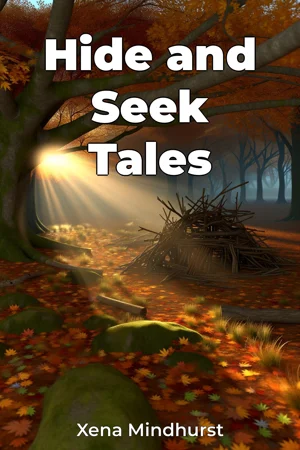
About This Book
"Hide and Seek Tales" explores one of childhood's most universal games through the lens of developmental psychology and parenting insights, revealing how this seemingly simple activity shapes cognitive development, social skills, and emotional resilience. The book presents three core themes: the psychological mechanisms underlying hide-and-seek behavior, the game's role in childhood development, and its cultural significance across different societies. Drawing from research in developmental psychology, anthropology, and neuroscience, it demonstrates how this playful activity serves as a fundamental learning tool for spatial awareness, emotional regulation, and social bonding. The work is structured in three main sections. The first examines the basic psychology of hide-and-seek, including concepts like object permanence, spatial cognition, and the development of theory of mind. The second section explores the social dynamics of the game, analyzing how children learn to negotiate rules, develop strategic thinking, and manage emotions like anticipation and disappointment. The final section addresses practical applications for parents and educators, offering evidence-based strategies for using hide-and-seek to support healthy child development. Research evidence includes longitudinal studies of children's play patterns, cognitive development research from major universities, and cross-cultural analyses of hiding games. The book incorporates observational data from daycare centers, family studies, and therapeutic settings, providing a comprehensive view of how hide-and-seek influences child development. The work connects multiple disciplines, linking developmental psychology with evolutionary biology (examining the game's role in survival skill development), anthropology (exploring cultural variations of hiding games), and education (applying insights to learning environments). This interdisciplinary approach provides readers with a rich understanding of the game's significance. Written in an accessible narrative style that combines academic research with real-world examples, the book maintains scientific rigor while remaining engaging for parents, educators, and psychology enthusiasts. It includes practical sections with structured activities, observation guidelines, and adaptation suggestions for different age groups and abilities. The target audience includes parents, early childhood educators, developmental psychologists, and professionals working with children. The book addresses current debates in child development, including the role of unstructured play in learning, screen time's impact on traditional games, and the balance between supervised and independent play. Limitations are clearly addressed, acknowledging that research focuses primarily on ages 2-10 and Western cultural contexts. The book provides specific recommendations for adapting hide-and-seek for various developmental stages, special needs considerations, and different cultural settings. Real-world applications include using hide-and-seek to assess spatial awareness, build trust between caregivers and children, and develop problem-solving skills. The book offers structured observation tools for parents and educators to track developmental progress through play. The work stands out through its systematic analysis of a common childhood game, transforming casual observations into valuable insights for child development. It challenges some traditional assumptions about supervised play while supporting evidence-based approaches to childhood development through natural play patterns. By examining this universal childhood experience through multiple scientific lenses, "Hide and Seek Tales" provides a comprehensive understanding of how simple games contribute to complex developmental processes, making it a valuable resource for anyone involved in child development and education.
"Hide and Seek Tales" explores one of childhood's most universal games through the lens of developmental psychology and parenting insights, revealing how this seemingly simple activity shapes cognitive development, social skills, and emotional resilience. The book presents three core themes: the psychological mechanisms underlying hide-and-seek behavior, the game's role in childhood development, and its cultural significance across different societies. Drawing from research in developmental psychology, anthropology, and neuroscience, it demonstrates how this playful activity serves as a fundamental learning tool for spatial awareness, emotional regulation, and social bonding. The work is structured in three main sections. The first examines the basic psychology of hide-and-seek, including concepts like object permanence, spatial cognition, and the development of theory of mind. The second section explores the social dynamics of the game, analyzing how children learn to negotiate rules, develop strategic thinking, and manage emotions like anticipation and disappointment. The final section addresses practical applications for parents and educators, offering evidence-based strategies for using hide-and-seek to support healthy child development. Research evidence includes longitudinal studies of children's play patterns, cognitive development research from major universities, and cross-cultural analyses of hiding games. The book incorporates observational data from daycare centers, family studies, and therapeutic settings, providing a comprehensive view of how hide-and-seek influences child development. The work connects multiple disciplines, linking developmental psychology with evolutionary biology (examining the game's role in survival skill development), anthropology (exploring cultural variations of hiding games), and education (applying insights to learning environments). This interdisciplinary approach provides readers with a rich understanding of the game's significance. Written in an accessible narrative style that combines academic research with real-world examples, the book maintains scientific rigor while remaining engaging for parents, educators, and psychology enthusiasts. It includes practical sections with structured activities, observation guidelines, and adaptation suggestions for different age groups and abilities. The target audience includes parents, early childhood educators, developmental psychologists, and professionals working with children. The book addresses current debates in child development, including the role of unstructured play in learning, screen time's impact on traditional games, and the balance between supervised and independent play. Limitations are clearly addressed, acknowledging that research focuses primarily on ages 2-10 and Western cultural contexts. The book provides specific recommendations for adapting hide-and-seek for various developmental stages, special needs considerations, and different cultural settings. Real-world applications include using hide-and-seek to assess spatial awareness, build trust between caregivers and children, and develop problem-solving skills. The book offers structured observation tools for parents and educators to track developmental progress through play. The work stands out through its systematic analysis of a common childhood game, transforming casual observations into valuable insights for child development. It challenges some traditional assumptions about supervised play while supporting evidence-based approaches to childhood development through natural play patterns. By examining this universal childhood experience through multiple scientific lenses, "Hide and Seek Tales" provides a comprehensive understanding of how simple games contribute to complex developmental processes, making it a valuable resource for anyone involved in child development and education.
"Hide and Seek Tales" offers a fascinating exploration of how a beloved childhood game serves as a powerful tool for developmental growth and learning. Through the lens of developmental psychology and cross-cultural research, the book reveals how this universal game shapes crucial aspects of child development, from cognitive abilities and spatial awareness to emotional regulation and social skills. The book's three-part structure systematically unpacks the psychological mechanisms behind hide-and-seek, beginning with fundamental concepts like object permanence and spatial cognition. It then delves into the social dimensions of the game, examining how children learn to negotiate rules and manage emotions during play. The final section provides practical applications for parents and educators, offering evidence-based strategies to enhance child development through purposeful play. What sets this work apart is its interdisciplinary approach, combining insights from developmental psychology, evolutionary biology, and anthropology to provide a comprehensive understanding of hide-and-seek's developmental impact. Written in an accessible narrative style, the book bridges academic research with real-world applications, making it invaluable for parents, educators, and child development professionals. Through carefully structured observations and practical guidelines, readers learn how to leverage this simple game to support children's cognitive, social, and emotional growth across different ages and abilities.
Book Details
ISBN
9788233943226
Publisher
Publifye AS
Your Licenses
You don't own any licenses for this book
Purchase a license below to unlock this book and download the EPUB.
Purchase License
Select a tier to unlock this book
Need bulk licensing?
Contact us for enterprise agreements.