
About This Book
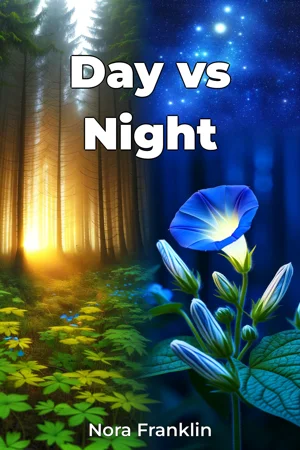
"Day vs Night" examines the intricate patterns of life's daily rhythms, revealing how the 24-hour cycle shapes the behavior of organisms and natural systems across the planet. This comprehensive study bridges the gap between casual observation and scientific understanding of diurnal and nocturnal transitions. The book presents three core themes: the physiological adaptations of organisms to light and dark cycles, the ecological interactions that differ between day and night, and the environmental factors that influence temporal activity patterns. These interconnected topics help readers understand how time-of-day determines survival strategies across species. Building on centuries of naturalist observations and modern chronobiology research, the text explores how circadian rhythms evolved and their critical role in maintaining life processes. Readers gain foundational knowledge in basic biology and ecology, though no advanced scientific background is required. The central thesis demonstrates that the day-night cycle serves as a fundamental organizing principle in nature, driving evolution, behavior, and ecosystem dynamics. This understanding becomes increasingly relevant as human activities alter natural light patterns through urbanization and climate change. The book's structure progresses from individual organisms to ecosystem-wide patterns. The first section examines cellular and physiological responses to light and dark, including detailed analysis of circadian rhythm mechanisms. The middle chapters explore behavioral adaptations, from nocturnal hunting strategies to diurnal foraging patterns. The final section synthesizes these elements to show how temporal partitioning enables species coexistence and ecosystem stability. Research evidence draws from field studies, laboratory experiments, and long-term monitoring data. The text incorporates recent findings from satellite tracking, infrared photography, and genetic research to provide current insights into temporal behavior patterns. The work connects biology with climate science, evolutionary psychology, and conservation biology. These interdisciplinary links highlight how temporal patterns influence everything from human sleep disorders to wildlife corridor planning and light pollution management. Rather than simply cataloging day versus night differences, the book employs a systems-thinking approach to demonstrate how temporal variations create complex networks of interaction. This perspective helps readers understand both specific adaptations and broader ecological principles. Written in clear, precise language, the text balances scientific rigor with accessibility. Technical concepts are explained through concrete examples and real-world applications, making the material engaging for both students and general readers interested in natural science. The primary audience includes biology students, environmental professionals, and informed general readers seeking to understand how time shapes living systems. The book serves as both an academic resource and a practical guide for nature observation. Following conventions of scientific writing, each chapter includes clearly stated objectives, evidence-based discussions, and summary conclusions. Detailed illustrations and data visualizations support key concepts. While focused primarily on biological systems, the book acknowledges that many aspects of temporal ecology remain under investigation. Current debates about the impacts of artificial light and climate change on natural rhythms are addressed with balanced consideration of available evidence. Readers can apply this knowledge to improve their understanding of personal circadian rhythms, wildlife observation techniques, and conservation planning. The book provides practical guidelines for minimizing human disruption of natural temporal patterns. This work maintains objective analysis throughout, presenting factual information while acknowledging areas of scientific uncertainty and ongoing research. The result is a comprehensive examination of how time structures life on Earth, offering readers both theoretical understanding and practical insights into day-night dynamics in nature.
"Day vs Night" examines the intricate patterns of life's daily rhythms, revealing how the 24-hour cycle shapes the behavior of organisms and natural systems across the planet. This comprehensive study bridges the gap between casual observation and scientific understanding of diurnal and nocturnal transitions. The book presents three core themes: the physiological adaptations of organisms to light and dark cycles, the ecological interactions that differ between day and night, and the environmental factors that influence temporal activity patterns. These interconnected topics help readers understand how time-of-day determines survival strategies across species. Building on centuries of naturalist observations and modern chronobiology research, the text explores how circadian rhythms evolved and their critical role in maintaining life processes. Readers gain foundational knowledge in basic biology and ecology, though no advanced scientific background is required. The central thesis demonstrates that the day-night cycle serves as a fundamental organizing principle in nature, driving evolution, behavior, and ecosystem dynamics. This understanding becomes increasingly relevant as human activities alter natural light patterns through urbanization and climate change. The book's structure progresses from individual organisms to ecosystem-wide patterns. The first section examines cellular and physiological responses to light and dark, including detailed analysis of circadian rhythm mechanisms. The middle chapters explore behavioral adaptations, from nocturnal hunting strategies to diurnal foraging patterns. The final section synthesizes these elements to show how temporal partitioning enables species coexistence and ecosystem stability. Research evidence draws from field studies, laboratory experiments, and long-term monitoring data. The text incorporates recent findings from satellite tracking, infrared photography, and genetic research to provide current insights into temporal behavior patterns. The work connects biology with climate science, evolutionary psychology, and conservation biology. These interdisciplinary links highlight how temporal patterns influence everything from human sleep disorders to wildlife corridor planning and light pollution management. Rather than simply cataloging day versus night differences, the book employs a systems-thinking approach to demonstrate how temporal variations create complex networks of interaction. This perspective helps readers understand both specific adaptations and broader ecological principles. Written in clear, precise language, the text balances scientific rigor with accessibility. Technical concepts are explained through concrete examples and real-world applications, making the material engaging for both students and general readers interested in natural science. The primary audience includes biology students, environmental professionals, and informed general readers seeking to understand how time shapes living systems. The book serves as both an academic resource and a practical guide for nature observation. Following conventions of scientific writing, each chapter includes clearly stated objectives, evidence-based discussions, and summary conclusions. Detailed illustrations and data visualizations support key concepts. While focused primarily on biological systems, the book acknowledges that many aspects of temporal ecology remain under investigation. Current debates about the impacts of artificial light and climate change on natural rhythms are addressed with balanced consideration of available evidence. Readers can apply this knowledge to improve their understanding of personal circadian rhythms, wildlife observation techniques, and conservation planning. The book provides practical guidelines for minimizing human disruption of natural temporal patterns. This work maintains objective analysis throughout, presenting factual information while acknowledging areas of scientific uncertainty and ongoing research. The result is a comprehensive examination of how time structures life on Earth, offering readers both theoretical understanding and practical insights into day-night dynamics in nature.
"Day vs Night" presents a fascinating exploration of how Earth's 24-hour cycle fundamentally shapes life on our planet, from the cellular level to entire ecosystems. The book masterfully weaves together three core themes: physiological adaptations to light and dark cycles, ecological interactions that vary between day and night, and the environmental factors influencing temporal activity patterns. Through clear, accessible language, it reveals how circadian rhythms serve as a crucial organizing principle in nature, affecting everything from cellular processes to species survival. The progression from molecular to ecosystem-wide patterns provides readers with a comprehensive understanding of temporal ecology. Beginning with cellular responses to light and dark, the book moves through fascinating examples of behavioral adaptations, such as nocturnal hunting strategies and diurnal foraging patterns, before culminating in a broader examination of how these temporal variations create complex ecological networks. Modern research methods, including satellite tracking and infrared photography, bring these concepts to life with current scientific insights. What sets this book apart is its systems-thinking approach, connecting biology with climate science, evolutionary psychology, and conservation biology. While maintaining scientific rigor, it remains accessible to both students and general readers, using concrete examples and real-world applications to illuminate complex concepts. The work is particularly timely as it addresses how human activities, including urbanization and artificial lighting, are impacting natural temporal patterns, making it relevant for anyone interested in environmental science and conservation.
Book Details
ISBN
9788233943097
Publisher
Publifye AS
Your Licenses
You don't own any licenses for this book
Purchase a license below to unlock this book and download the EPUB.
Purchase License
Select a tier to unlock this book
Need bulk licensing?
Contact us for enterprise agreements.