
About This Book
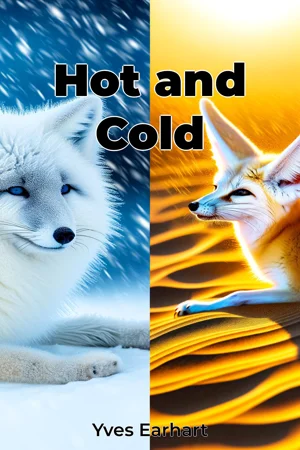
"Hot and Cold" explores the remarkable resilience of life in Earth's most extreme temperature environments, from the scorching Sahara Desert to the frozen Antarctic continent. Through detailed scientific analysis and field research, this comprehensive guide examines how organisms survive and thrive in conditions that push the boundaries of biological adaptation. The book presents three interconnected themes: temperature extremes in various global ecosystems, the physiological and behavioral adaptations of resident species, and the impact of climate change on these delicate systems. These topics are particularly relevant as global temperature patterns continue to shift, affecting biodiversity and ecosystem stability worldwide. The work begins with an examination of temperature as a fundamental force in nature, explaining the physics of heat transfer and its role in shaping life on Earth. This foundation helps readers understand subsequent discussions about specific adaptations and survival strategies. The text then divides into two major sections: hot-zone ecosystems and cold-zone ecosystems, each exploring multiple habitat types and their inhabitants. In hot-zone ecosystems, readers discover how desert plants maintain water balance through specialized leaf structures and how animals like the fennec fox use enlarged ears for thermoregulation. The cold-zone section reveals how Arctic foxes modify their metabolism seasonally and how fish in polar waters prevent ice crystal formation in their cells through specialized proteins. The research presented draws from recent biological studies, long-term climate data, and direct field observations. The book incorporates findings from leading research institutions and includes detailed case studies of specific species and their adaptation mechanisms. Advanced imaging techniques and molecular studies provide insights into cellular and genetic adaptations to temperature extremes. The text makes important connections to evolution, showing how temperature pressures have shaped species development over millions of years. It also links to chemistry, explaining how proteins and cellular structures modify their behavior under temperature stress, and to physics, demonstrating how heat transfer principles apply to biological systems. The book maintains an academic tone while remaining accessible to educated general readers, using clear explanations and relevant examples to illustrate complex concepts. Technical terms are carefully defined and supported by diagrams and photographs that clarify key points. This work serves multiple audiences, including biology students, environmental scientists, and informed general readers interested in natural adaptation and climate science. It provides practical insights for conservation efforts and habitat preservation, while also offering a framework for understanding how species might respond to ongoing climate change. The scope encompasses both micro and macro perspectives, from cellular mechanisms to ecosystem-wide patterns, though it focuses primarily on vertebrate animals and vascular plants. The book acknowledges current debates in climate science and species conservation while maintaining a strictly evidence-based approach to these topics. Of particular value is the book's analysis of convergent evolution, where different species develop similar adaptations to handle temperature extremes. This demonstrates the universal challenges posed by temperature regulation and the limited number of successful biological solutions available. The final section examines current research in biomimicry, showing how human technology can benefit from understanding natural temperature adaptation mechanisms. This includes applications in materials science, architecture, and medical preservation techniques. Through careful analysis and comprehensive research, "Hot and Cold" provides readers with a thorough understanding of how life adapts to temperature extremes, offering insights crucial for both scientific knowledge and practical applications in a changing world.
"Hot and Cold" explores the remarkable resilience of life in Earth's most extreme temperature environments, from the scorching Sahara Desert to the frozen Antarctic continent. Through detailed scientific analysis and field research, this comprehensive guide examines how organisms survive and thrive in conditions that push the boundaries of biological adaptation. The book presents three interconnected themes: temperature extremes in various global ecosystems, the physiological and behavioral adaptations of resident species, and the impact of climate change on these delicate systems. These topics are particularly relevant as global temperature patterns continue to shift, affecting biodiversity and ecosystem stability worldwide. The work begins with an examination of temperature as a fundamental force in nature, explaining the physics of heat transfer and its role in shaping life on Earth. This foundation helps readers understand subsequent discussions about specific adaptations and survival strategies. The text then divides into two major sections: hot-zone ecosystems and cold-zone ecosystems, each exploring multiple habitat types and their inhabitants. In hot-zone ecosystems, readers discover how desert plants maintain water balance through specialized leaf structures and how animals like the fennec fox use enlarged ears for thermoregulation. The cold-zone section reveals how Arctic foxes modify their metabolism seasonally and how fish in polar waters prevent ice crystal formation in their cells through specialized proteins. The research presented draws from recent biological studies, long-term climate data, and direct field observations. The book incorporates findings from leading research institutions and includes detailed case studies of specific species and their adaptation mechanisms. Advanced imaging techniques and molecular studies provide insights into cellular and genetic adaptations to temperature extremes. The text makes important connections to evolution, showing how temperature pressures have shaped species development over millions of years. It also links to chemistry, explaining how proteins and cellular structures modify their behavior under temperature stress, and to physics, demonstrating how heat transfer principles apply to biological systems. The book maintains an academic tone while remaining accessible to educated general readers, using clear explanations and relevant examples to illustrate complex concepts. Technical terms are carefully defined and supported by diagrams and photographs that clarify key points. This work serves multiple audiences, including biology students, environmental scientists, and informed general readers interested in natural adaptation and climate science. It provides practical insights for conservation efforts and habitat preservation, while also offering a framework for understanding how species might respond to ongoing climate change. The scope encompasses both micro and macro perspectives, from cellular mechanisms to ecosystem-wide patterns, though it focuses primarily on vertebrate animals and vascular plants. The book acknowledges current debates in climate science and species conservation while maintaining a strictly evidence-based approach to these topics. Of particular value is the book's analysis of convergent evolution, where different species develop similar adaptations to handle temperature extremes. This demonstrates the universal challenges posed by temperature regulation and the limited number of successful biological solutions available. The final section examines current research in biomimicry, showing how human technology can benefit from understanding natural temperature adaptation mechanisms. This includes applications in materials science, architecture, and medical preservation techniques. Through careful analysis and comprehensive research, "Hot and Cold" provides readers with a thorough understanding of how life adapts to temperature extremes, offering insights crucial for both scientific knowledge and practical applications in a changing world.
"Hot and Cold" presents a fascinating exploration of life's remarkable adaptability in Earth's most extreme temperature environments, from scorching deserts to frozen polar regions. This comprehensive work investigates how diverse organisms have evolved ingenious strategies to survive in conditions that seem impossible for life to exist. Through a careful progression from basic principles of heat transfer to specific adaptation mechanisms, the book builds a complete picture of temperature's role in shaping life on our planet. The text masterfully weaves together three critical themes: the nature of temperature extremes in global ecosystems, the incredible physiological and behavioral adaptations of various species, and the implications of climate change on these delicate systems. Readers discover fascinating examples of natural innovation, such as how desert plants maintain crucial water balance through specialized leaf structures and how polar fish prevent their cells from freezing through unique proteins. These real-world examples make complex biological concepts accessible while maintaining scientific accuracy. What sets this book apart is its multidisciplinary approach, connecting evolutionary biology with physics, chemistry, and conservation science. Drawing from recent research and field observations, it offers valuable insights for both academic and general readers interested in natural adaptation and climate science. The inclusion of biomimicry applications in the final section demonstrates how understanding these natural adaptation mechanisms can inspire practical solutions in human technology and architecture, making the content relevant to contemporary challenges in a warming world.
Book Details
ISBN
9788233943073
Publisher
Publifye AS
Your Licenses
You don't own any licenses for this book
Purchase a license below to unlock this book and download the EPUB.
Purchase License
Select a tier to unlock this book
Need bulk licensing?
Contact us for enterprise agreements.