
About This Book
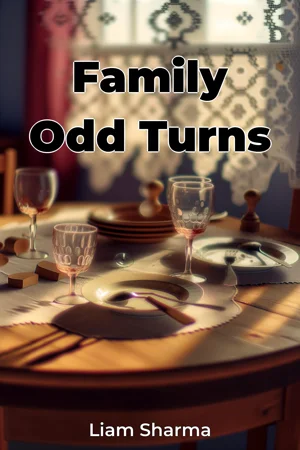
"Family Odd Turns" presents a collection of meticulously documented family incidents that illuminate the subtle complexities of modern family dynamics. Through carefully curated personal narratives, the book reveals how seemingly routine family interactions often contain deeper truths about human relationships and societal expectations. The work explores three primary themes: the evolution of family roles in the 21st century, the impact of inherited behavioral patterns across generations, and the transformation of family traditions in response to social change. Each theme emerges through detailed accounts of real-life situations, from weekly family dinners that become diplomatic negotiations to holiday traditions that accidentally spawn unintended annual customs. Drawing from ten years of personal journals, family interviews, and correspondence, the author presents a methodical examination of how family duties intersect with individual aspirations. The book's structure follows a chronological progression through key life stages, with each chapter focusing on specific family dynamics: parent-child role reversals, sibling rivalry in adulthood, and the delicate balance between personal independence and family obligations. The central thesis posits that family relationships serve as microsystems that reflect broader societal shifts. This argument develops through three main sections: "Inherited Patterns," which examines how family behaviors persist or evolve across generations; "Daily Paradoxes," which explores how routine family interactions reveal unexpected insights; and "Adaptive Traditions," which analyzes how families modify customs to accommodate changing circumstances. The research methodology combines ethnographic observation with social psychology principles, featuring detailed case studies from multiple family units. The author incorporates insights from family systems theory, sociology, and cultural anthropology to provide context for observed patterns and behaviors. The work connects to multiple disciplines, including social psychology, cultural studies, and contemporary anthropology. These interdisciplinary links help readers understand how family dynamics reflect broader social trends and psychological principles. Written in a narrative non-fiction style, the book maintains scholarly rigor while remaining accessible to general readers. The author employs a observational approach, presenting detailed scenarios followed by analysis that reveals their broader implications. The target audience includes family counselors, sociologists, and general readers interested in understanding family dynamics. The book offers particular value to those navigating complex family relationships or studying contemporary social structures. The scope focuses specifically on middle-class Western family structures from 1990-2020, acknowledging cultural and socioeconomic limitations. While drawing primarily from American and European examples, the analysis considers how these patterns might apply in other cultural contexts. Practical applications include frameworks for understanding family conflict, strategies for managing intergenerational relationships, and methods for adapting family traditions to changing circumstances. The book addresses ongoing debates in family studies about the evolution of traditional family structures and the impact of technology on family relationships. The work stands out through its micro-focus approach, examining how small, specific incidents reveal larger patterns in family dynamics. Rather than presenting broad generalizations, it builds understanding through detailed observation and analysis of particular moments and interactions. This methodical examination of family life provides readers with tools for understanding their own family dynamics while contributing to the broader field of family studies through its detailed observational approach and analytical framework.
"Family Odd Turns" presents a collection of meticulously documented family incidents that illuminate the subtle complexities of modern family dynamics. Through carefully curated personal narratives, the book reveals how seemingly routine family interactions often contain deeper truths about human relationships and societal expectations. The work explores three primary themes: the evolution of family roles in the 21st century, the impact of inherited behavioral patterns across generations, and the transformation of family traditions in response to social change. Each theme emerges through detailed accounts of real-life situations, from weekly family dinners that become diplomatic negotiations to holiday traditions that accidentally spawn unintended annual customs. Drawing from ten years of personal journals, family interviews, and correspondence, the author presents a methodical examination of how family duties intersect with individual aspirations. The book's structure follows a chronological progression through key life stages, with each chapter focusing on specific family dynamics: parent-child role reversals, sibling rivalry in adulthood, and the delicate balance between personal independence and family obligations. The central thesis posits that family relationships serve as microsystems that reflect broader societal shifts. This argument develops through three main sections: "Inherited Patterns," which examines how family behaviors persist or evolve across generations; "Daily Paradoxes," which explores how routine family interactions reveal unexpected insights; and "Adaptive Traditions," which analyzes how families modify customs to accommodate changing circumstances. The research methodology combines ethnographic observation with social psychology principles, featuring detailed case studies from multiple family units. The author incorporates insights from family systems theory, sociology, and cultural anthropology to provide context for observed patterns and behaviors. The work connects to multiple disciplines, including social psychology, cultural studies, and contemporary anthropology. These interdisciplinary links help readers understand how family dynamics reflect broader social trends and psychological principles. Written in a narrative non-fiction style, the book maintains scholarly rigor while remaining accessible to general readers. The author employs a observational approach, presenting detailed scenarios followed by analysis that reveals their broader implications. The target audience includes family counselors, sociologists, and general readers interested in understanding family dynamics. The book offers particular value to those navigating complex family relationships or studying contemporary social structures. The scope focuses specifically on middle-class Western family structures from 1990-2020, acknowledging cultural and socioeconomic limitations. While drawing primarily from American and European examples, the analysis considers how these patterns might apply in other cultural contexts. Practical applications include frameworks for understanding family conflict, strategies for managing intergenerational relationships, and methods for adapting family traditions to changing circumstances. The book addresses ongoing debates in family studies about the evolution of traditional family structures and the impact of technology on family relationships. The work stands out through its micro-focus approach, examining how small, specific incidents reveal larger patterns in family dynamics. Rather than presenting broad generalizations, it builds understanding through detailed observation and analysis of particular moments and interactions. This methodical examination of family life provides readers with tools for understanding their own family dynamics while contributing to the broader field of family studies through its detailed observational approach and analytical framework.
"Family Odd Turns" offers a fascinating exploration of modern family dynamics through meticulously documented real-life incidents and personal narratives. Drawing from a decade of journals, interviews, and correspondence, the book illuminates how everyday family interactions reveal profound truths about human relationships and societal changes. The author masterfully weaves together stories of weekly family dinners turned diplomatic missions and accidental holiday traditions to demonstrate how family units adapt and evolve in the 21st century. The book is structured in three compelling sections: "Inherited Patterns," examining generational behavior transmission; "Daily Paradoxes," exploring unexpected insights from routine family interactions; and "Adaptive Traditions," analyzing how families modify customs to match contemporary needs. Through this journey, readers discover how parent-child role reversals, adult sibling relationships, and the balance between personal independence and family obligations shape our modern family landscape. What sets this work apart is its unique micro-focus approach, using specific family moments as windows into larger social patterns. By combining ethnographic observation with social psychology principles, the author creates an accessible yet scholarly examination of family life that speaks to both academic and general audiences. The book offers practical insights for understanding family conflicts and managing intergenerational relationships, while contributing valuable perspectives to ongoing discussions about the evolution of family structures in our rapidly changing society.
Book Details
ISBN
9788233943004
Publisher
Publifye AS
Your Licenses
You don't own any licenses for this book
Purchase a license below to unlock this book and download the EPUB.
Purchase License
Select a tier to unlock this book
Need bulk licensing?
Contact us for enterprise agreements.