
About This Book
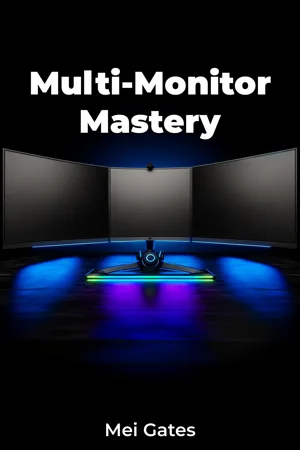
"Multi-Monitor Mastery" addresses the growing trend of multi-display computing setups and their impact on modern work and leisure activities. This comprehensive guide examines how multiple screens transform productivity workflows and gaming experiences in the digital age. The book explores three core areas: productivity optimization, gaming enhancement, and technical implementation. It begins by documenting the evolution of multi-monitor setups from specialized financial trading stations to mainstream computing configurations, providing context for current applications and future possibilities. The central thesis argues that proper implementation of multi-monitor systems creates measurable improvements in task efficiency and user experience across both professional and recreational computing activities. Research data from workplace productivity studies shows up to 42% improvement in task completion times for knowledge workers using multiple displays, while gaming applications demonstrate enhanced immersion and control through expanded field of view. Structured in three main sections, the book first covers the technical foundations of multi-monitor setups, including hardware requirements, display technologies, and configuration optimization. The second section focuses on productivity applications, examining workflow design, window management strategies, and task organization across multiple screens. The final section addresses gaming applications, covering game compatibility, performance optimization, and immersive setup techniques. The content draws from empirical research in human-computer interaction, ergonomics studies, and performance metrics from both corporate environments and gaming communities. Case studies feature successful implementations across various industries, from financial services to creative design studios. The book connects multiple disciplines, including computer science, ergonomics, and cognitive psychology, examining how screen arrangements affect human attention and task performance. It also explores the intersection of hardware engineering and software design in creating seamless multi-display experiences. Written in a technical yet accessible style, the content balances detailed instructions with theoretical understanding, making it suitable for both IT professionals and enthusiast users. The target audience includes knowledge workers, IT administrators, gamers, and technology enthusiasts seeking to optimize their computing environments. Practical applications range from setting up optimal workstation configurations to creating immersive gaming environments. The book includes detailed guides for various use cases, from basic dual-monitor productivity setups to complex multi-display gaming rigs. The text addresses ongoing debates in the field, such as the optimal number of displays for different tasks and the balance between screen real estate and cognitive load. It examines competing theories about productivity gains versus diminishing returns with multiple monitors. Limitations are clearly defined, acknowledging that not all software supports multi-monitor configurations effectively and that hardware requirements may present barriers to entry for some users. The book maintains focus on Windows and Linux operating systems, with limited coverage of other platforms. The content provides specific configuration recommendations based on different user needs, workspace constraints, and budget considerations. It includes troubleshooting guides, performance optimization techniques, and future-proofing strategies for evolving technology landscapes. This comprehensive guide serves as both a practical manual and a theoretical framework for understanding and implementing multi-monitor solutions, addressing the growing demand for optimized display configurations in modern computing environments.
"Multi-Monitor Mastery" addresses the growing trend of multi-display computing setups and their impact on modern work and leisure activities. This comprehensive guide examines how multiple screens transform productivity workflows and gaming experiences in the digital age. The book explores three core areas: productivity optimization, gaming enhancement, and technical implementation. It begins by documenting the evolution of multi-monitor setups from specialized financial trading stations to mainstream computing configurations, providing context for current applications and future possibilities. The central thesis argues that proper implementation of multi-monitor systems creates measurable improvements in task efficiency and user experience across both professional and recreational computing activities. Research data from workplace productivity studies shows up to 42% improvement in task completion times for knowledge workers using multiple displays, while gaming applications demonstrate enhanced immersion and control through expanded field of view. Structured in three main sections, the book first covers the technical foundations of multi-monitor setups, including hardware requirements, display technologies, and configuration optimization. The second section focuses on productivity applications, examining workflow design, window management strategies, and task organization across multiple screens. The final section addresses gaming applications, covering game compatibility, performance optimization, and immersive setup techniques. The content draws from empirical research in human-computer interaction, ergonomics studies, and performance metrics from both corporate environments and gaming communities. Case studies feature successful implementations across various industries, from financial services to creative design studios. The book connects multiple disciplines, including computer science, ergonomics, and cognitive psychology, examining how screen arrangements affect human attention and task performance. It also explores the intersection of hardware engineering and software design in creating seamless multi-display experiences. Written in a technical yet accessible style, the content balances detailed instructions with theoretical understanding, making it suitable for both IT professionals and enthusiast users. The target audience includes knowledge workers, IT administrators, gamers, and technology enthusiasts seeking to optimize their computing environments. Practical applications range from setting up optimal workstation configurations to creating immersive gaming environments. The book includes detailed guides for various use cases, from basic dual-monitor productivity setups to complex multi-display gaming rigs. The text addresses ongoing debates in the field, such as the optimal number of displays for different tasks and the balance between screen real estate and cognitive load. It examines competing theories about productivity gains versus diminishing returns with multiple monitors. Limitations are clearly defined, acknowledging that not all software supports multi-monitor configurations effectively and that hardware requirements may present barriers to entry for some users. The book maintains focus on Windows and Linux operating systems, with limited coverage of other platforms. The content provides specific configuration recommendations based on different user needs, workspace constraints, and budget considerations. It includes troubleshooting guides, performance optimization techniques, and future-proofing strategies for evolving technology landscapes. This comprehensive guide serves as both a practical manual and a theoretical framework for understanding and implementing multi-monitor solutions, addressing the growing demand for optimized display configurations in modern computing environments.
"Multi-Monitor Mastery" offers a comprehensive exploration of how multiple display setups are revolutionizing both professional productivity and gaming experiences. The book meticulously examines the transformation from single-screen computing to sophisticated multi-monitor environments, backed by compelling research showing up to 42% improvement in task completion times for knowledge workers using multiple displays. The guide progresses logically through three main sections, beginning with technical foundations and hardware considerations, moving into productivity applications and workflow optimization, and concluding with gaming implementations and immersive setup techniques. Drawing from human-computer interaction research and ergonomics studies, it presents practical solutions for both everyday users and IT professionals, while maintaining an accessible approach to complex technical concepts. What sets this book apart is its holistic treatment of multi-monitor computing, combining theoretical understanding with practical implementation strategies. Whether dealing with workstation configurations or gaming setups, readers receive detailed guidance on optimizing their multi-display environments. The content thoughtfully addresses various user needs, workspace constraints, and budget considerations, while providing clear troubleshooting guides and future-proofing strategies for evolving technology landscapes.
Book Details
ISBN
9788233942533
Publisher
Publifye AS
Your Licenses
You don't own any licenses for this book
Purchase a license below to unlock this book and download the EPUB.
Purchase License
Select a tier to unlock this book
Need bulk licensing?
Contact us for enterprise agreements.