
About This Book
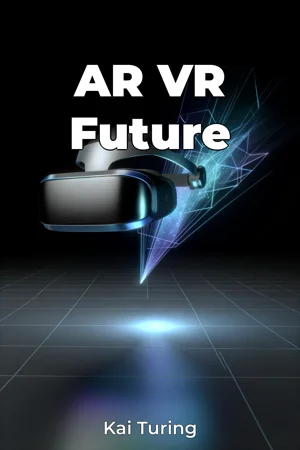
"AR VR Future" examines how augmented and virtual reality technologies are fundamentally transforming human interaction, work environments, and entertainment platforms. The book presents a data-driven analysis of immersive technologies' impact on society, backed by current research and industry applications. The work explores three primary themes: the technical evolution of AR/VR systems, their current implementation across industries, and the projected developments that will shape human-computer interaction over the next decade. Through careful examination of case studies and research data, the book demonstrates how these technologies are moving beyond gaming and entertainment to revolutionize fields including healthcare, education, and industrial design. The historical context begins with early virtual reality experiments in the 1960s, tracking the technology's development through to current-generation headsets and augmented reality applications. This progression provides readers with essential background to understand both the technical and social evolution of immersive technologies. Central to the book's thesis is the argument that AR/VR represents not merely new display technologies, but rather a fundamental shift in human-computer interaction that will reshape how we process information, communicate, and perform complex tasks. This position is supported by extensive research from cognitive science, computer engineering, and workplace efficiency studies. The content is structured in three main sections: First, a technical overview of AR/VR systems, including optics, tracking systems, and spatial computing. Second, an analysis of current implementation cases across multiple sectors, including manufacturing, medical training, and remote collaboration. Third, an examination of emerging trends and their implications for future applications. The research draws from multiple sources, including academic studies, industry white papers, and direct interviews with technology developers and early adopters. The book incorporates data from longitudinal studies on user adaptation and productivity impacts in workplace implementations. Interdisciplinary connections link computer science with cognitive psychology, examining how immersive technologies align with human perception and learning processes. The work also explores connections with architectural design and educational theory, demonstrating how spatial computing influences physical and virtual space design. The book maintains an analytical tone, presenting information through a combination of technical explanation, case studies, and data analysis. While technical concepts are thoroughly explained, the writing remains accessible to readers with basic technology literacy. The target audience includes technology professionals, business strategists, and educators interested in understanding and implementing immersive technologies. The book serves both as a comprehensive overview for newcomers and a detailed reference for practitioners. Within the technology genre, the book adheres to conventions of evidence-based analysis while incorporating elements of forward-looking technology assessment. It addresses current limitations in AR/VR technology, including hardware constraints, user comfort issues, and social acceptance barriers. Practical applications are emphasized throughout, with specific guidance on assessing organizational readiness for AR/VR implementation, selecting appropriate solutions, and measuring success metrics. The book addresses ongoing debates regarding privacy, digital rights, and the social implications of widespread AR/VR adoption. The scope encompasses current commercial technologies while extending to anticipated developments within the next five years, based on research pipelines and industry roadmaps. The work maintains objectivity when discussing competing technical standards and platforms, focusing on capabilities and use cases rather than specific products.
"AR VR Future" examines how augmented and virtual reality technologies are fundamentally transforming human interaction, work environments, and entertainment platforms. The book presents a data-driven analysis of immersive technologies' impact on society, backed by current research and industry applications. The work explores three primary themes: the technical evolution of AR/VR systems, their current implementation across industries, and the projected developments that will shape human-computer interaction over the next decade. Through careful examination of case studies and research data, the book demonstrates how these technologies are moving beyond gaming and entertainment to revolutionize fields including healthcare, education, and industrial design. The historical context begins with early virtual reality experiments in the 1960s, tracking the technology's development through to current-generation headsets and augmented reality applications. This progression provides readers with essential background to understand both the technical and social evolution of immersive technologies. Central to the book's thesis is the argument that AR/VR represents not merely new display technologies, but rather a fundamental shift in human-computer interaction that will reshape how we process information, communicate, and perform complex tasks. This position is supported by extensive research from cognitive science, computer engineering, and workplace efficiency studies. The content is structured in three main sections: First, a technical overview of AR/VR systems, including optics, tracking systems, and spatial computing. Second, an analysis of current implementation cases across multiple sectors, including manufacturing, medical training, and remote collaboration. Third, an examination of emerging trends and their implications for future applications. The research draws from multiple sources, including academic studies, industry white papers, and direct interviews with technology developers and early adopters. The book incorporates data from longitudinal studies on user adaptation and productivity impacts in workplace implementations. Interdisciplinary connections link computer science with cognitive psychology, examining how immersive technologies align with human perception and learning processes. The work also explores connections with architectural design and educational theory, demonstrating how spatial computing influences physical and virtual space design. The book maintains an analytical tone, presenting information through a combination of technical explanation, case studies, and data analysis. While technical concepts are thoroughly explained, the writing remains accessible to readers with basic technology literacy. The target audience includes technology professionals, business strategists, and educators interested in understanding and implementing immersive technologies. The book serves both as a comprehensive overview for newcomers and a detailed reference for practitioners. Within the technology genre, the book adheres to conventions of evidence-based analysis while incorporating elements of forward-looking technology assessment. It addresses current limitations in AR/VR technology, including hardware constraints, user comfort issues, and social acceptance barriers. Practical applications are emphasized throughout, with specific guidance on assessing organizational readiness for AR/VR implementation, selecting appropriate solutions, and measuring success metrics. The book addresses ongoing debates regarding privacy, digital rights, and the social implications of widespread AR/VR adoption. The scope encompasses current commercial technologies while extending to anticipated developments within the next five years, based on research pipelines and industry roadmaps. The work maintains objectivity when discussing competing technical standards and platforms, focusing on capabilities and use cases rather than specific products.
"AR VR Future" presents a comprehensive exploration of how augmented and virtual reality technologies are reshaping our world across multiple domains. The book navigates through three key areas: the technical foundations of AR/VR systems, their current real-world applications, and the future trajectory of human-computer interaction. By tracing the evolution from 1960s experiments to today's sophisticated headsets, it provides readers with crucial context for understanding these transformative technologies. The book stands out through its data-driven approach, combining academic research, industry studies, and direct interviews to demonstrate how AR/VR transcends gaming to revolutionize healthcare, education, and industrial design. Through detailed case studies and longitudinal research, readers gain insight into practical implementations and their measurable impacts on workplace productivity. The analysis of cognitive science and spatial computing reveals how these technologies align with human perception and learning processes. What makes this work particularly valuable is its balanced treatment of both technical and social aspects, addressing current limitations while exploring future possibilities. The content progresses logically from technical fundamentals through real-world applications to emerging trends, making it accessible to both newcomers and practitioners. By incorporating interdisciplinary perspectives and practical implementation guidance, the book serves as both a comprehensive primer and a detailed reference for anyone interested in the future of immersive technologies.
Book Details
ISBN
9788233942472
Publisher
Publifye AS
Your Licenses
You don't own any licenses for this book
Purchase a license below to unlock this book and download the EPUB.
Purchase License
Select a tier to unlock this book
Need bulk licensing?
Contact us for enterprise agreements.