
About This Book
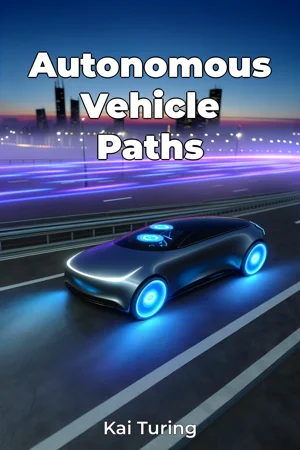
In "Autonomous Vehicle Paths," readers encounter a data-driven exploration of how self-driving technology is fundamentally reshaping transportation systems and public safety protocols. The book opens with a pivotal question: How will the integration of autonomous vehicles transform not just our roads, but the very fabric of human mobility? The work systematically examines three core topics: the technical architecture of autonomous systems, the evolution of transportation safety frameworks, and the socioeconomic implications of widespread autonomous vehicle adoption. These intersecting themes provide readers with a comprehensive understanding of both current capabilities and future trajectories in self-driving technology. Drawing from a decade of research and development in the automotive and technology sectors, the book establishes its foundation in the historical context of vehicle automation, beginning with early driver assistance systems and progressing to contemporary full autonomy initiatives. The central thesis posits that autonomous vehicles represent not merely a technological advancement, but a paradigm shift in how societies approach transportation safety and efficiency. The content is structured in three major sections. The first addresses the technical infrastructure, including sensor technologies, decision-making algorithms, and safety validation protocols. The second section examines real-world implementation challenges, from regulatory frameworks to public acceptance barriers. The final section projects future developments and necessary adaptations in urban planning and transportation policy. Supporting evidence is drawn from multiple sources, including technical documentation from leading autonomous vehicle manufacturers, accident statistics from transportation safety boards, and peer-reviewed research from transportation science journals. The book incorporates case studies from early autonomous vehicle deployments in various global markets. The work connects transportation technology with urban planning, computer science, and behavioral psychology, demonstrating how these disciplines contribute to understanding and implementing autonomous systems. The author employs a methodical, research-based approach while maintaining accessibility for readers with limited technical background. The target audience includes transportation professionals, urban planners, policy makers, and technology enthusiasts seeking to understand the comprehensive impact of autonomous vehicles. The writing style balances technical precision with clear explanations, making complex concepts accessible without oversimplification. Practical applications discussed include infrastructure planning requirements, safety protocol development, and transition strategies for mixed autonomous and human-driven environments. The book addresses current debates regarding liability frameworks, ethical decision-making in autonomous systems, and the role of human oversight in automated transportation. The scope encompasses current technology capabilities, near-term developments (5-10 years), and long-term implications, while acknowledging limitations in predicting technological advancement rates and social adaptation patterns. It maintains objectivity when discussing competing technological approaches and implementation strategies. The work stands out through its integration of technical analysis with practical implementation considerations, offering readers both theoretical understanding and actionable insights. It addresses ongoing controversies in the field, including debates over safety validation methods, privacy concerns, and the economic impact on traditional transportation sectors. Throughout its chapters, the book maintains focus on evidence-based analysis while acknowledging the dynamic nature of autonomous vehicle development. This approach provides readers with a solid foundation for understanding both the current state and future potential of self-driving technology in transforming transportation systems.
In "Autonomous Vehicle Paths," readers encounter a data-driven exploration of how self-driving technology is fundamentally reshaping transportation systems and public safety protocols. The book opens with a pivotal question: How will the integration of autonomous vehicles transform not just our roads, but the very fabric of human mobility? The work systematically examines three core topics: the technical architecture of autonomous systems, the evolution of transportation safety frameworks, and the socioeconomic implications of widespread autonomous vehicle adoption. These intersecting themes provide readers with a comprehensive understanding of both current capabilities and future trajectories in self-driving technology. Drawing from a decade of research and development in the automotive and technology sectors, the book establishes its foundation in the historical context of vehicle automation, beginning with early driver assistance systems and progressing to contemporary full autonomy initiatives. The central thesis posits that autonomous vehicles represent not merely a technological advancement, but a paradigm shift in how societies approach transportation safety and efficiency. The content is structured in three major sections. The first addresses the technical infrastructure, including sensor technologies, decision-making algorithms, and safety validation protocols. The second section examines real-world implementation challenges, from regulatory frameworks to public acceptance barriers. The final section projects future developments and necessary adaptations in urban planning and transportation policy. Supporting evidence is drawn from multiple sources, including technical documentation from leading autonomous vehicle manufacturers, accident statistics from transportation safety boards, and peer-reviewed research from transportation science journals. The book incorporates case studies from early autonomous vehicle deployments in various global markets. The work connects transportation technology with urban planning, computer science, and behavioral psychology, demonstrating how these disciplines contribute to understanding and implementing autonomous systems. The author employs a methodical, research-based approach while maintaining accessibility for readers with limited technical background. The target audience includes transportation professionals, urban planners, policy makers, and technology enthusiasts seeking to understand the comprehensive impact of autonomous vehicles. The writing style balances technical precision with clear explanations, making complex concepts accessible without oversimplification. Practical applications discussed include infrastructure planning requirements, safety protocol development, and transition strategies for mixed autonomous and human-driven environments. The book addresses current debates regarding liability frameworks, ethical decision-making in autonomous systems, and the role of human oversight in automated transportation. The scope encompasses current technology capabilities, near-term developments (5-10 years), and long-term implications, while acknowledging limitations in predicting technological advancement rates and social adaptation patterns. It maintains objectivity when discussing competing technological approaches and implementation strategies. The work stands out through its integration of technical analysis with practical implementation considerations, offering readers both theoretical understanding and actionable insights. It addresses ongoing controversies in the field, including debates over safety validation methods, privacy concerns, and the economic impact on traditional transportation sectors. Throughout its chapters, the book maintains focus on evidence-based analysis while acknowledging the dynamic nature of autonomous vehicle development. This approach provides readers with a solid foundation for understanding both the current state and future potential of self-driving technology in transforming transportation systems.
"Autonomous Vehicle Paths" offers a comprehensive exploration of how self-driving technology is revolutionizing transportation systems and safety protocols. The book expertly weaves together technical insights, safety considerations, and socioeconomic implications to present a holistic view of autonomous vehicle development and its impact on society. Through a methodical analysis of sensor technologies, decision-making algorithms, and real-world implementation challenges, readers gain a deep understanding of both current capabilities and future possibilities in vehicle automation. The book's unique strength lies in its three-part structure, beginning with technical infrastructure fundamentals before progressing to practical implementation challenges and future projections. Drawing from a decade of research across automotive and technology sectors, it presents compelling evidence through case studies from global markets and data from transportation safety boards. Particularly fascinating are the discussions on how early driver assistance systems evolved into contemporary full autonomy initiatives, and how urban planning must adapt to accommodate this technological shift. Written for transportation professionals, urban planners, and technology enthusiasts, the book maintains an accessible approach while delving into complex topics. It addresses crucial debates surrounding liability frameworks and ethical decision-making in autonomous systems, while providing actionable insights for mixed autonomous and human-driven environments. By connecting transportation technology with urban planning and behavioral psychology, it offers readers a unique perspective on how autonomous vehicles will reshape not just our roads, but the entire framework of human mobility.
Book Details
ISBN
9788233942397
Publisher
Publifye AS
Your Licenses
You don't own any licenses for this book
Purchase a license below to unlock this book and download the EPUB.
Purchase License
Select a tier to unlock this book
Need bulk licensing?
Contact us for enterprise agreements.