
About This Book
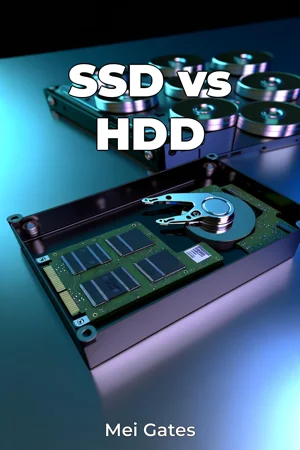
"SSD vs HDD" presents a comprehensive technical analysis of modern storage technologies, addressing the crucial decision that both professionals and consumers face when selecting data storage solutions. The book examines how solid-state drives (SSDs) and hard disk drives (HDDs) compare across essential metrics that impact computing performance and business operations. The work begins by establishing the fundamental architectural differences between SSDs, which use flash memory chips, and HDDs, which rely on spinning magnetic platters. This foundation helps readers understand how these distinct approaches to data storage influence real-world performance characteristics. The historical context traces the evolution from the first HDDs in the 1950s to the emergence of consumer SSDs in the early 2000s, providing readers with necessary background knowledge. The book is structured around three primary pillars: speed considerations, reliability factors, and cost implications. The speed analysis delves into read/write speeds, random access times, and input/output operations per second (IOPS), supported by benchmark data from industry-standard testing protocols. The reliability section examines mean time between failures (MTBF), wear patterns, and environmental factors affecting each technology. The cost analysis covers price-per-gigabyte metrics, total cost of ownership, and long-term value considerations. Technical evidence is drawn from peer-reviewed research, manufacturer specifications, and independent laboratory testing. The book includes data from enterprise deployment case studies, demonstrating real-world performance in various computing environments. This empirical approach is complemented by practical insights from system administrators and IT professionals who manage large-scale storage implementations. The work connects to several related fields, including data center management, computer engineering, and business technology strategy. These intersections help readers understand storage decisions within broader technological and organizational contexts. The book maintains an objective, technical tone while remaining accessible to readers with basic IT knowledge. Practical applications are emphasized throughout, with specific recommendations for different use cases: personal computing, small business operations, and enterprise-level implementations. The content addresses current industry trends, including the rising adoption of NVMe protocols, hybrid storage solutions, and the impact of storage choices on energy consumption and environmental sustainability. The target audience includes IT professionals, system administrators, technology decision-makers, and informed consumers. The book provides decision frameworks and comparative matrices to assist readers in making informed storage choices based on their specific requirements and constraints. While maintaining technical accuracy, the book acknowledges ongoing debates in the field, such as the future role of emerging storage technologies and the balance between performance and cost in different computing environments. It addresses common misconceptions about both technologies, particularly regarding lifespan and reliability. The scope focuses specifically on current-generation SSDs and HDDs, with limited discussion of emerging technologies like PCM (Phase Change Memory) and HAMR (Heat-Assisted Magnetic Recording). This targeted approach allows for detailed analysis of proven technologies while acknowledging future developments that may impact storage decisions. The book concludes by providing practical guidelines for storage selection based on specific use cases, workload types, and budget constraints, enabling readers to apply the knowledge directly to their storage decisions.
"SSD vs HDD" presents a comprehensive technical analysis of modern storage technologies, addressing the crucial decision that both professionals and consumers face when selecting data storage solutions. The book examines how solid-state drives (SSDs) and hard disk drives (HDDs) compare across essential metrics that impact computing performance and business operations. The work begins by establishing the fundamental architectural differences between SSDs, which use flash memory chips, and HDDs, which rely on spinning magnetic platters. This foundation helps readers understand how these distinct approaches to data storage influence real-world performance characteristics. The historical context traces the evolution from the first HDDs in the 1950s to the emergence of consumer SSDs in the early 2000s, providing readers with necessary background knowledge. The book is structured around three primary pillars: speed considerations, reliability factors, and cost implications. The speed analysis delves into read/write speeds, random access times, and input/output operations per second (IOPS), supported by benchmark data from industry-standard testing protocols. The reliability section examines mean time between failures (MTBF), wear patterns, and environmental factors affecting each technology. The cost analysis covers price-per-gigabyte metrics, total cost of ownership, and long-term value considerations. Technical evidence is drawn from peer-reviewed research, manufacturer specifications, and independent laboratory testing. The book includes data from enterprise deployment case studies, demonstrating real-world performance in various computing environments. This empirical approach is complemented by practical insights from system administrators and IT professionals who manage large-scale storage implementations. The work connects to several related fields, including data center management, computer engineering, and business technology strategy. These intersections help readers understand storage decisions within broader technological and organizational contexts. The book maintains an objective, technical tone while remaining accessible to readers with basic IT knowledge. Practical applications are emphasized throughout, with specific recommendations for different use cases: personal computing, small business operations, and enterprise-level implementations. The content addresses current industry trends, including the rising adoption of NVMe protocols, hybrid storage solutions, and the impact of storage choices on energy consumption and environmental sustainability. The target audience includes IT professionals, system administrators, technology decision-makers, and informed consumers. The book provides decision frameworks and comparative matrices to assist readers in making informed storage choices based on their specific requirements and constraints. While maintaining technical accuracy, the book acknowledges ongoing debates in the field, such as the future role of emerging storage technologies and the balance between performance and cost in different computing environments. It addresses common misconceptions about both technologies, particularly regarding lifespan and reliability. The scope focuses specifically on current-generation SSDs and HDDs, with limited discussion of emerging technologies like PCM (Phase Change Memory) and HAMR (Heat-Assisted Magnetic Recording). This targeted approach allows for detailed analysis of proven technologies while acknowledging future developments that may impact storage decisions. The book concludes by providing practical guidelines for storage selection based on specific use cases, workload types, and budget constraints, enabling readers to apply the knowledge directly to their storage decisions.
"SSD vs HDD" delivers a thorough examination of modern data storage technologies, helping readers understand the critical differences between solid-state drives and traditional hard disk drives. The book navigates through the fundamental architectural distinctions between these technologies, tracing their evolution from the earliest HDDs of the 1950s to today's advanced storage solutions, while maintaining a clear focus on practical decision-making factors. The analysis is structured around three key areas: performance metrics (including read/write speeds and IOPS), reliability considerations (examining failure rates and wear patterns), and cost implications (analyzing price-per-gigabyte and total ownership costs). By incorporating real-world case studies and empirical data from enterprise deployments, the book brings technical concepts to life through practical examples. The content is particularly valuable for IT professionals and decision-makers who need to make informed choices about storage solutions for various computing environments. What sets this work apart is its balanced approach to technical depth and accessibility, supported by benchmark data and independent laboratory testing results. The book addresses current industry trends, including NVMe protocols and hybrid storage solutions, while providing specific recommendations for different use cases - from personal computing to enterprise-level implementations. Through decision frameworks and comparative matrices, readers gain practical tools for evaluating storage options based on their specific needs and constraints, making complex technical decisions more manageable.
Book Details
ISBN
9788233942311
Publisher
Publifye AS
Your Licenses
You don't own any licenses for this book
Purchase a license below to unlock this book and download the EPUB.
Purchase License
Select a tier to unlock this book
Need bulk licensing?
Contact us for enterprise agreements.