
About This Book
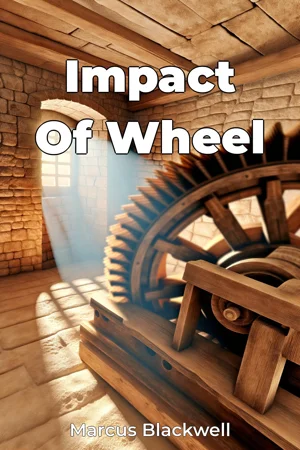
"Impact of Wheel" examines how a single mechanical innovation catalyzed humanity's advancement from early settlements to modern civilization. Through archaeological evidence and historical records, this comprehensive analysis reveals how the wheel transformed not just transportation, but the fundamental structure of human society. The book traces three primary threads: the wheel's role in revolutionizing agricultural practices, its impact on early industrial development, and its influence on trade networks and cultural exchange. These interconnected themes demonstrate how mechanical advantage translated into societal advancement across continents and millennia. Beginning with archaeological findings from Mesopotamia circa 3500 BCE, the narrative establishes the context of early wheel development, from initial potter's wheels to the first wheeled transport vehicles. The book presents evidence from multiple civilizations, including the Indus Valley, ancient China, and pre-Columbian Americas, offering a comparative analysis of parallel and divergent technological developments. The central thesis argues that the wheel served as both a technological catalyst and a metaphorical blueprint for mechanical innovation, inspiring countless derivative technologies that expanded human capabilities. This argument is supported through detailed technical analyses, archaeological data, and historical records from diverse sources. The content progresses through three major sections: First, it examines the mechanical principles and early applications of the wheel in pottery and transport. Second, it analyzes how wheeled technology transformed agriculture through innovations like water wheels and mechanical mills. Third, it explores the wheel's role in industrial development, from simple machines to complex gear systems. Research methodology combines archaeological findings, engineering analysis, and historical documentation. The book incorporates recent discoveries from sites across Eurasia, advanced materials analysis of ancient artifacts, and computational models of early wheel designs. The work connects mechanical engineering principles with anthropological insights and economic history, demonstrating how technological innovation drives societal change. It explores the relationship between wheel-based technologies and the development of urban centers, trade routes, and military capabilities. Rather than presenting a purely chronological history, the book employs a systems-thinking approach, examining how wheel-based innovations created cascading effects across societies. This analytical framework provides readers with tools to understand how technological advances reshape civilizations. Written in an analytical style that balances technical detail with accessible explanations, the book serves scholars, engineers, and general readers interested in technological history. It provides detailed technical drawings, archaeological photographs, and historical illustrations to support its arguments. The target audience includes historians, engineers, archaeologists, and readers interested in understanding how fundamental innovations shape human progress. The book's interdisciplinary approach makes it valuable for both academic study and professional reference. Particular attention is given to the engineering principles that made the wheel effective in different applications, including detailed analysis of materials, geometric principles, and mechanical advantages. The book addresses ongoing debates about the wheel's origins and its absence in some advanced civilizations. While focusing primarily on pre-industrial applications, the work concludes by examining how wheel-based principles continue to influence modern mechanical design and engineering. It demonstrates how understanding this fundamental innovation remains relevant for contemporary technological development. The book maintains objectivity when discussing competing theories about the wheel's origins and development, presenting evidence for various viewpoints while acknowledging areas where historical records remain incomplete.
"Impact of Wheel" examines how a single mechanical innovation catalyzed humanity's advancement from early settlements to modern civilization. Through archaeological evidence and historical records, this comprehensive analysis reveals how the wheel transformed not just transportation, but the fundamental structure of human society. The book traces three primary threads: the wheel's role in revolutionizing agricultural practices, its impact on early industrial development, and its influence on trade networks and cultural exchange. These interconnected themes demonstrate how mechanical advantage translated into societal advancement across continents and millennia. Beginning with archaeological findings from Mesopotamia circa 3500 BCE, the narrative establishes the context of early wheel development, from initial potter's wheels to the first wheeled transport vehicles. The book presents evidence from multiple civilizations, including the Indus Valley, ancient China, and pre-Columbian Americas, offering a comparative analysis of parallel and divergent technological developments. The central thesis argues that the wheel served as both a technological catalyst and a metaphorical blueprint for mechanical innovation, inspiring countless derivative technologies that expanded human capabilities. This argument is supported through detailed technical analyses, archaeological data, and historical records from diverse sources. The content progresses through three major sections: First, it examines the mechanical principles and early applications of the wheel in pottery and transport. Second, it analyzes how wheeled technology transformed agriculture through innovations like water wheels and mechanical mills. Third, it explores the wheel's role in industrial development, from simple machines to complex gear systems. Research methodology combines archaeological findings, engineering analysis, and historical documentation. The book incorporates recent discoveries from sites across Eurasia, advanced materials analysis of ancient artifacts, and computational models of early wheel designs. The work connects mechanical engineering principles with anthropological insights and economic history, demonstrating how technological innovation drives societal change. It explores the relationship between wheel-based technologies and the development of urban centers, trade routes, and military capabilities. Rather than presenting a purely chronological history, the book employs a systems-thinking approach, examining how wheel-based innovations created cascading effects across societies. This analytical framework provides readers with tools to understand how technological advances reshape civilizations. Written in an analytical style that balances technical detail with accessible explanations, the book serves scholars, engineers, and general readers interested in technological history. It provides detailed technical drawings, archaeological photographs, and historical illustrations to support its arguments. The target audience includes historians, engineers, archaeologists, and readers interested in understanding how fundamental innovations shape human progress. The book's interdisciplinary approach makes it valuable for both academic study and professional reference. Particular attention is given to the engineering principles that made the wheel effective in different applications, including detailed analysis of materials, geometric principles, and mechanical advantages. The book addresses ongoing debates about the wheel's origins and its absence in some advanced civilizations. While focusing primarily on pre-industrial applications, the work concludes by examining how wheel-based principles continue to influence modern mechanical design and engineering. It demonstrates how understanding this fundamental innovation remains relevant for contemporary technological development. The book maintains objectivity when discussing competing theories about the wheel's origins and development, presenting evidence for various viewpoints while acknowledging areas where historical records remain incomplete.
"Impact of Wheel" presents a fascinating exploration of how this fundamental mechanical innovation transformed human civilization from ancient settlements to the modern world. This comprehensive analysis weaves together archaeological evidence and historical records to demonstrate how the wheel's influence extended far beyond transportation, fundamentally reshaping agriculture, industry, and cultural exchange across continents and millennia. Through a systematic examination beginning in Mesopotamia around 3500 BCE, the book reveals how the wheel evolved from simple potter's wheels to sophisticated mechanical systems. The narrative explores three interconnected themes: agricultural revolution through innovations like water wheels and mills, industrial development via complex gear systems, and the expansion of trade networks that facilitated cultural exchange. Archaeological findings from diverse civilizations, including the Indus Valley and ancient China, provide compelling evidence of how different societies adapted and advanced wheel technology. The book employs a unique systems-thinking approach, demonstrating how wheel-based innovations created cascading effects across societies. Rather than simply presenting a chronological history, it combines engineering principles with anthropological insights to show how this mechanical advantage translated into societal advancement. Technical drawings, archaeological photographs, and historical illustrations support the analysis, making complex engineering concepts accessible to both scholars and general readers interested in understanding how fundamental innovations shape human progress.
Book Details
ISBN
9788233942168
Publisher
Publifye AS
Your Licenses
You don't own any licenses for this book
Purchase a license below to unlock this book and download the EPUB.
Purchase License
Select a tier to unlock this book
Need bulk licensing?
Contact us for enterprise agreements.