
About This Book
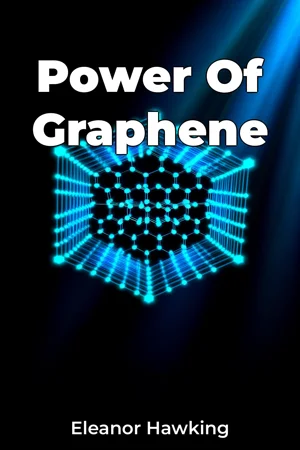
"Power of Graphene" explores the scientific foundations and transformative potential of a material that consists of a single layer of carbon atoms arranged in a hexagonal lattice. This comprehensive examination reveals how graphene's atomic structure leads to its distinct properties and its role in advancing multiple technological fields. The book begins by establishing graphene's discovery context, including the groundbreaking 2004 isolation of the material by Andre Geim and Konstantin Novoselov, which earned them the 2010 Nobel Prize in Physics. This historical framework sets the stage for understanding graphene's significance in modern materials science and technology. Three core sections form the book's structure. The first examines graphene's fundamental properties: its exceptional electrical conductivity, where electrons move with minimal resistance; its thermal conductivity, which exceeds that of diamond; and its mechanical strength, measured at 200 times stronger than steel while remaining incredibly flexible. The second section analyzes how these properties emerge from graphene's unique two-dimensional structure and quantum mechanical behavior. The third section presents current and potential applications across various industries. The book presents evidence through detailed laboratory findings, experimental data, and real-world implementation cases. It incorporates research from leading institutions worldwide, including breakthrough studies in electron mobility, heat dissipation, and structural integrity. Technical illustrations and atomic-scale imaging help readers visualize concepts and mechanisms. Interdisciplinary connections link physics with materials science, electronics, and energy technology. The text explains how graphene's properties influence developments in semiconductor technology, battery design, and structural materials. These connections demonstrate graphene's broad impact across scientific and engineering disciplines. The writing maintains a technical yet accessible approach, using clear explanations and relevant analogies to convey complex concepts. While the content includes advanced physics concepts, care is taken to build understanding progressively, making the material accessible to readers with a basic science background. Practical applications discussed include next-generation electronic devices, energy storage systems, and structural composites. The book examines graphene's role in developing faster transistors, more efficient solar cells, and stronger lightweight materials. It addresses current technological limitations and explores potential solutions through graphene implementation. The target audience includes physics students, electronics engineers, materials scientists, and technology professionals seeking to understand graphene's capabilities and applications. The book serves as both an educational resource and a practical guide for implementing graphene-based solutions. The text acknowledges ongoing challenges in mass production, cost-effectiveness, and quality control of graphene materials. It presents current debates regarding the practical limitations of graphene applications and various approaches to overcome these obstacles. The scope encompasses fundamental physics principles, materials science concepts, and engineering applications, while maintaining focus on graphene's most significant and well-documented properties and uses. This focused approach ensures depth in critical areas while avoiding speculation about unproven applications. This book provides readers with the theoretical foundation and practical knowledge needed to understand and potentially work with graphene in research or industrial applications. It presents graphene not just as a scientific curiosity but as a practical material with specific, achievable applications in multiple fields.
"Power of Graphene" explores the scientific foundations and transformative potential of a material that consists of a single layer of carbon atoms arranged in a hexagonal lattice. This comprehensive examination reveals how graphene's atomic structure leads to its distinct properties and its role in advancing multiple technological fields. The book begins by establishing graphene's discovery context, including the groundbreaking 2004 isolation of the material by Andre Geim and Konstantin Novoselov, which earned them the 2010 Nobel Prize in Physics. This historical framework sets the stage for understanding graphene's significance in modern materials science and technology. Three core sections form the book's structure. The first examines graphene's fundamental properties: its exceptional electrical conductivity, where electrons move with minimal resistance; its thermal conductivity, which exceeds that of diamond; and its mechanical strength, measured at 200 times stronger than steel while remaining incredibly flexible. The second section analyzes how these properties emerge from graphene's unique two-dimensional structure and quantum mechanical behavior. The third section presents current and potential applications across various industries. The book presents evidence through detailed laboratory findings, experimental data, and real-world implementation cases. It incorporates research from leading institutions worldwide, including breakthrough studies in electron mobility, heat dissipation, and structural integrity. Technical illustrations and atomic-scale imaging help readers visualize concepts and mechanisms. Interdisciplinary connections link physics with materials science, electronics, and energy technology. The text explains how graphene's properties influence developments in semiconductor technology, battery design, and structural materials. These connections demonstrate graphene's broad impact across scientific and engineering disciplines. The writing maintains a technical yet accessible approach, using clear explanations and relevant analogies to convey complex concepts. While the content includes advanced physics concepts, care is taken to build understanding progressively, making the material accessible to readers with a basic science background. Practical applications discussed include next-generation electronic devices, energy storage systems, and structural composites. The book examines graphene's role in developing faster transistors, more efficient solar cells, and stronger lightweight materials. It addresses current technological limitations and explores potential solutions through graphene implementation. The target audience includes physics students, electronics engineers, materials scientists, and technology professionals seeking to understand graphene's capabilities and applications. The book serves as both an educational resource and a practical guide for implementing graphene-based solutions. The text acknowledges ongoing challenges in mass production, cost-effectiveness, and quality control of graphene materials. It presents current debates regarding the practical limitations of graphene applications and various approaches to overcome these obstacles. The scope encompasses fundamental physics principles, materials science concepts, and engineering applications, while maintaining focus on graphene's most significant and well-documented properties and uses. This focused approach ensures depth in critical areas while avoiding speculation about unproven applications. This book provides readers with the theoretical foundation and practical knowledge needed to understand and potentially work with graphene in research or industrial applications. It presents graphene not just as a scientific curiosity but as a practical material with specific, achievable applications in multiple fields.
"Power of Graphene" offers a comprehensive exploration of one of science's most remarkable materials: a single-layer carbon structure that's revolutionizing multiple technological fields. This accessible yet thorough examination delves into graphene's extraordinary properties, from its unparalleled electrical conductivity to its astounding strength—200 times stronger than steel while maintaining remarkable flexibility. The book traces graphene's journey from its Nobel Prize-winning discovery in 2004 to its current status as a cornerstone of modern materials science. The narrative progresses logically through three main sections, beginning with fundamental properties, moving to quantum mechanical behavior, and culminating in practical applications. Through detailed laboratory findings and experimental data, readers learn how graphene's unique two-dimensional hexagonal lattice structure gives rise to its exceptional characteristics, including thermal conductivity superior to diamond and unprecedented electron mobility. The book expertly bridges theoretical physics with real-world applications, demonstrating graphene's potential in next-generation electronics, energy storage, and structural materials. What sets this book apart is its balanced approach to technical content, making complex quantum mechanics and materials science concepts accessible to readers with basic scientific knowledge while maintaining academic rigor. By incorporating research from leading institutions and addressing current challenges in graphene production and implementation, it serves both as an educational resource and a practical guide for professionals in physics, electronics, and materials science who seek to understand and harness graphene's transformative potential.
Book Details
ISBN
9788233942090
Publisher
Publifye AS
Your Licenses
You don't own any licenses for this book
Purchase a license below to unlock this book and download the EPUB.
Purchase License
Select a tier to unlock this book
Need bulk licensing?
Contact us for enterprise agreements.