
About This Book
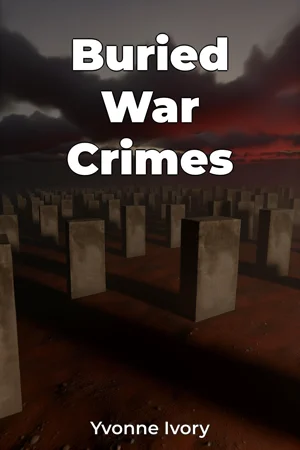
"Buried War Crimes" examines overlooked atrocities from 20th and 21st-century conflicts that have remained largely absent from mainstream historical narratives. Through declassified documents, witness testimonies, and forensic evidence, this investigative work brings to light systematic violations of international law and human rights that have shaped modern geopolitics. The book focuses on three primary cases: the systematic elimination of ethnic minorities in Southeast Asia during the 1960s, unreported mass killings in Central Africa during the 1980s, and covered-up civilian massacres in Eastern Europe during the 1990s. These events, while less known than prominent war crimes, demonstrate patterns of institutional denial, diplomatic compromise, and international complicity. Drawing from military archives, diplomatic cables, and survivor accounts, the narrative reconstructs these events within their historical context. The book argues that understanding these hidden atrocities is crucial for preventing future conflicts and addressing ongoing justice concerns. It demonstrates how political expediency often supersedes accountability, creating cycles of impunity that influence current international relations. The work is structured in three parts: first establishing the historical and legal framework of war crimes investigation, then examining each case study in detail, and finally analyzing the lasting impact on affected communities and international law. The research combines traditional historical methodology with modern forensic analysis and digital archive examination, providing multiple layers of verification for each documented incident. Military historians will find detailed tactical analyses of how these crimes were executed and concealed, while students of international law will benefit from examinations of legal precedents and jurisdictional challenges. The book connects military history with diplomatic studies, international law, and forensic science, offering a comprehensive approach to understanding war crimes investigation. The methodology emphasizes objective documentation over sensationalism, utilizing primary sources, including recently declassified military records, satellite imagery analysis, and ground-penetrating radar surveys of mass graves. This evidence-based approach distinguishes the work from more speculative treatments of similar subjects. Written in a structured, academic style with careful attention to documentation, the book maintains accessibility for general readers while meeting scholarly standards. It addresses an audience of military historians, international law practitioners, human rights advocates, and readers interested in understanding complex global conflicts. The scope spans from 1960 to 2000, focusing on conflicts that received limited international attention but had significant regional impacts. While the book acknowledges limitations in available evidence due to systematic document destruction and witness intimidation, it presents verifiable facts supported by multiple sources. Current practitioners in international law and human rights advocacy will find practical applications in the book's analysis of investigation techniques and legal precedents. The work contributes to ongoing debates about international justice mechanisms, the role of major powers in prosecuting war crimes, and the effectiveness of current international law frameworks. The research raises questions about selective justice in international courts and the influence of geopolitical interests on war crimes prosecution. It challenges common assumptions about historical documentation and demonstrates how modern technology and methodologies can uncover previously hidden atrocities. For military historians, legal scholars, and human rights advocates, this work provides essential insights into the mechanisms of war crimes concealment and investigation, while offering practical frameworks for understanding similar current situations.
"Buried War Crimes" examines overlooked atrocities from 20th and 21st-century conflicts that have remained largely absent from mainstream historical narratives. Through declassified documents, witness testimonies, and forensic evidence, this investigative work brings to light systematic violations of international law and human rights that have shaped modern geopolitics. The book focuses on three primary cases: the systematic elimination of ethnic minorities in Southeast Asia during the 1960s, unreported mass killings in Central Africa during the 1980s, and covered-up civilian massacres in Eastern Europe during the 1990s. These events, while less known than prominent war crimes, demonstrate patterns of institutional denial, diplomatic compromise, and international complicity. Drawing from military archives, diplomatic cables, and survivor accounts, the narrative reconstructs these events within their historical context. The book argues that understanding these hidden atrocities is crucial for preventing future conflicts and addressing ongoing justice concerns. It demonstrates how political expediency often supersedes accountability, creating cycles of impunity that influence current international relations. The work is structured in three parts: first establishing the historical and legal framework of war crimes investigation, then examining each case study in detail, and finally analyzing the lasting impact on affected communities and international law. The research combines traditional historical methodology with modern forensic analysis and digital archive examination, providing multiple layers of verification for each documented incident. Military historians will find detailed tactical analyses of how these crimes were executed and concealed, while students of international law will benefit from examinations of legal precedents and jurisdictional challenges. The book connects military history with diplomatic studies, international law, and forensic science, offering a comprehensive approach to understanding war crimes investigation. The methodology emphasizes objective documentation over sensationalism, utilizing primary sources, including recently declassified military records, satellite imagery analysis, and ground-penetrating radar surveys of mass graves. This evidence-based approach distinguishes the work from more speculative treatments of similar subjects. Written in a structured, academic style with careful attention to documentation, the book maintains accessibility for general readers while meeting scholarly standards. It addresses an audience of military historians, international law practitioners, human rights advocates, and readers interested in understanding complex global conflicts. The scope spans from 1960 to 2000, focusing on conflicts that received limited international attention but had significant regional impacts. While the book acknowledges limitations in available evidence due to systematic document destruction and witness intimidation, it presents verifiable facts supported by multiple sources. Current practitioners in international law and human rights advocacy will find practical applications in the book's analysis of investigation techniques and legal precedents. The work contributes to ongoing debates about international justice mechanisms, the role of major powers in prosecuting war crimes, and the effectiveness of current international law frameworks. The research raises questions about selective justice in international courts and the influence of geopolitical interests on war crimes prosecution. It challenges common assumptions about historical documentation and demonstrates how modern technology and methodologies can uncover previously hidden atrocities. For military historians, legal scholars, and human rights advocates, this work provides essential insights into the mechanisms of war crimes concealment and investigation, while offering practical frameworks for understanding similar current situations.
"Buried War Crimes" delves into previously undocumented atrocities from late 20th-century conflicts, bringing to light systematic human rights violations that have shaped modern international relations. Through meticulous research combining declassified military documents, witness testimonies, and cutting-edge forensic evidence, the book uncovers three major cases of concealed war crimes: ethnic minority eliminations in 1960s Southeast Asia, mass killings in 1980s Central Africa, and civilian massacres in 1990s Eastern Europe. The investigation employs a multifaceted approach, utilizing traditional historical research methods alongside modern forensic techniques and digital archive analysis. Rather than sensationalizing these tragic events, the book presents verified facts through primary sources, including recently declassified military records and satellite imagery. This methodical documentation reveals disturbing patterns of institutional denial and diplomatic compromise that have allowed perpetrators to escape justice. The narrative progresses logically through three sections, beginning with the foundational context of war crimes investigations, followed by detailed case studies, and concluding with an analysis of lasting impacts on affected communities and international law. What sets this work apart is its comprehensive integration of military history, international law, and forensic science, making it valuable for both academic researchers and practitioners in the field of human rights advocacy. The book demonstrates how political expediency often overshadows accountability, creating cycles of impunity that continue to influence contemporary global relations.
Book Details
ISBN
9788233941956
Publisher
Publifye AS
Your Licenses
You don't own any licenses for this book
Purchase a license below to unlock this book and download the EPUB.
Purchase License
Select a tier to unlock this book
Need bulk licensing?
Contact us for enterprise agreements.