
About This Book
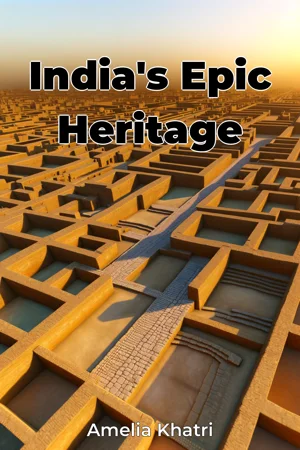
"India's Epic Heritage" presents a comprehensive exploration of the Indian subcontinent's historical development, beginning with a fundamental question: How did a land of diverse cultures, languages, and traditions evolve into one of the world's oldest continuous civilizations? The book systematically examines three primary spheres of Indian history: the evolution of social structures from the Indus Valley Civilization through the medieval period, the development of philosophical and religious thought systems, and the progression of artistic and architectural achievements across millennia. Through careful analysis of archaeological findings, historical documents, and cultural artifacts, the work traces India's transformation from early urban settlements to complex empires. The narrative begins with the sophisticated urban planning of Mohenjodaro and Harappa, moving through the Vedic period, the rise of Buddhism and Jainism, the Mauryan Empire, the Gupta Golden Age, and into the medieval sultanates and Mughal rule. The central thesis argues that India's historical significance lies not only in its political developments but in its continuous cultural synthesis - a process that created enduring philosophical, artistic, and social frameworks that influenced global civilization. This perspective is supported by extensive archaeological data, primary textual sources including the Vedas, Upanishads, and court chronicles, and architectural evidence from various periods. The book's structure follows a chronological progression while maintaining thematic coherence. It examines: - The development of social institutions and governance systems - The evolution of religious and philosophical traditions - The advancement of sciences, mathematics, and astronomy - The flourishing of literature, arts, and architecture Research methodology combines archaeological findings, epigraphic evidence, textual analysis of historical documents, and contemporary scholarly interpretations. The work incorporates recent discoveries and academic perspectives while acknowledging ongoing debates about historical interpretations. The book connects history with multiple disciplines, including sociology, religious studies, and economics, demonstrating how trade routes influenced cultural exchange and how philosophical ideas shaped social structures. It maintains an academic tone while remaining accessible to general readers interested in world history. This work is particularly relevant for students, educators, and readers seeking to understand India's role in global history. It addresses scholarly debates about periodization, the impact of various dynasties, and the interpretation of historical evidence while maintaining objectivity. The scope encompasses over 5,000 years of history, focusing on major developments while acknowledging regional variations. It examines how historical patterns influence contemporary India and South Asia's global relationships. The book addresses several ongoing historical debates, including the Aryan migration theory, the nature of ancient Indian democracy, and the impact of various foreign influences on Indian culture. It presents multiple viewpoints while providing readers with tools to evaluate historical evidence. For practitioners in fields such as international relations, cultural studies, and policy-making, the book offers valuable context for understanding South Asian perspectives and historical patterns that continue to influence regional dynamics. This work stands out through its integrated approach to political, cultural, and social history, offering readers a nuanced understanding of how India's past shapes its present and future role in global affairs.
"India's Epic Heritage" presents a comprehensive exploration of the Indian subcontinent's historical development, beginning with a fundamental question: How did a land of diverse cultures, languages, and traditions evolve into one of the world's oldest continuous civilizations? The book systematically examines three primary spheres of Indian history: the evolution of social structures from the Indus Valley Civilization through the medieval period, the development of philosophical and religious thought systems, and the progression of artistic and architectural achievements across millennia. Through careful analysis of archaeological findings, historical documents, and cultural artifacts, the work traces India's transformation from early urban settlements to complex empires. The narrative begins with the sophisticated urban planning of Mohenjodaro and Harappa, moving through the Vedic period, the rise of Buddhism and Jainism, the Mauryan Empire, the Gupta Golden Age, and into the medieval sultanates and Mughal rule. The central thesis argues that India's historical significance lies not only in its political developments but in its continuous cultural synthesis - a process that created enduring philosophical, artistic, and social frameworks that influenced global civilization. This perspective is supported by extensive archaeological data, primary textual sources including the Vedas, Upanishads, and court chronicles, and architectural evidence from various periods. The book's structure follows a chronological progression while maintaining thematic coherence. It examines: - The development of social institutions and governance systems - The evolution of religious and philosophical traditions - The advancement of sciences, mathematics, and astronomy - The flourishing of literature, arts, and architecture Research methodology combines archaeological findings, epigraphic evidence, textual analysis of historical documents, and contemporary scholarly interpretations. The work incorporates recent discoveries and academic perspectives while acknowledging ongoing debates about historical interpretations. The book connects history with multiple disciplines, including sociology, religious studies, and economics, demonstrating how trade routes influenced cultural exchange and how philosophical ideas shaped social structures. It maintains an academic tone while remaining accessible to general readers interested in world history. This work is particularly relevant for students, educators, and readers seeking to understand India's role in global history. It addresses scholarly debates about periodization, the impact of various dynasties, and the interpretation of historical evidence while maintaining objectivity. The scope encompasses over 5,000 years of history, focusing on major developments while acknowledging regional variations. It examines how historical patterns influence contemporary India and South Asia's global relationships. The book addresses several ongoing historical debates, including the Aryan migration theory, the nature of ancient Indian democracy, and the impact of various foreign influences on Indian culture. It presents multiple viewpoints while providing readers with tools to evaluate historical evidence. For practitioners in fields such as international relations, cultural studies, and policy-making, the book offers valuable context for understanding South Asian perspectives and historical patterns that continue to influence regional dynamics. This work stands out through its integrated approach to political, cultural, and social history, offering readers a nuanced understanding of how India's past shapes its present and future role in global affairs.
"India's Epic Heritage" presents a compelling journey through the evolution of one of the world's oldest continuous civilizations, unraveling how a land of remarkable diversity unified into a cohesive cultural powerhouse. The book masterfully weaves together three fundamental aspects of Indian history: social structures dating back to the Indus Valley Civilization, the development of philosophical and religious thought, and the progression of artistic and architectural achievements across millennia. Through meticulous examination of archaeological findings and historical documents, the narrative traces India's transformation from the sophisticated urban planning of Mohenjodaro and Harappa through the Vedic period, the rise of Buddhism and Jainism, and into the medieval sultanates. The book's unique strength lies in its exploration of India's continuous cultural synthesis, demonstrating how trade routes, philosophical ideas, and social structures intertwined to create enduring frameworks that influenced global civilization. The work progresses chronologically while maintaining thematic focus, examining everything from ancient governance systems to the advancement of sciences and mathematics. It addresses major scholarly debates, including the Aryan migration theory and the nature of ancient Indian democracy, while remaining accessible to general readers. By combining archaeological evidence with textual analysis and contemporary interpretations, the book offers a comprehensive understanding of how India's rich heritage continues to shape its role in global affairs.
Book Details
ISBN
9788233941840
Publisher
Publifye AS
Your Licenses
You don't own any licenses for this book
Purchase a license below to unlock this book and download the EPUB.
Purchase License
Select a tier to unlock this book
Need bulk licensing?
Contact us for enterprise agreements.