
About This Book
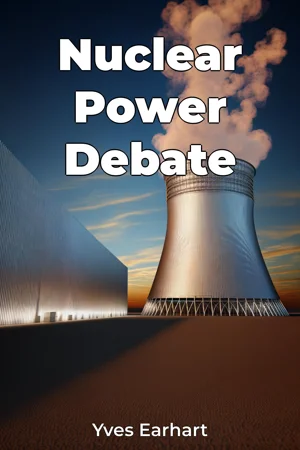
"Nuclear Power Debate" confronts one of the most critical energy policy decisions facing modern societies: the role of nuclear power in addressing climate change while ensuring public safety. Through comprehensive analysis of technical data, policy frameworks, and real-world case studies, this book examines the complex interplay between energy security, environmental protection, and public health. The work systematically analyzes three fundamental aspects of nuclear energy: operational safety protocols and risk assessment, long-term waste management solutions, and the policy mechanisms that govern nuclear power development. Drawing from five decades of industry data, including detailed studies of both successes and failures, the book provides readers with a foundation for understanding nuclear energy's place in the contemporary energy landscape. The central argument maintains that nuclear power decisions must be evaluated through an integrated framework considering scientific evidence, economic factors, and social implications. This approach reveals how different nations have reached varying conclusions about nuclear energy's role in their energy portfolios, from France's extensive nuclear program to Germany's planned phase-out. The book's structure progresses from technical fundamentals to policy applications. Initial chapters examine reactor designs, safety systems, and operational protocols, incorporating lessons learned from events at Three Mile Island, Chernobyl, and Fukushima. Middle sections address waste management challenges, exploring current storage methods and emerging technologies for spent fuel handling. Final chapters analyze policy frameworks and decision-making processes across different national contexts. Supporting evidence includes peer-reviewed research from nuclear physics, engineering, and environmental science, complemented by economic analyses and policy studies. The work incorporates data from the International Atomic Energy Agency, national regulatory bodies, and independent research institutions, providing a comprehensive empirical foundation. The interdisciplinary approach connects nuclear science with environmental policy, economic planning, and risk management. This integration helps readers understand how technical decisions influence public policy and social outcomes. The book maintains an objective, evidence-based tone while acknowledging the legitimate concerns of both nuclear power advocates and critics. Unique to this work is its systematic comparison of nuclear power with other energy sources, examining full lifecycle impacts including construction, operation, decommissioning, and waste management. This analysis helps readers understand the relative advantages and disadvantages of different energy options within specific contexts. Written in clear, technical language accessible to educated non-specialists, the book serves policymakers, energy sector professionals, environmental advocates, and informed citizens seeking to understand nuclear power's role in energy policy. Rather than advocating for or against nuclear power, it provides analytical tools for evaluating nuclear energy decisions within specific contexts. The scope encompasses civilian nuclear power applications, intentionally excluding military applications and fusion research. The book addresses current debates including the role of new reactor designs, the economics of nuclear power versus renewable energy, and the challenges of waste storage site selection. Real-world applications include frameworks for evaluating energy policy decisions, understanding risk assessment methodologies, and participating in public discussions about energy infrastructure. The work concludes with case studies of successful nuclear program management and lessons learned from less successful experiences, providing practical insights for future decision-making.
"Nuclear Power Debate" confronts one of the most critical energy policy decisions facing modern societies: the role of nuclear power in addressing climate change while ensuring public safety. Through comprehensive analysis of technical data, policy frameworks, and real-world case studies, this book examines the complex interplay between energy security, environmental protection, and public health. The work systematically analyzes three fundamental aspects of nuclear energy: operational safety protocols and risk assessment, long-term waste management solutions, and the policy mechanisms that govern nuclear power development. Drawing from five decades of industry data, including detailed studies of both successes and failures, the book provides readers with a foundation for understanding nuclear energy's place in the contemporary energy landscape. The central argument maintains that nuclear power decisions must be evaluated through an integrated framework considering scientific evidence, economic factors, and social implications. This approach reveals how different nations have reached varying conclusions about nuclear energy's role in their energy portfolios, from France's extensive nuclear program to Germany's planned phase-out. The book's structure progresses from technical fundamentals to policy applications. Initial chapters examine reactor designs, safety systems, and operational protocols, incorporating lessons learned from events at Three Mile Island, Chernobyl, and Fukushima. Middle sections address waste management challenges, exploring current storage methods and emerging technologies for spent fuel handling. Final chapters analyze policy frameworks and decision-making processes across different national contexts. Supporting evidence includes peer-reviewed research from nuclear physics, engineering, and environmental science, complemented by economic analyses and policy studies. The work incorporates data from the International Atomic Energy Agency, national regulatory bodies, and independent research institutions, providing a comprehensive empirical foundation. The interdisciplinary approach connects nuclear science with environmental policy, economic planning, and risk management. This integration helps readers understand how technical decisions influence public policy and social outcomes. The book maintains an objective, evidence-based tone while acknowledging the legitimate concerns of both nuclear power advocates and critics. Unique to this work is its systematic comparison of nuclear power with other energy sources, examining full lifecycle impacts including construction, operation, decommissioning, and waste management. This analysis helps readers understand the relative advantages and disadvantages of different energy options within specific contexts. Written in clear, technical language accessible to educated non-specialists, the book serves policymakers, energy sector professionals, environmental advocates, and informed citizens seeking to understand nuclear power's role in energy policy. Rather than advocating for or against nuclear power, it provides analytical tools for evaluating nuclear energy decisions within specific contexts. The scope encompasses civilian nuclear power applications, intentionally excluding military applications and fusion research. The book addresses current debates including the role of new reactor designs, the economics of nuclear power versus renewable energy, and the challenges of waste storage site selection. Real-world applications include frameworks for evaluating energy policy decisions, understanding risk assessment methodologies, and participating in public discussions about energy infrastructure. The work concludes with case studies of successful nuclear program management and lessons learned from less successful experiences, providing practical insights for future decision-making.
"Nuclear Power Debate" offers a comprehensive examination of nuclear energy's role in addressing climate change while balancing safety concerns. The book navigates the complex intersection of energy security, environmental protection, and public health through a methodical analysis of operational safety, waste management, and policy frameworks. Drawing from five decades of industry data, it presents readers with an evidence-based foundation for understanding nuclear power's position in modern energy systems. The book uniquely approaches the subject by integrating technical expertise with practical policy implications, examining real-world cases from France's extensive nuclear program to Germany's phase-out decision. Through clear, accessible language, it explores critical events like Three Mile Island, Chernobyl, and Fukushima, using these incidents to illustrate the evolution of safety protocols and risk assessment strategies. The systematic comparison of nuclear power with other energy sources, including their full lifecycle impacts, provides readers with crucial context for understanding energy policy decisions. Progressing from technical fundamentals to policy applications, the book maintains an objective stance while addressing both the promises and challenges of nuclear energy. It synthesizes data from authoritative sources like the International Atomic Energy Agency and national regulatory bodies, making complex technical concepts accessible to educated non-specialists. This interdisciplinary approach helps readers understand how scientific evidence, economic factors, and social implications interconnect in shaping nuclear power decisions within specific national contexts.
Book Details
ISBN
9788233941703
Publisher
Publifye AS
Your Licenses
You don't own any licenses for this book
Purchase a license below to unlock this book and download the EPUB.
Purchase License
Select a tier to unlock this book
Need bulk licensing?
Contact us for enterprise agreements.