
About This Book
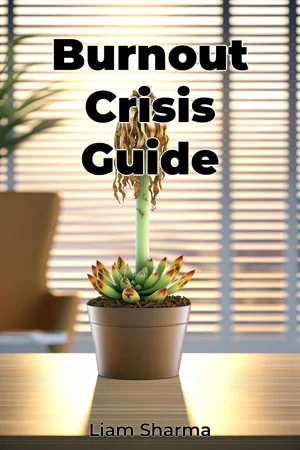
"Burnout Crisis Guide" addresses the escalating workplace health emergency that affects an estimated 77% of professionals across industries, presenting research-based solutions for individuals and organizations dealing with chronic workplace stress. Drawing from extensive occupational health studies and organizational psychology research, the book examines burnout through three principal lenses: systematic workplace factors, individual vulnerability patterns, and organizational culture impact. This multi-dimensional approach helps readers understand how burnout develops and persists in modern work environments. The work builds on foundational research from the 1970s, when occupational burnout was first identified, through current findings from major institutions including the World Health Organization and leading business schools. This historical perspective demonstrates how evolving workplace demands have intensified burnout risks in the digital age. The central thesis maintains that burnout is primarily a systemic issue rather than an individual failure, requiring coordinated interventions at both organizational and personal levels. This position challenges traditional wellness programs that place the burden of prevention solely on employees. The book's structure progresses through three major sections: First, it presents diagnostic frameworks for identifying burnout risk factors within organizations. Second, it examines evidence-based prevention strategies, including workflow redesign, boundary-setting protocols, and leadership practices. Third, it offers recovery methodologies for individuals and teams already experiencing burnout symptoms. Supporting evidence comes from multiple sources: longitudinal studies tracking burnout patterns across industries, case studies from Fortune 500 companies, and meta-analyses of intervention effectiveness. The research incorporates data from both traditional office environments and remote work settings. The content connects organizational psychology, neuroscience, and management theory, showing how stress affects cognitive function and decision-making capacity. It also explores links between workplace culture, productivity metrics, and employee well-being. The book's distinctive contribution lies in its integration of individual and organizational perspectives, providing both immediate tactical responses and long-term strategic solutions. It includes assessment tools for measuring organizational burnout risk and evaluating the effectiveness of interventions. Written in an analytical yet accessible style, the text balances academic rigor with practical application, using clear examples and implementable frameworks. While maintaining professional credibility, it avoids academic jargon that might impede understanding. The primary audience includes human resource professionals, organizational leaders, and individuals seeking to understand and address workplace burnout. The content serves both those in management positions and employees looking to navigate high-stress work environments. The book adheres to self-help and management genre conventions by providing actionable steps while maintaining a foundation in research and data. Each chapter includes practical exercises and implementation guides. While focusing primarily on corporate and professional settings, the book acknowledges its limitations regarding certain work environments, such as healthcare and education, which may require specialized approaches. Practical applications include burnout assessment protocols, intervention planning templates, and recovery strategies that can be implemented at both individual and organizational levels. These tools are designed to be adaptable across different organizational sizes and structures. The work addresses ongoing debates about remote work impact on burnout, the role of technology in workplace stress, and the balance between productivity demands and employee well-being. It presents evidence-based perspectives on these contemporary issues while acknowledging areas where research is still evolving.
"Burnout Crisis Guide" addresses the escalating workplace health emergency that affects an estimated 77% of professionals across industries, presenting research-based solutions for individuals and organizations dealing with chronic workplace stress. Drawing from extensive occupational health studies and organizational psychology research, the book examines burnout through three principal lenses: systematic workplace factors, individual vulnerability patterns, and organizational culture impact. This multi-dimensional approach helps readers understand how burnout develops and persists in modern work environments. The work builds on foundational research from the 1970s, when occupational burnout was first identified, through current findings from major institutions including the World Health Organization and leading business schools. This historical perspective demonstrates how evolving workplace demands have intensified burnout risks in the digital age. The central thesis maintains that burnout is primarily a systemic issue rather than an individual failure, requiring coordinated interventions at both organizational and personal levels. This position challenges traditional wellness programs that place the burden of prevention solely on employees. The book's structure progresses through three major sections: First, it presents diagnostic frameworks for identifying burnout risk factors within organizations. Second, it examines evidence-based prevention strategies, including workflow redesign, boundary-setting protocols, and leadership practices. Third, it offers recovery methodologies for individuals and teams already experiencing burnout symptoms. Supporting evidence comes from multiple sources: longitudinal studies tracking burnout patterns across industries, case studies from Fortune 500 companies, and meta-analyses of intervention effectiveness. The research incorporates data from both traditional office environments and remote work settings. The content connects organizational psychology, neuroscience, and management theory, showing how stress affects cognitive function and decision-making capacity. It also explores links between workplace culture, productivity metrics, and employee well-being. The book's distinctive contribution lies in its integration of individual and organizational perspectives, providing both immediate tactical responses and long-term strategic solutions. It includes assessment tools for measuring organizational burnout risk and evaluating the effectiveness of interventions. Written in an analytical yet accessible style, the text balances academic rigor with practical application, using clear examples and implementable frameworks. While maintaining professional credibility, it avoids academic jargon that might impede understanding. The primary audience includes human resource professionals, organizational leaders, and individuals seeking to understand and address workplace burnout. The content serves both those in management positions and employees looking to navigate high-stress work environments. The book adheres to self-help and management genre conventions by providing actionable steps while maintaining a foundation in research and data. Each chapter includes practical exercises and implementation guides. While focusing primarily on corporate and professional settings, the book acknowledges its limitations regarding certain work environments, such as healthcare and education, which may require specialized approaches. Practical applications include burnout assessment protocols, intervention planning templates, and recovery strategies that can be implemented at both individual and organizational levels. These tools are designed to be adaptable across different organizational sizes and structures. The work addresses ongoing debates about remote work impact on burnout, the role of technology in workplace stress, and the balance between productivity demands and employee well-being. It presents evidence-based perspectives on these contemporary issues while acknowledging areas where research is still evolving.
"Burnout Crisis Guide" tackles the widespread epidemic of workplace burnout, offering a comprehensive examination of this critical issue that affects over three-quarters of today's professionals. Unlike traditional approaches that place the burden of prevention solely on individuals, this research-backed guide presents burnout as a systemic challenge requiring coordinated solutions at both organizational and personal levels. The book systematically explores burnout through three crucial perspectives: workplace systems, individual patterns, and organizational culture. Drawing from decades of occupational health research and organizational psychology, it bridges the gap between academic insights and practical application. Readers gain access to diagnostic tools for identifying burnout risks, evidence-based prevention strategies including workflow redesign and boundary-setting protocols, and concrete recovery methodologies for those already experiencing symptoms. What sets this guide apart is its integration of multiple disciplines, combining insights from organizational psychology, neuroscience, and management theory to create a holistic understanding of workplace stress. The content progresses logically from identification through prevention to recovery, incorporating real-world case studies from Fortune 500 companies and data from both traditional and remote work environments. Through clear examples and implementable frameworks, it provides HR professionals, organizational leaders, and individuals with the tools needed to address burnout effectively while maintaining productivity and fostering a healthier workplace culture.
Book Details
ISBN
9788233941550
Publisher
Publifye AS
Your Licenses
You don't own any licenses for this book
Purchase a license below to unlock this book and download the EPUB.
Purchase License
Select a tier to unlock this book
Need bulk licensing?
Contact us for enterprise agreements.