
About This Book
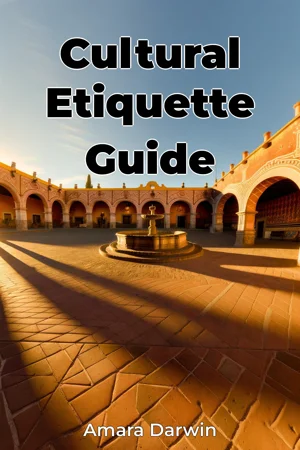
"Cultural Etiquette Guide" provides readers with a comprehensive framework for navigating Mexican social customs and traditions, addressing the critical role that cultural understanding plays in meaningful cross-cultural interactions. This practical guide examines how Mexico's rich historical legacy shapes contemporary social norms and interpersonal dynamics. The book systematically explores three core dimensions of Mexican cultural etiquette: social relationships, daily interactions, and ceremonial customs. Beginning with an analysis of Mexico's indigenous and colonial influences, readers gain insight into how historical forces have molded modern social expectations. This context proves essential for understanding seemingly subtle aspects of Mexican culture, from the proper duration of social greetings to the nuanced meanings behind different forms of address. Through detailed chapters on social conduct, the book examines the Mexican concept of personal space, which differs significantly from Anglo-American norms. Readers learn about proper physical proximity during conversations, appropriate topics for small talk, and the importance of indirect communication in maintaining harmony. The guide explains why certain behaviors considered acceptable in other cultures may be viewed as disrespectful in Mexico. The section on dining customs combines practical guidance with cultural analysis, covering everything from seating arrangements to the timing of meals. Readers discover why declining second helpings might offend hosts and how to navigate complex social obligations during shared meals. The book draws on anthropological research and firsthand accounts to illustrate how food-related customs reflect deeper cultural values about hospitality and community. A substantial portion focuses on holiday celebrations and ceremonial occasions, explaining their historical origins and current significance. The guide outlines expectations for participation in events ranging from quinceañeras to Day of the Dead observances, helping readers understand their role as either guests or observers. The research methodology combines academic sources with insights from cultural anthropologists, Mexican sociologists, and extensive interviews with both locals and expatriates who have successfully integrated into Mexican communities. This multi-faceted approach provides readers with both theoretical understanding and practical applications. The book maintains an instructional tone while avoiding oversimplification of complex cultural phenomena. It addresses regional variations in customs across Mexico's diverse states and acknowledges the dynamic nature of cultural practices in urban versus rural settings. Written for business travelers, expatriates, and cultural enthusiasts, the guide serves as both a reference manual and a deeper exploration of Mexican social values. It connects to business studies through sections on professional etiquette, to anthropology through its examination of cultural evolution, and to sociology through analysis of social structures. The content is arranged in progressive layers, beginning with essential customs before moving to more nuanced social interactions. Each chapter includes practical scenarios, common misconceptions, and specific recommendations for appropriate behavior. The guide addresses contemporary challenges, such as navigating social media etiquette within Mexican cultural contexts and adapting traditional customs to modern business environments. Rather than presenting Mexican culture as a set of rigid rules, the book emphasizes the principles underlying social customs, enabling readers to respond appropriately even in unfamiliar situations. It acknowledges ongoing debates about cultural adaptation versus preservation in an increasingly globalized world, while maintaining focus on practical guidance for respectful cultural engagement.
"Cultural Etiquette Guide" provides readers with a comprehensive framework for navigating Mexican social customs and traditions, addressing the critical role that cultural understanding plays in meaningful cross-cultural interactions. This practical guide examines how Mexico's rich historical legacy shapes contemporary social norms and interpersonal dynamics. The book systematically explores three core dimensions of Mexican cultural etiquette: social relationships, daily interactions, and ceremonial customs. Beginning with an analysis of Mexico's indigenous and colonial influences, readers gain insight into how historical forces have molded modern social expectations. This context proves essential for understanding seemingly subtle aspects of Mexican culture, from the proper duration of social greetings to the nuanced meanings behind different forms of address. Through detailed chapters on social conduct, the book examines the Mexican concept of personal space, which differs significantly from Anglo-American norms. Readers learn about proper physical proximity during conversations, appropriate topics for small talk, and the importance of indirect communication in maintaining harmony. The guide explains why certain behaviors considered acceptable in other cultures may be viewed as disrespectful in Mexico. The section on dining customs combines practical guidance with cultural analysis, covering everything from seating arrangements to the timing of meals. Readers discover why declining second helpings might offend hosts and how to navigate complex social obligations during shared meals. The book draws on anthropological research and firsthand accounts to illustrate how food-related customs reflect deeper cultural values about hospitality and community. A substantial portion focuses on holiday celebrations and ceremonial occasions, explaining their historical origins and current significance. The guide outlines expectations for participation in events ranging from quinceañeras to Day of the Dead observances, helping readers understand their role as either guests or observers. The research methodology combines academic sources with insights from cultural anthropologists, Mexican sociologists, and extensive interviews with both locals and expatriates who have successfully integrated into Mexican communities. This multi-faceted approach provides readers with both theoretical understanding and practical applications. The book maintains an instructional tone while avoiding oversimplification of complex cultural phenomena. It addresses regional variations in customs across Mexico's diverse states and acknowledges the dynamic nature of cultural practices in urban versus rural settings. Written for business travelers, expatriates, and cultural enthusiasts, the guide serves as both a reference manual and a deeper exploration of Mexican social values. It connects to business studies through sections on professional etiquette, to anthropology through its examination of cultural evolution, and to sociology through analysis of social structures. The content is arranged in progressive layers, beginning with essential customs before moving to more nuanced social interactions. Each chapter includes practical scenarios, common misconceptions, and specific recommendations for appropriate behavior. The guide addresses contemporary challenges, such as navigating social media etiquette within Mexican cultural contexts and adapting traditional customs to modern business environments. Rather than presenting Mexican culture as a set of rigid rules, the book emphasizes the principles underlying social customs, enabling readers to respond appropriately even in unfamiliar situations. It acknowledges ongoing debates about cultural adaptation versus preservation in an increasingly globalized world, while maintaining focus on practical guidance for respectful cultural engagement.
"Cultural Etiquette Guide" offers an illuminating journey through Mexican social customs and traditions, providing readers with essential insights for meaningful cross-cultural interactions. The book uniquely combines practical guidance with deep cultural understanding, exploring how Mexico's indigenous and colonial heritage shapes modern social norms. Through a carefully structured approach, it examines three fundamental aspects: social relationships, daily interactions, and ceremonial customs, making complex cultural concepts accessible to travelers, expatriates, and cultural enthusiasts. The guide delves into fascinating aspects of Mexican culture, such as the distinct concept of personal space and the intricate dynamics of dining customs, where declining second helpings might inadvertently offend hosts. Readers discover the subtle art of indirect communication and learn why certain behaviors acceptable elsewhere may be considered disrespectful in Mexico. The book's methodology draws from diverse sources, including anthropological research, sociological studies, and firsthand accounts from both locals and successfully integrated expatriates. Moving from essential customs to more nuanced social interactions, the guide progresses through practical scenarios and common misconceptions, particularly focusing on ceremonial occasions like quinceañeras and Day of the Dead celebrations. Rather than presenting rigid rules, it emphasizes understanding the underlying principles of Mexican social customs, enabling readers to navigate unfamiliar situations with confidence and cultural sensitivity. The book successfully balances theoretical knowledge with practical application, making it an invaluable resource for anyone seeking to engage respectfully with Mexican culture.
Book Details
ISBN
9788233941420
Publisher
Publifye AS
Your Licenses
You don't own any licenses for this book
Purchase a license below to unlock this book and download the EPUB.
Purchase License
Select a tier to unlock this book
Need bulk licensing?
Contact us for enterprise agreements.