
About This Book
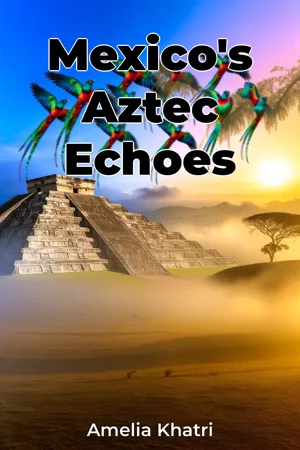
"Mexico's Aztec Echoes" examines how ancient Mesoamerican civilizations continue to influence modern Mexican identity through a detailed analysis of pre-Columbian societies, colonial transformation, and post-independence development. The book traces the complex interweaving of indigenous and European elements that shaped Mexico's cultural and political landscape over five centuries. The narrative begins with the rise of sophisticated pre-Columbian societies, focusing particularly on the Aztec Empire's administrative and religious systems. Through archaeological evidence and historical documents, the book reveals how the Aztecs built upon previous Mesoamerican achievements in agriculture, architecture, and governance to create a complex urban civilization. This foundation sets up the examination of how these established systems both resisted and adapted to Spanish colonial rule. The book's central argument posits that Mexico's modern national identity emerges from a continuous process of cultural synthesis rather than simple replacement or preservation. This perspective challenges traditional views of Mexican history as a clear break between pre-and post-colonial periods, instead demonstrating the persistent influence of pre-Columbian social structures and beliefs. Divided into three major sections, the work first examines the sophisticated political and religious systems of pre-Columbian societies, supported by recent archaeological findings and contemporary Spanish accounts. The second section analyzes the colonial period's complex social hierarchies and economic systems, drawing from administrative records and religious documents. The final section traces how independent Mexico incorporated and reinterpreted its indigenous heritage through political movements and cultural expressions. The research combines archaeological data, colonial-era documents, and modern anthropological studies to support its arguments. The book incorporates recent discoveries from urban excavations in Mexico City and newly translated indigenous codices, providing fresh insights into well-documented historical events. The work connects history with contemporary fields including sociology, economics, and political science, demonstrating how ancient social structures influence modern Mexican institutions. These interdisciplinary connections help readers understand current issues in Mexican society through their historical context. Written in an academic yet accessible style, the book employs narrative techniques to engage readers while maintaining scholarly rigor. Each chapter begins with a specific case study that illustrates broader historical patterns, making complex historical processes more approachable for general readers. The target audience includes students and professionals in Latin American studies, world history enthusiasts, and readers interested in understanding how ancient civilizations influence modern societies. The book serves as both a comprehensive historical overview and an analysis of cultural persistence and change. The work addresses ongoing debates about the nature of cultural survival and adaptation, particularly how indigenous practices and beliefs persisted despite official suppression. It examines controversial topics such as the role of religion in conquest and resistance, and the complex nature of mestizaje (racial and cultural mixing) in Mexican society. While focusing primarily on central Mexico, the book acknowledges regional variations and the influence of other Mesoamerican cultures. It establishes clear parameters around its temporal scope, covering the period from the rise of the Aztec Empire through the early twentieth century. The book provides readers with tools for understanding contemporary Mexican society, including insights into modern political institutions, social relationships, and cultural practices that reflect pre-Columbian origins. This practical application helps readers recognize historical patterns in current events and social structures.
"Mexico's Aztec Echoes" examines how ancient Mesoamerican civilizations continue to influence modern Mexican identity through a detailed analysis of pre-Columbian societies, colonial transformation, and post-independence development. The book traces the complex interweaving of indigenous and European elements that shaped Mexico's cultural and political landscape over five centuries. The narrative begins with the rise of sophisticated pre-Columbian societies, focusing particularly on the Aztec Empire's administrative and religious systems. Through archaeological evidence and historical documents, the book reveals how the Aztecs built upon previous Mesoamerican achievements in agriculture, architecture, and governance to create a complex urban civilization. This foundation sets up the examination of how these established systems both resisted and adapted to Spanish colonial rule. The book's central argument posits that Mexico's modern national identity emerges from a continuous process of cultural synthesis rather than simple replacement or preservation. This perspective challenges traditional views of Mexican history as a clear break between pre-and post-colonial periods, instead demonstrating the persistent influence of pre-Columbian social structures and beliefs. Divided into three major sections, the work first examines the sophisticated political and religious systems of pre-Columbian societies, supported by recent archaeological findings and contemporary Spanish accounts. The second section analyzes the colonial period's complex social hierarchies and economic systems, drawing from administrative records and religious documents. The final section traces how independent Mexico incorporated and reinterpreted its indigenous heritage through political movements and cultural expressions. The research combines archaeological data, colonial-era documents, and modern anthropological studies to support its arguments. The book incorporates recent discoveries from urban excavations in Mexico City and newly translated indigenous codices, providing fresh insights into well-documented historical events. The work connects history with contemporary fields including sociology, economics, and political science, demonstrating how ancient social structures influence modern Mexican institutions. These interdisciplinary connections help readers understand current issues in Mexican society through their historical context. Written in an academic yet accessible style, the book employs narrative techniques to engage readers while maintaining scholarly rigor. Each chapter begins with a specific case study that illustrates broader historical patterns, making complex historical processes more approachable for general readers. The target audience includes students and professionals in Latin American studies, world history enthusiasts, and readers interested in understanding how ancient civilizations influence modern societies. The book serves as both a comprehensive historical overview and an analysis of cultural persistence and change. The work addresses ongoing debates about the nature of cultural survival and adaptation, particularly how indigenous practices and beliefs persisted despite official suppression. It examines controversial topics such as the role of religion in conquest and resistance, and the complex nature of mestizaje (racial and cultural mixing) in Mexican society. While focusing primarily on central Mexico, the book acknowledges regional variations and the influence of other Mesoamerican cultures. It establishes clear parameters around its temporal scope, covering the period from the rise of the Aztec Empire through the early twentieth century. The book provides readers with tools for understanding contemporary Mexican society, including insights into modern political institutions, social relationships, and cultural practices that reflect pre-Columbian origins. This practical application helps readers recognize historical patterns in current events and social structures.
"Mexico's Aztec Echoes" presents a fascinating exploration of how ancient Mesoamerican civilizations, particularly the Aztec Empire, continue to shape modern Mexican identity. Through a carefully structured analysis spanning five centuries, the book challenges the traditional view of Mexican history as a clear break between pre-and post-colonial periods, instead revealing a complex tapestry of cultural synthesis and transformation. The narrative unfolds across three major sections, beginning with an examination of pre-Columbian societies' sophisticated political and religious systems, supported by archaeological evidence and Spanish accounts. The book reveals how the Aztecs developed advanced systems of agriculture, architecture, and governance that would later influence colonial Mexico. The second section delves into the colonial period's intricate social hierarchies, while the final part explores how independent Mexico has incorporated and reinterpreted its indigenous heritage. What sets this work apart is its interdisciplinary approach, combining archaeological data, colonial documents, and modern anthropological studies to demonstrate how ancient social structures continue to influence contemporary Mexican institutions. Through engaging case studies and accessible narrative techniques, the book illuminates the persistent echoes of pre-Columbian civilization in modern Mexican society, from political institutions to cultural practices. This comprehensive analysis helps readers understand how ancient civilizations can shape modern national identity through centuries of cultural adaptation and synthesis.
Book Details
ISBN
9788233941307
Publisher
Publifye AS
Your Licenses
You don't own any licenses for this book
Purchase a license below to unlock this book and download the EPUB.
Purchase License
Select a tier to unlock this book
Need bulk licensing?
Contact us for enterprise agreements.