
About This Book
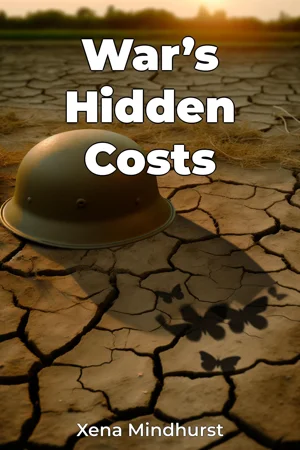
"War's Hidden Costs" examines the intricate web of psychological and social damage that ripples through societies long after the gunfire falls silent. Drawing from decades of research across multiple conflicts, this book reveals how the true impact of warfare extends far beyond casualty counts and physical destruction. The work centers on three primary areas: intergenerational trauma transmission, social fabric deterioration, and collective psychological adaptation. Through detailed analysis, it demonstrates how combat experiences reshape not only veterans' minds but also their families, communities, and subsequent generations. The book presents evidence showing that war's psychological footprint often spans 50-75 years beyond the conflict's end. Using data from longitudinal studies, military archives, and psychological assessments spanning World War II through modern conflicts, the research combines quantitative analysis with personal narratives. The methodology integrates clinical studies, demographic data, and social network analysis to create a comprehensive picture of war's extended impact. The central thesis argues that traditional military history significantly understates warfare's actual cost by focusing primarily on immediate combat outcomes rather than long-term social consequences. This limitation has led to systematic underestimation of war's true burden on society and inadequate post-conflict recovery planning. The book is structured in three main sections. The first establishes the theoretical framework for understanding trauma transmission across generations, supported by neurobiological and psychological research. The second section examines how warfare disrupts social networks, community bonds, and cultural institutions, using case studies from various conflicts. The final section explores adaptive mechanisms at both individual and societal levels, offering insights into resilience and recovery. The interdisciplinary approach bridges military history with social psychology, neuroscience, and sociology. By incorporating perspectives from public health and economic development, the book provides a multi-faceted view of post-conflict recovery challenges. Written in an academic yet accessible style, the work maintains scholarly rigor while ensuring key concepts remain comprehensible to general readers. It serves military historians, mental health professionals, policy makers, and anyone seeking to understand warfare's comprehensive social impact. The research draws from previously unmined sources, including recently declassified military documents, multi-generational family studies, and cross-cultural comparative analyses. This combination of sources enables new insights into how different societies process and adapt to war-related trauma. Practical applications include recommendations for post-conflict community rebuilding, veteran support program design, and preventive measures for protecting social institutions during conflicts. The book addresses ongoing debates about military intervention costs, challenging traditional cost-benefit analyses that focus primarily on economic and military factors. While the scope encompasses multiple conflicts from the 20th and 21st centuries, it specifically focuses on wars with substantial documentation of their psychological aftermath. This limitation ensures conclusions are supported by reliable data rather than speculation. The work fills a critical gap in military historiography by quantifying and analyzing aspects of warfare that have traditionally been considered too intangible or complex to measure. It provides essential context for current debates about military intervention, veteran care, and post-conflict reconstruction policies.
"War's Hidden Costs" examines the intricate web of psychological and social damage that ripples through societies long after the gunfire falls silent. Drawing from decades of research across multiple conflicts, this book reveals how the true impact of warfare extends far beyond casualty counts and physical destruction. The work centers on three primary areas: intergenerational trauma transmission, social fabric deterioration, and collective psychological adaptation. Through detailed analysis, it demonstrates how combat experiences reshape not only veterans' minds but also their families, communities, and subsequent generations. The book presents evidence showing that war's psychological footprint often spans 50-75 years beyond the conflict's end. Using data from longitudinal studies, military archives, and psychological assessments spanning World War II through modern conflicts, the research combines quantitative analysis with personal narratives. The methodology integrates clinical studies, demographic data, and social network analysis to create a comprehensive picture of war's extended impact. The central thesis argues that traditional military history significantly understates warfare's actual cost by focusing primarily on immediate combat outcomes rather than long-term social consequences. This limitation has led to systematic underestimation of war's true burden on society and inadequate post-conflict recovery planning. The book is structured in three main sections. The first establishes the theoretical framework for understanding trauma transmission across generations, supported by neurobiological and psychological research. The second section examines how warfare disrupts social networks, community bonds, and cultural institutions, using case studies from various conflicts. The final section explores adaptive mechanisms at both individual and societal levels, offering insights into resilience and recovery. The interdisciplinary approach bridges military history with social psychology, neuroscience, and sociology. By incorporating perspectives from public health and economic development, the book provides a multi-faceted view of post-conflict recovery challenges. Written in an academic yet accessible style, the work maintains scholarly rigor while ensuring key concepts remain comprehensible to general readers. It serves military historians, mental health professionals, policy makers, and anyone seeking to understand warfare's comprehensive social impact. The research draws from previously unmined sources, including recently declassified military documents, multi-generational family studies, and cross-cultural comparative analyses. This combination of sources enables new insights into how different societies process and adapt to war-related trauma. Practical applications include recommendations for post-conflict community rebuilding, veteran support program design, and preventive measures for protecting social institutions during conflicts. The book addresses ongoing debates about military intervention costs, challenging traditional cost-benefit analyses that focus primarily on economic and military factors. While the scope encompasses multiple conflicts from the 20th and 21st centuries, it specifically focuses on wars with substantial documentation of their psychological aftermath. This limitation ensures conclusions are supported by reliable data rather than speculation. The work fills a critical gap in military historiography by quantifying and analyzing aspects of warfare that have traditionally been considered too intangible or complex to measure. It provides essential context for current debates about military intervention, veteran care, and post-conflict reconstruction policies.
"War's Hidden Costs" presents a groundbreaking examination of warfare's enduring psychological and social impacts that persist long after battles end. Through a comprehensive analysis of multiple conflicts, the book reveals how combat's true costs extend far beyond traditional casualty counts and physical destruction, often affecting societies for 50-75 years after conflicts conclude. The research uniquely combines military archives, psychological assessments, and longitudinal studies to paint a complete picture of war's lasting legacy. The book is structured in three illuminating sections, beginning with the science behind intergenerational trauma transmission, supported by neurobiological research. It then explores the disruption of social networks and community bonds through detailed case studies, before examining adaptive mechanisms that contribute to both individual and societal resilience. This methodical progression helps readers understand not just the problems war creates, but also potential paths to recovery and healing. What sets this work apart is its interdisciplinary approach, bridging military history with social psychology and neuroscience. By analyzing previously unmined sources, including declassified military documents and multi-generational family studies, the book challenges conventional understanding of warfare's costs. The accessible writing style makes complex concepts understandable while maintaining academic rigor, making it valuable for both scholars and general readers interested in understanding the full scope of war's hidden impact on society.
Book Details
ISBN
9788233941246
Publisher
Publifye AS
Your Licenses
You don't own any licenses for this book
Purchase a license below to unlock this book and download the EPUB.
Purchase License
Select a tier to unlock this book
Need bulk licensing?
Contact us for enterprise agreements.