
About This Book
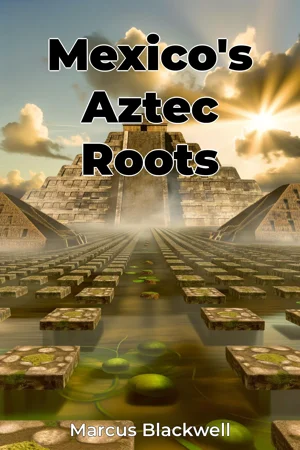
"Mexico's Aztec Roots" examines the complex tapestry of pre-Columbian civilization and colonial influence that formed modern Mexico, beginning with a pivotal question: How did the collision of Aztec and Spanish worlds create one of Latin America's most distinctive cultural identities? Drawing from archaeological findings, colonial documents, and indigenous codices, this comprehensive study traces the evolution of Mexican society from the rise of Tenochtitlan through the colonial period and beyond. The book presents three core themes: the sophisticated social and political structure of the Aztec Empire, the mechanisms of Spanish conquest and colonization, and the persistent indigenous influences that survived and adapted under colonial rule. The narrative begins with a detailed analysis of Aztec society, examining their advanced agricultural systems, complex religious hierarchy, and sophisticated urban planning. Using recent archaeological discoveries from the Templo Mayor site, the book reconstructs daily life in the Aztec capital, from market operations to ritual ceremonies. This section challenges previous oversimplified portrayals of Aztec civilization, presenting evidence of their complex diplomatic relationships, educational systems, and legal frameworks. The second section analyzes the Spanish conquest, moving beyond traditional accounts to explore the role of indigenous allies, disease, and political fragmentation in the empire's fall. Through careful examination of both Spanish and indigenous primary sources, the book provides a balanced perspective on this transformative period. Particular attention is given to the early colonial era, when Spanish and indigenous institutions began their complex process of integration. The final portion examines the emergence of mestizo culture, documenting how indigenous practices, beliefs, and social structures survived and adapted under Spanish rule. Using case studies from different regions of Mexico, the book demonstrates how local communities maintained their cultural identity while adapting to new political and religious systems. The research draws upon recent archaeological findings, colonial-era documents, linguistic studies, and anthropological research to support its arguments. The methodology combines traditional historical analysis with insights from anthropology, archaeology, and linguistics, providing a multifaceted view of Mexico's cultural transformation. The book connects to multiple disciplines, including anthropology, sociology, and political science, demonstrating how Mexico's experience offers insights into broader patterns of colonialism, cultural resilience, and national identity formation. This interdisciplinary approach helps readers understand how historical processes continue to influence contemporary Mexican society. Written in an accessible academic style, the text balances scholarly rigor with engaging narrative elements, making it suitable for both academic audiences and informed general readers interested in Latin American history, colonial studies, or indigenous cultures. While maintaining academic standards, the book uses clear language and careful exposition to make complex historical processes understandable. The work addresses ongoing scholarly debates about the nature of cultural exchange in colonial situations, the extent of indigenous agency, and the process of national identity formation. It offers new interpretations of key historical events based on recent archaeological discoveries and revised readings of historical documents. While focusing primarily on central Mexico, the book acknowledges regional variations and includes comparative references to other Mesoamerican cultures. It explicitly addresses the limitations of available historical sources and archaeological evidence, discussing how scholars work with incomplete information to reconstruct historical narratives. This research provides valuable insights for understanding contemporary issues in Mexican society, including ongoing debates about indigenous rights, cultural identity, and national heritage. It offers readers a framework for analyzing how historical processes shape modern social and political dynamics.
"Mexico's Aztec Roots" examines the complex tapestry of pre-Columbian civilization and colonial influence that formed modern Mexico, beginning with a pivotal question: How did the collision of Aztec and Spanish worlds create one of Latin America's most distinctive cultural identities? Drawing from archaeological findings, colonial documents, and indigenous codices, this comprehensive study traces the evolution of Mexican society from the rise of Tenochtitlan through the colonial period and beyond. The book presents three core themes: the sophisticated social and political structure of the Aztec Empire, the mechanisms of Spanish conquest and colonization, and the persistent indigenous influences that survived and adapted under colonial rule. The narrative begins with a detailed analysis of Aztec society, examining their advanced agricultural systems, complex religious hierarchy, and sophisticated urban planning. Using recent archaeological discoveries from the Templo Mayor site, the book reconstructs daily life in the Aztec capital, from market operations to ritual ceremonies. This section challenges previous oversimplified portrayals of Aztec civilization, presenting evidence of their complex diplomatic relationships, educational systems, and legal frameworks. The second section analyzes the Spanish conquest, moving beyond traditional accounts to explore the role of indigenous allies, disease, and political fragmentation in the empire's fall. Through careful examination of both Spanish and indigenous primary sources, the book provides a balanced perspective on this transformative period. Particular attention is given to the early colonial era, when Spanish and indigenous institutions began their complex process of integration. The final portion examines the emergence of mestizo culture, documenting how indigenous practices, beliefs, and social structures survived and adapted under Spanish rule. Using case studies from different regions of Mexico, the book demonstrates how local communities maintained their cultural identity while adapting to new political and religious systems. The research draws upon recent archaeological findings, colonial-era documents, linguistic studies, and anthropological research to support its arguments. The methodology combines traditional historical analysis with insights from anthropology, archaeology, and linguistics, providing a multifaceted view of Mexico's cultural transformation. The book connects to multiple disciplines, including anthropology, sociology, and political science, demonstrating how Mexico's experience offers insights into broader patterns of colonialism, cultural resilience, and national identity formation. This interdisciplinary approach helps readers understand how historical processes continue to influence contemporary Mexican society. Written in an accessible academic style, the text balances scholarly rigor with engaging narrative elements, making it suitable for both academic audiences and informed general readers interested in Latin American history, colonial studies, or indigenous cultures. While maintaining academic standards, the book uses clear language and careful exposition to make complex historical processes understandable. The work addresses ongoing scholarly debates about the nature of cultural exchange in colonial situations, the extent of indigenous agency, and the process of national identity formation. It offers new interpretations of key historical events based on recent archaeological discoveries and revised readings of historical documents. While focusing primarily on central Mexico, the book acknowledges regional variations and includes comparative references to other Mesoamerican cultures. It explicitly addresses the limitations of available historical sources and archaeological evidence, discussing how scholars work with incomplete information to reconstruct historical narratives. This research provides valuable insights for understanding contemporary issues in Mexican society, including ongoing debates about indigenous rights, cultural identity, and national heritage. It offers readers a framework for analyzing how historical processes shape modern social and political dynamics.
"Mexico's Aztec Roots" explores the fascinating transformation of Mexican society from the height of the Aztec Empire through the colonial period, revealing how the collision of two distinct worlds created modern Mexico's unique cultural identity. The book masterfully weaves together archaeological evidence, colonial documents, and indigenous records to present a comprehensive view of this crucial historical period. Through careful examination of recent discoveries at the Templo Mayor site, readers gain unprecedented insights into daily life in Tenochtitlan, from its sophisticated urban planning to its complex market systems and religious ceremonies. The narrative progresses through three major phases, beginning with a detailed examination of pre-Columbian Aztec civilization, challenging simplified historical accounts with evidence of their advanced diplomatic and educational systems. Moving beyond traditional conquest narratives, the book explores the nuanced role of indigenous allies and political dynamics in the Spanish conquest, before delving into the emergence of mestizo culture. Throughout each section, the author draws upon multidisciplinary sources, including linguistics, anthropology, and archaeology, to provide a well-rounded understanding of Mexico's cultural evolution. What sets this work apart is its balanced approach to examining cultural transformation, using regional case studies to demonstrate how indigenous communities maintained their identity while adapting to new systems. The book's accessible academic style makes complex historical processes understandable for both scholars and general readers, while its integration of recent archaeological findings and revised interpretations of historical documents offers fresh perspectives on Mexico's rich cultural heritage.
Book Details
ISBN
9788233941161
Publisher
Publifye AS
Your Licenses
You don't own any licenses for this book
Purchase a license below to unlock this book and download the EPUB.
Purchase License
Select a tier to unlock this book
Need bulk licensing?
Contact us for enterprise agreements.