
About This Book
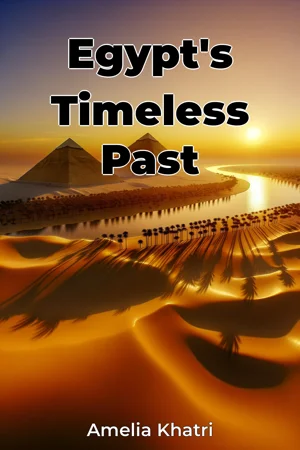
"Egypt's Timeless Past" examines how a civilization that emerged along the Nile River banks developed into one of history's most influential societies, whose impact continues to shape our understanding of human achievement. This comprehensive analysis traces Egypt's development across 3,000 years, from the unification under Narmer to the end of the Ptolemaic period. The book presents three core themes: the evolution of Egyptian political structures through successive dynasties, the development of monumental architecture as expressions of power and religious belief, and the advancement of cultural practices that defined Egyptian civilization. These interconnected elements reveal how Egypt maintained remarkable consistency in its cultural identity while adapting to changing conditions over millennia. Drawing from recent archaeological findings, hieroglyphic translations, and architectural studies, the work provides updated interpretations of well-documented periods while shedding light on lesser-known eras. The narrative begins with the formation of the Old Kingdom, examining how early rulers established administrative systems that would endure for centuries. Subsequent chapters analyze the Middle and New Kingdoms, highlighting innovations in engineering, artistic expression, and international relations. The book's central argument posits that Egypt's longevity stemmed from its ability to integrate religious, political, and social systems into a cohesive worldview that provided stability through periods of both prosperity and decline. This thesis is supported by examination of administrative texts, religious documents, and material culture from multiple archaeological sites. Structured chronologically, the content progresses through major periods while maintaining thematic continuity. Key sections explore the development of pyramid construction techniques, the evolution of burial practices, and the sophisticated theological systems that undergirded Egyptian society. The work pays particular attention to how environmental factors, especially the Nile's annual flood cycle, influenced Egyptian culture and governance. Research draws from multiple disciplines, including archaeology, anthropology, and climatology. The book incorporates data from ongoing excavations, chemical analysis of artifacts, and advanced imaging techniques that reveal new details about ancient structures and artifacts. These findings are contextualized within current scholarly debates about chronology, technological capabilities, and social organization. The work connects Egyptian developments to broader patterns in ancient Near Eastern history, demonstrating how trade networks, diplomatic relations, and cultural exchange influenced the region. It examines Egypt's relationships with Nubia, the Levant, and Mediterranean societies, revealing complex networks of interaction. Written in an academic yet accessible style, the book balances scholarly rigor with engaging narrative elements. It serves scholars, students, and general readers interested in ancient history, archaeology, and cultural studies. Technical terms are clearly explained, and complex concepts are illustrated through specific examples and case studies. The scope encompasses major historical periods while acknowledging gaps in the archaeological record. It addresses ongoing debates about chronology, the extent of Egyptian technological knowledge, and the nature of ancient Egyptian society. The work considers how modern political boundaries and contemporary biases have influenced our understanding of ancient Egypt. Practical applications include insights into leadership, organizational systems, and the role of ideology in maintaining social cohesion. The book provides context for current archaeological preservation efforts and debates about cultural heritage management. This comprehensive examination of Egypt's past offers readers a nuanced understanding of how ancient societies developed and maintained complex civilizations, while contributing to ongoing discussions about the interpretation of archaeological evidence and the nature of historical change.
"Egypt's Timeless Past" examines how a civilization that emerged along the Nile River banks developed into one of history's most influential societies, whose impact continues to shape our understanding of human achievement. This comprehensive analysis traces Egypt's development across 3,000 years, from the unification under Narmer to the end of the Ptolemaic period. The book presents three core themes: the evolution of Egyptian political structures through successive dynasties, the development of monumental architecture as expressions of power and religious belief, and the advancement of cultural practices that defined Egyptian civilization. These interconnected elements reveal how Egypt maintained remarkable consistency in its cultural identity while adapting to changing conditions over millennia. Drawing from recent archaeological findings, hieroglyphic translations, and architectural studies, the work provides updated interpretations of well-documented periods while shedding light on lesser-known eras. The narrative begins with the formation of the Old Kingdom, examining how early rulers established administrative systems that would endure for centuries. Subsequent chapters analyze the Middle and New Kingdoms, highlighting innovations in engineering, artistic expression, and international relations. The book's central argument posits that Egypt's longevity stemmed from its ability to integrate religious, political, and social systems into a cohesive worldview that provided stability through periods of both prosperity and decline. This thesis is supported by examination of administrative texts, religious documents, and material culture from multiple archaeological sites. Structured chronologically, the content progresses through major periods while maintaining thematic continuity. Key sections explore the development of pyramid construction techniques, the evolution of burial practices, and the sophisticated theological systems that undergirded Egyptian society. The work pays particular attention to how environmental factors, especially the Nile's annual flood cycle, influenced Egyptian culture and governance. Research draws from multiple disciplines, including archaeology, anthropology, and climatology. The book incorporates data from ongoing excavations, chemical analysis of artifacts, and advanced imaging techniques that reveal new details about ancient structures and artifacts. These findings are contextualized within current scholarly debates about chronology, technological capabilities, and social organization. The work connects Egyptian developments to broader patterns in ancient Near Eastern history, demonstrating how trade networks, diplomatic relations, and cultural exchange influenced the region. It examines Egypt's relationships with Nubia, the Levant, and Mediterranean societies, revealing complex networks of interaction. Written in an academic yet accessible style, the book balances scholarly rigor with engaging narrative elements. It serves scholars, students, and general readers interested in ancient history, archaeology, and cultural studies. Technical terms are clearly explained, and complex concepts are illustrated through specific examples and case studies. The scope encompasses major historical periods while acknowledging gaps in the archaeological record. It addresses ongoing debates about chronology, the extent of Egyptian technological knowledge, and the nature of ancient Egyptian society. The work considers how modern political boundaries and contemporary biases have influenced our understanding of ancient Egypt. Practical applications include insights into leadership, organizational systems, and the role of ideology in maintaining social cohesion. The book provides context for current archaeological preservation efforts and debates about cultural heritage management. This comprehensive examination of Egypt's past offers readers a nuanced understanding of how ancient societies developed and maintained complex civilizations, while contributing to ongoing discussions about the interpretation of archaeological evidence and the nature of historical change.
"Egypt's Timeless Past" offers a compelling journey through three millennia of ancient Egyptian civilization, exploring how a society that emerged along the Nile River became one of history's most enduring and influential cultures. The book masterfully weaves together three fundamental themes: political evolution across dynasties, monumental architectural achievements, and the development of distinctive cultural practices that defined Egyptian identity. Through careful examination of archaeological evidence and hieroglyphic records, it reveals how Egypt maintained remarkable cultural consistency while adapting to changing circumstances over thousands of years. The narrative progresses chronologically from the unification under Narmer through the Ptolemaic period, with particular attention to the transformative periods of the Old, Middle, and New Kingdoms. Drawing from recent archaeological discoveries and advanced imaging techniques, the book presents fresh insights into familiar topics like pyramid construction and burial practices, while also illuminating lesser-known aspects of Egyptian society. The author emphasizes how the Nile's annual flood cycle profoundly influenced Egyptian culture, governance, and religious beliefs, creating a unified worldview that supported the civilization's extraordinary longevity. What sets this work apart is its multidisciplinary approach, incorporating findings from archaeology, anthropology, and climatology to paint a comprehensive picture of ancient Egyptian life. The book contextualizes Egypt's achievements within the broader ancient Near Eastern world, examining its relationships with neighboring civilizations through trade networks and diplomatic exchanges. Written in an accessible yet scholarly style, it provides valuable insights for both academics and general readers interested in understanding how ancient societies developed and maintained complex civilizations over extended periods.
Book Details
ISBN
9788233941116
Publisher
Publifye AS
Your Licenses
You don't own any licenses for this book
Purchase a license below to unlock this book and download the EPUB.
Purchase License
Select a tier to unlock this book
Need bulk licensing?
Contact us for enterprise agreements.