
About This Book
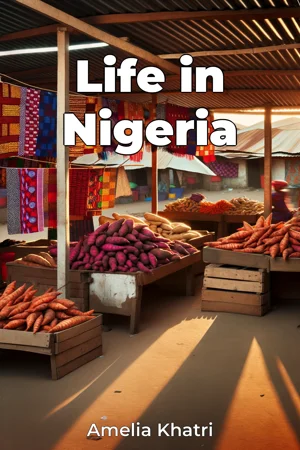
"Life in Nigeria" opens by exploring the complex tapestry of Africa's most populous nation, where over 250 ethnic groups weave together a social fabric that challenges conventional understanding of national identity and cultural cohesion. This comprehensive examination of Nigeria's societal structure reveals how traditional systems adapt to modern realities, offering insights into one of Africa's most influential nations. The book presents three core themes: the interplay between Nigeria's diverse ethnic groups and languages, the evolution of its economy from agricultural foundation to petroleum giant, and the transformation of social structures in response to rapid urbanization. These interconnected elements form the basis for understanding contemporary Nigerian life and its broader implications for African development. Drawing from extensive field research, demographic data, and historical records, the work traces Nigeria's journey from colonial amalgamation to its present status. The first section examines the linguistic and ethnic landscape, analyzing how Hausa, Yoruba, and Igbo populations, among others, maintain distinct identities while participating in a shared national narrative. This analysis includes detailed linguistic maps and ethnographic studies demonstrating how language shapes social interaction and economic opportunities. The second section investigates Nigeria's economic evolution, documenting the shift from an agriculture-based economy to its emergence as Africa's largest oil producer. Through economic data and case studies, the book illustrates how this transition has affected traditional farming communities, urban development, and social mobility. The analysis extends to the environmental impact of oil exploitation in the Niger Delta and its implications for local communities. The third section focuses on urbanization and social change, examining how city growth influences family structures, educational systems, and intergenerational relationships. Using demographic trends and sociological research, the book demonstrates how traditional extended family systems adapt to urban constraints while maintaining cultural continuity. The work employs a multidisciplinary approach, combining anthropological observation, economic analysis, and sociological research. It features first-hand accounts from diverse Nigerian communities, statistical data from government archives, and comparative analyses with other African nations. This methodology provides readers with both macro and micro perspectives on Nigerian society. The book maintains an academic tone while remaining accessible to general readers interested in African studies, development economics, or cultural anthropology. It addresses ongoing debates about national integration, resource management, and cultural preservation without taking partisan positions. Special attention is given to the role of women in Nigerian society, the impact of religious diversity on social cohesion, and the emergence of new cultural forms in urban centers. The work examines how traditional governance systems interact with modern democratic institutions, providing insight into Nigeria's political development. Intended for students, researchers, and professionals in African studies, development studies, and related fields, this book offers practical frameworks for understanding complex societal transformations. It includes extensive references, maps, and demographic data, making it a valuable resource for comparative studies. The book acknowledges its limitations, focusing primarily on major ethnic groups and urban centers while recognizing the existence of numerous smaller communities. It addresses contemporary challenges such as security concerns, economic inequality, and environmental sustainability, providing context for current events without speculation about future developments. Through careful analysis and documented research, "Life in Nigeria" presents a nuanced portrait of a nation that continues to navigate the complexities of tradition and modernity, offering lessons for understanding societal transformation in developing nations.
"Life in Nigeria" opens by exploring the complex tapestry of Africa's most populous nation, where over 250 ethnic groups weave together a social fabric that challenges conventional understanding of national identity and cultural cohesion. This comprehensive examination of Nigeria's societal structure reveals how traditional systems adapt to modern realities, offering insights into one of Africa's most influential nations. The book presents three core themes: the interplay between Nigeria's diverse ethnic groups and languages, the evolution of its economy from agricultural foundation to petroleum giant, and the transformation of social structures in response to rapid urbanization. These interconnected elements form the basis for understanding contemporary Nigerian life and its broader implications for African development. Drawing from extensive field research, demographic data, and historical records, the work traces Nigeria's journey from colonial amalgamation to its present status. The first section examines the linguistic and ethnic landscape, analyzing how Hausa, Yoruba, and Igbo populations, among others, maintain distinct identities while participating in a shared national narrative. This analysis includes detailed linguistic maps and ethnographic studies demonstrating how language shapes social interaction and economic opportunities. The second section investigates Nigeria's economic evolution, documenting the shift from an agriculture-based economy to its emergence as Africa's largest oil producer. Through economic data and case studies, the book illustrates how this transition has affected traditional farming communities, urban development, and social mobility. The analysis extends to the environmental impact of oil exploitation in the Niger Delta and its implications for local communities. The third section focuses on urbanization and social change, examining how city growth influences family structures, educational systems, and intergenerational relationships. Using demographic trends and sociological research, the book demonstrates how traditional extended family systems adapt to urban constraints while maintaining cultural continuity. The work employs a multidisciplinary approach, combining anthropological observation, economic analysis, and sociological research. It features first-hand accounts from diverse Nigerian communities, statistical data from government archives, and comparative analyses with other African nations. This methodology provides readers with both macro and micro perspectives on Nigerian society. The book maintains an academic tone while remaining accessible to general readers interested in African studies, development economics, or cultural anthropology. It addresses ongoing debates about national integration, resource management, and cultural preservation without taking partisan positions. Special attention is given to the role of women in Nigerian society, the impact of religious diversity on social cohesion, and the emergence of new cultural forms in urban centers. The work examines how traditional governance systems interact with modern democratic institutions, providing insight into Nigeria's political development. Intended for students, researchers, and professionals in African studies, development studies, and related fields, this book offers practical frameworks for understanding complex societal transformations. It includes extensive references, maps, and demographic data, making it a valuable resource for comparative studies. The book acknowledges its limitations, focusing primarily on major ethnic groups and urban centers while recognizing the existence of numerous smaller communities. It addresses contemporary challenges such as security concerns, economic inequality, and environmental sustainability, providing context for current events without speculation about future developments. Through careful analysis and documented research, "Life in Nigeria" presents a nuanced portrait of a nation that continues to navigate the complexities of tradition and modernity, offering lessons for understanding societal transformation in developing nations.
"Life in Nigeria" presents a comprehensive exploration of Africa's most populous nation, examining how over 250 ethnic groups coexist and adapt in a rapidly changing society. The book masterfully weaves together three fundamental aspects of Nigerian life: the intricate relationships between diverse ethnic communities, the country's transformation from an agricultural society to an oil-based economy, and the profound impact of urbanization on traditional social structures. Through a blend of field research, demographic data, and historical records, the book illuminates fascinating aspects of Nigerian society, such as how the major ethnic groups—Hausa, Yoruba, and Igbo—maintain their distinct cultural identities while participating in a shared national narrative. The work particularly excels in demonstrating how Nigeria's economic evolution from farming to oil production has reshaped both urban landscapes and traditional community structures, with special attention given to environmental and social implications in regions like the Niger Delta. The book's multidisciplinary approach combines anthropological insights with economic analysis, making complex societal transformations accessible to readers interested in African studies, development economics, and cultural anthropology. By examining the interplay between traditional customs and modern realities, from family structures to governance systems, the work provides valuable frameworks for understanding how developing nations navigate the delicate balance between preserving cultural heritage and embracing change.
Book Details
ISBN
9788233941109
Publisher
Publifye AS
Your Licenses
You don't own any licenses for this book
Purchase a license below to unlock this book and download the EPUB.
Purchase License
Select a tier to unlock this book
Need bulk licensing?
Contact us for enterprise agreements.