
About This Book
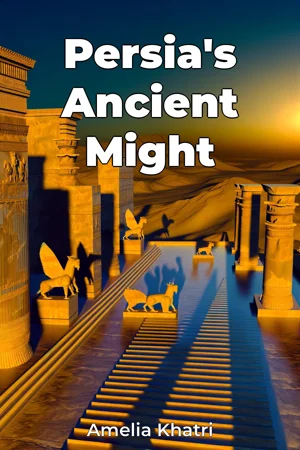
"Persia's Ancient Might" examines how a collection of nomadic tribes transformed into one of history's most sophisticated and influential empires, whose administrative and cultural innovations continue to resonate in modern governance and society. The book presents a detailed analysis of three pivotal aspects of Persian imperial power: the intricate court system that managed vast territories, the evolution of religious practices that shaped social cohesion, and the architectural achievements that demonstrated both practical innovation and symbolic authority. These elements formed the foundation of an empire that stretched from Egypt to India, creating a template for future civilizations. Through careful examination of primary sources, including the royal archives of Persepolis, diplomatic correspondences, and archaeological evidence, the book reconstructs the complex mechanisms of Persian statecraft. The text explores how the Achaemenid dynasty (559-330 BCE) developed a remarkably efficient administrative system that balanced central authority with local autonomy, creating a model of governance that influenced future empires from Rome to Britain. The narrative is structured in three main sections. The first examines the royal court's structure and protocols, revealing how Persian kings maintained control through a sophisticated network of satraps, diplomatic marriages, and ceremonial practices. The second section analyzes the empire's religious evolution, particularly focusing on Zoroastrianism's role in shaping Persian worldview and governance. The final section documents the empire's architectural achievements, from the engineering marvel of the Royal Road to the symbolic grandeur of Persepolis. Supporting evidence comes from recent archaeological discoveries, translated ancient texts, and comparative analyses with contemporary civilizations. The book incorporates findings from multiple disciplines, including archaeology, linguistics, and architectural history, to present a comprehensive understanding of Persian power structures. The work connects to multiple fields, including political science through its analysis of administrative systems, religious studies through examination of Zoroastrian influence, and engineering through study of Persian architectural innovations. These intersections demonstrate how Persian achievements influenced subsequent civilizations. Written in an academic yet accessible style, the book employs a chronological framework while weaving thematic analyses throughout. It serves scholars, students, and general readers interested in understanding how ancient Persian systems inform current political and cultural institutions. The text addresses ongoing scholarly debates about the nature of Persian influence on Greek civilization, the extent of religious tolerance in the empire, and the accuracy of classical Western sources regarding Persian history. It presents balanced evaluations of competing interpretations while advancing evidence-based conclusions. The book's scope encompasses the period from Cyrus the Great's rise to Alexander's conquest, though it includes relevant background on pre-Achaemenid Persia and the empire's lasting legacy. It particularly focuses on the height of Persian power during the fifth and fourth centuries BCE. For modern readers, the book offers insights into effective governance of multicultural societies, the role of ceremony and symbol in maintaining authority, and the importance of infrastructure in empire building. These lessons remain relevant for understanding current geopolitical dynamics and cultural interactions. The work maintains scholarly rigor while making complex historical concepts accessible to non-specialists. It provides readers with the contextual knowledge needed to understand both the specific details of Persian civilization and its broader historical significance.
"Persia's Ancient Might" examines how a collection of nomadic tribes transformed into one of history's most sophisticated and influential empires, whose administrative and cultural innovations continue to resonate in modern governance and society. The book presents a detailed analysis of three pivotal aspects of Persian imperial power: the intricate court system that managed vast territories, the evolution of religious practices that shaped social cohesion, and the architectural achievements that demonstrated both practical innovation and symbolic authority. These elements formed the foundation of an empire that stretched from Egypt to India, creating a template for future civilizations. Through careful examination of primary sources, including the royal archives of Persepolis, diplomatic correspondences, and archaeological evidence, the book reconstructs the complex mechanisms of Persian statecraft. The text explores how the Achaemenid dynasty (559-330 BCE) developed a remarkably efficient administrative system that balanced central authority with local autonomy, creating a model of governance that influenced future empires from Rome to Britain. The narrative is structured in three main sections. The first examines the royal court's structure and protocols, revealing how Persian kings maintained control through a sophisticated network of satraps, diplomatic marriages, and ceremonial practices. The second section analyzes the empire's religious evolution, particularly focusing on Zoroastrianism's role in shaping Persian worldview and governance. The final section documents the empire's architectural achievements, from the engineering marvel of the Royal Road to the symbolic grandeur of Persepolis. Supporting evidence comes from recent archaeological discoveries, translated ancient texts, and comparative analyses with contemporary civilizations. The book incorporates findings from multiple disciplines, including archaeology, linguistics, and architectural history, to present a comprehensive understanding of Persian power structures. The work connects to multiple fields, including political science through its analysis of administrative systems, religious studies through examination of Zoroastrian influence, and engineering through study of Persian architectural innovations. These intersections demonstrate how Persian achievements influenced subsequent civilizations. Written in an academic yet accessible style, the book employs a chronological framework while weaving thematic analyses throughout. It serves scholars, students, and general readers interested in understanding how ancient Persian systems inform current political and cultural institutions. The text addresses ongoing scholarly debates about the nature of Persian influence on Greek civilization, the extent of religious tolerance in the empire, and the accuracy of classical Western sources regarding Persian history. It presents balanced evaluations of competing interpretations while advancing evidence-based conclusions. The book's scope encompasses the period from Cyrus the Great's rise to Alexander's conquest, though it includes relevant background on pre-Achaemenid Persia and the empire's lasting legacy. It particularly focuses on the height of Persian power during the fifth and fourth centuries BCE. For modern readers, the book offers insights into effective governance of multicultural societies, the role of ceremony and symbol in maintaining authority, and the importance of infrastructure in empire building. These lessons remain relevant for understanding current geopolitical dynamics and cultural interactions. The work maintains scholarly rigor while making complex historical concepts accessible to non-specialists. It provides readers with the contextual knowledge needed to understand both the specific details of Persian civilization and its broader historical significance.
"Persia's Ancient Might" offers a compelling exploration of how nomadic tribes evolved into one of history's most sophisticated empires, whose influence continues to resonate in modern governance. The book masterfully weaves together three crucial aspects of Persian power: their revolutionary court system, the pivotal role of Zoroastrianism in social cohesion, and their remarkable architectural achievements, including the legendary Persepolis. Through meticulous analysis of primary sources and archaeological evidence, the text reveals how the Achaemenid dynasty created an administrative marvel that effectively governed territories from Egypt to India. The Persian Empire's ability to balance central authority with local autonomy created a governance template that influenced subsequent empires for centuries. Particularly fascinating is their sophisticated network of satraps and diplomatic marriages, which maintained stability across their vast territories. The book progresses systematically through three main sections, examining court structure, religious evolution, and architectural innovation. Drawing from recent archaeological discoveries and translated ancient texts, it presents a comprehensive view of Persian civilization that speaks to modern challenges of multicultural governance and infrastructure development. This approach makes complex historical concepts accessible while maintaining scholarly depth, offering valuable insights for both academics and general readers interested in understanding how ancient Persian systems continue to influence contemporary institutions.
Book Details
ISBN
9788233941093
Publisher
Publifye AS
Your Licenses
You don't own any licenses for this book
Purchase a license below to unlock this book and download the EPUB.
Purchase License
Select a tier to unlock this book
Need bulk licensing?
Contact us for enterprise agreements.