
About This Book
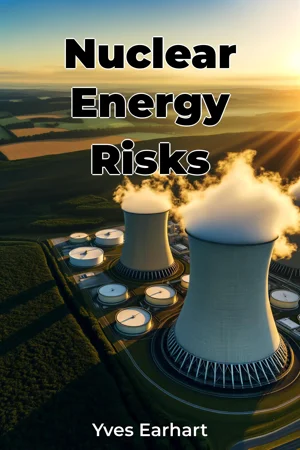
"Nuclear Energy Risks" examines the complex intersection of technological advancement and public safety in nuclear power generation, opening with the sobering reality that nuclear energy simultaneously represents one of humanity's most powerful tools for clean energy production and one of its most significant technological challenges. The book develops three core themes: the fundamental science of nuclear power generation, the evolution and current state of safety protocols in nuclear facilities, and the ethical implications of nuclear energy in a carbon-conscious world. These interconnected topics provide readers with a comprehensive framework for understanding both the technical and societal aspects of nuclear power. Drawing from six decades of nuclear power history, including watershed moments like Three Mile Island, Chernobyl, and Fukushima, the text establishes crucial context for contemporary debates about nuclear energy. The book presents detailed analyses of these incidents, using them to illustrate the development of modern safety protocols and risk assessment methodologies. The central argument posits that nuclear power's role in combating climate change must be evaluated through a rigorous risk-benefit analysis framework, considering both quantifiable safety metrics and broader societal impacts. This balanced approach acknowledges both the technology's potential benefits and its inherent risks. The content progresses systematically through three major sections. The first addresses the physics of nuclear fission and reactor design, providing readers with essential technical foundation. The second examines safety systems, emergency protocols, and waste management strategies, including current best practices and emerging technologies. The final section explores the ethical dimensions of nuclear power deployment, including environmental justice considerations and intergenerational responsibilities regarding waste storage. The book draws upon peer-reviewed research, industry data, and regulatory documentation from multiple countries' nuclear programs. It features case studies of both successful nuclear programs and notable failures, analyzing the factors that led to different outcomes. Interdisciplinary connections link nuclear physics with environmental science, public policy, and risk management theory. The text demonstrates how advances in materials science and computer modeling have enhanced safety systems, while social science research has improved emergency response protocols and public communication strategies. The book maintains an evidence-based, analytical tone while remaining accessible to educated general readers. Technical concepts are explained clearly, with analogies and illustrations to aid comprehension. The target audience includes policymakers, environmental scientists, engineers, and informed citizens seeking a deeper understanding of nuclear energy issues. Within the environmental and physics genres, the book adheres to scientific rigor while addressing practical implications. It examines current debates in the field, including the role of new reactor designs, the economic viability of nuclear power, and varying international approaches to nuclear energy policy. The scope encompasses both current nuclear technology and anticipated developments in the field, though it acknowledges limitations in predicting future technological advances. Practical applications include frameworks for evaluating nuclear policy proposals and understanding risk assessment methodologies. The book addresses ongoing controversies, including disputes over radiation exposure standards, waste storage solutions, and the true costs of nuclear power when factoring in safety measures and insurance requirements. It presents competing viewpoints while maintaining a commitment to scientific evidence and rational analysis.
"Nuclear Energy Risks" examines the complex intersection of technological advancement and public safety in nuclear power generation, opening with the sobering reality that nuclear energy simultaneously represents one of humanity's most powerful tools for clean energy production and one of its most significant technological challenges. The book develops three core themes: the fundamental science of nuclear power generation, the evolution and current state of safety protocols in nuclear facilities, and the ethical implications of nuclear energy in a carbon-conscious world. These interconnected topics provide readers with a comprehensive framework for understanding both the technical and societal aspects of nuclear power. Drawing from six decades of nuclear power history, including watershed moments like Three Mile Island, Chernobyl, and Fukushima, the text establishes crucial context for contemporary debates about nuclear energy. The book presents detailed analyses of these incidents, using them to illustrate the development of modern safety protocols and risk assessment methodologies. The central argument posits that nuclear power's role in combating climate change must be evaluated through a rigorous risk-benefit analysis framework, considering both quantifiable safety metrics and broader societal impacts. This balanced approach acknowledges both the technology's potential benefits and its inherent risks. The content progresses systematically through three major sections. The first addresses the physics of nuclear fission and reactor design, providing readers with essential technical foundation. The second examines safety systems, emergency protocols, and waste management strategies, including current best practices and emerging technologies. The final section explores the ethical dimensions of nuclear power deployment, including environmental justice considerations and intergenerational responsibilities regarding waste storage. The book draws upon peer-reviewed research, industry data, and regulatory documentation from multiple countries' nuclear programs. It features case studies of both successful nuclear programs and notable failures, analyzing the factors that led to different outcomes. Interdisciplinary connections link nuclear physics with environmental science, public policy, and risk management theory. The text demonstrates how advances in materials science and computer modeling have enhanced safety systems, while social science research has improved emergency response protocols and public communication strategies. The book maintains an evidence-based, analytical tone while remaining accessible to educated general readers. Technical concepts are explained clearly, with analogies and illustrations to aid comprehension. The target audience includes policymakers, environmental scientists, engineers, and informed citizens seeking a deeper understanding of nuclear energy issues. Within the environmental and physics genres, the book adheres to scientific rigor while addressing practical implications. It examines current debates in the field, including the role of new reactor designs, the economic viability of nuclear power, and varying international approaches to nuclear energy policy. The scope encompasses both current nuclear technology and anticipated developments in the field, though it acknowledges limitations in predicting future technological advances. Practical applications include frameworks for evaluating nuclear policy proposals and understanding risk assessment methodologies. The book addresses ongoing controversies, including disputes over radiation exposure standards, waste storage solutions, and the true costs of nuclear power when factoring in safety measures and insurance requirements. It presents competing viewpoints while maintaining a commitment to scientific evidence and rational analysis.
"Nuclear Energy Risks" offers a comprehensive exploration of nuclear power's dual nature as both a promising clean energy solution and a significant technological challenge. The book masterfully weaves together three interconnected themes: the fundamental science behind nuclear power, modern safety protocols, and the ethical considerations in our carbon-conscious world. Through detailed analysis of pivotal events like Three Mile Island, Chernobyl, and Fukushima, readers gain crucial insights into how these incidents shaped current safety standards and risk assessment methods. The book's systematic approach begins with an accessible explanation of nuclear fission and reactor design fundamentals, providing readers with essential technical knowledge. It then progresses through sophisticated safety systems and waste management strategies, before culminating in a thoughtful examination of ethical implications, including environmental justice and long-term waste storage responsibilities. What sets this work apart is its balanced treatment of both technical and societal aspects, supported by peer-reviewed research and real-world case studies from global nuclear programs. Drawing on six decades of nuclear power history, the book presents complex concepts in clear, understandable terms while maintaining scientific rigor. It addresses contemporary debates about new reactor designs, economic viability, and international policy approaches, making it invaluable for policymakers, environmental scientists, and informed citizens alike. The integration of materials science advances, computer modeling developments, and social science research provides readers with a multi-faceted understanding of nuclear energy's challenges and potential in addressing climate change.
Book Details
ISBN
9788233940911
Publisher
Publifye AS
Your Licenses
You don't own any licenses for this book
Purchase a license below to unlock this book and download the EPUB.
Purchase License
Select a tier to unlock this book
Need bulk licensing?
Contact us for enterprise agreements.