
About This Book
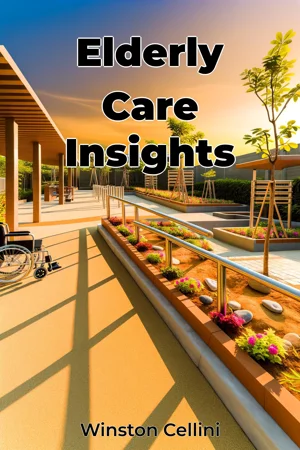
"Elderly Care Insights" addresses one of the most pressing challenges of our time: the rapid aging of global populations and society's readiness to meet their complex needs. This comprehensive examination of geriatric care combines medical expertise with social policy analysis to present a holistic view of elderly care systems and their evolution. The book centers on three fundamental areas: the physiological aspects of aging and associated healthcare requirements, the infrastructure of modern elderly care systems, and the social framework necessary for supporting an aging population. These interconnected themes form the foundation for understanding both current challenges and future solutions in geriatric care. Drawing from decades of research and clinical data, the work establishes its central argument: effective elderly care requires a integrated approach that combines medical services, social support systems, and community engagement. This framework is supported by demographic studies, healthcare outcomes research, and social impact assessments from various countries. The content progresses through several key sections. The first part examines the biological and medical aspects of aging, including common health conditions, preventive care strategies, and treatment approaches specific to older adults. The second section analyzes existing healthcare systems and their capacity to serve aging populations, incorporating case studies from different healthcare models worldwide. The final section focuses on community support structures and social programs that complement medical care. Research evidence includes longitudinal studies of aging populations, comparative analyses of healthcare systems, and data from pilot programs in community care. The book incorporates findings from medical journals, public health databases, and social science research, providing a robust foundation for its recommendations. The interdisciplinary approach connects medical science with public policy, urban planning, and social psychology. These connections illuminate how various factors influence elderly well-being and how different sectors can collaborate to improve care delivery. The book's distinctive contribution lies in its synthesis of medical knowledge with practical implementation strategies, offering concrete solutions rather than theoretical frameworks alone. It maintains an academic tone while remaining accessible to healthcare professionals, policy makers, and informed general readers. Written primarily for healthcare administrators, policy makers, and professionals in geriatric care, the book also serves as a valuable resource for families navigating elderly care decisions and students in healthcare-related fields. The content adheres to medical and social science conventions while presenting information in a structured, evidence-based format. The scope encompasses both institutional and community-based care systems, though it focuses primarily on developed nations' healthcare contexts. It addresses current debates in elderly care, including the balance between institutional and home-based care, resource allocation in healthcare systems, and the role of technology in care delivery. Practical applications include guidelines for healthcare system design, community program development, and family care planning. The book provides frameworks for assessing care quality, implementing support programs, and integrating various care services. The work acknowledges ongoing debates about sustainable healthcare funding, the role of family versus institutional care, and the integration of traditional and modern care approaches. It presents balanced perspectives on these issues while maintaining focus on evidence-based solutions. By combining medical knowledge with social science insights, "Elderly Care Insights" provides a comprehensive guide for addressing the challenges of aging populations while emphasizing the importance of dignity and quality of life in elder care.
"Elderly Care Insights" addresses one of the most pressing challenges of our time: the rapid aging of global populations and society's readiness to meet their complex needs. This comprehensive examination of geriatric care combines medical expertise with social policy analysis to present a holistic view of elderly care systems and their evolution. The book centers on three fundamental areas: the physiological aspects of aging and associated healthcare requirements, the infrastructure of modern elderly care systems, and the social framework necessary for supporting an aging population. These interconnected themes form the foundation for understanding both current challenges and future solutions in geriatric care. Drawing from decades of research and clinical data, the work establishes its central argument: effective elderly care requires a integrated approach that combines medical services, social support systems, and community engagement. This framework is supported by demographic studies, healthcare outcomes research, and social impact assessments from various countries. The content progresses through several key sections. The first part examines the biological and medical aspects of aging, including common health conditions, preventive care strategies, and treatment approaches specific to older adults. The second section analyzes existing healthcare systems and their capacity to serve aging populations, incorporating case studies from different healthcare models worldwide. The final section focuses on community support structures and social programs that complement medical care. Research evidence includes longitudinal studies of aging populations, comparative analyses of healthcare systems, and data from pilot programs in community care. The book incorporates findings from medical journals, public health databases, and social science research, providing a robust foundation for its recommendations. The interdisciplinary approach connects medical science with public policy, urban planning, and social psychology. These connections illuminate how various factors influence elderly well-being and how different sectors can collaborate to improve care delivery. The book's distinctive contribution lies in its synthesis of medical knowledge with practical implementation strategies, offering concrete solutions rather than theoretical frameworks alone. It maintains an academic tone while remaining accessible to healthcare professionals, policy makers, and informed general readers. Written primarily for healthcare administrators, policy makers, and professionals in geriatric care, the book also serves as a valuable resource for families navigating elderly care decisions and students in healthcare-related fields. The content adheres to medical and social science conventions while presenting information in a structured, evidence-based format. The scope encompasses both institutional and community-based care systems, though it focuses primarily on developed nations' healthcare contexts. It addresses current debates in elderly care, including the balance between institutional and home-based care, resource allocation in healthcare systems, and the role of technology in care delivery. Practical applications include guidelines for healthcare system design, community program development, and family care planning. The book provides frameworks for assessing care quality, implementing support programs, and integrating various care services. The work acknowledges ongoing debates about sustainable healthcare funding, the role of family versus institutional care, and the integration of traditional and modern care approaches. It presents balanced perspectives on these issues while maintaining focus on evidence-based solutions. By combining medical knowledge with social science insights, "Elderly Care Insights" provides a comprehensive guide for addressing the challenges of aging populations while emphasizing the importance of dignity and quality of life in elder care.
"Elderly Care Insights" presents a comprehensive analysis of the challenges and solutions surrounding global aging populations, expertly weaving together medical science and social policy perspectives. The book tackles this pressing contemporary issue through three interconnected lenses: the physical aspects of aging and healthcare needs, modern care system infrastructure, and social support frameworks essential for aging populations. This multifaceted approach distinguishes it from traditional healthcare texts by offering practical, implementable solutions rather than purely theoretical concepts. The book's progression follows a logical path, beginning with an in-depth examination of aging's biological and medical aspects, including common health conditions and preventive care strategies specific to older adults. It then expands into a detailed analysis of healthcare systems worldwide, incorporating revealing case studies and comparative analyses of different care models. The final section explores community support structures and social programs, demonstrating how various sectors can collaborate effectively to enhance elderly care delivery. Drawing from extensive research, including longitudinal studies and healthcare outcomes data, the book provides valuable insights for healthcare administrators, policy makers, and professionals in geriatric care. It uniquely bridges the gap between medical expertise and practical implementation, offering concrete guidelines for healthcare system design and community program development. The work maintains a careful balance between academic rigor and accessibility, making complex concepts understandable while addressing crucial debates in elderly care, such as the integration of institutional and home-based care approaches.
Book Details
ISBN
9788233940751
Publisher
Publifye AS
Your Licenses
You don't own any licenses for this book
Purchase a license below to unlock this book and download the EPUB.
Purchase License
Select a tier to unlock this book
Need bulk licensing?
Contact us for enterprise agreements.