
About This Book
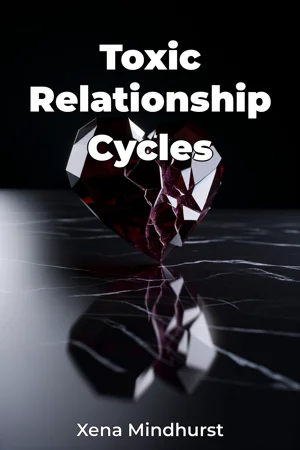
"Toxic Relationship Cycles" examines the intricate patterns of abusive interpersonal dynamics through the lens of modern psychological research, revealing how destructive behaviors become deeply embedded in relationships and offering evidence-based pathways toward breaking these cycles. The book addresses three fundamental aspects of toxic relationships: the neurobiological impact of emotional abuse, the intergenerational transmission of destructive patterns, and the societal frameworks that perpetuate harmful relationship dynamics. Drawing from extensive clinical research and case studies spanning three decades, it demonstrates how psychological trauma creates lasting alterations in both behavior and brain function. The central thesis argues that toxic relationship patterns operate as self-perpetuating systems, maintained through complex interactions of psychological, biological, and social factors. Understanding these mechanisms is crucial for both prevention and intervention in abusive dynamics. The content progresses through three major sections. The first examines the psychological mechanisms underlying toxic relationships, including attachment theory, trauma bonding, and cognitive distortions. The second section explores how these patterns transfer across generations, supported by longitudinal studies and family systems research. The final section presents practical intervention strategies, incorporating cognitive-behavioral approaches and trauma-informed therapeutic techniques. The book integrates research from multiple disciplines, including neuroscience, social psychology, and family systems theory. It presents data from clinical studies, neuroimaging research, and psychological assessments to support its arguments. The methodology combines quantitative research with qualitative analysis of therapeutic outcomes. Interdisciplinary connections link the material to sociology, public health, and child development. These connections illuminate how toxic relationships affect multiple aspects of human functioning and society at large. The book takes an innovative approach by combining traditional psychological frameworks with newer findings in neuroplasticity and trauma recovery. Written in an academic yet accessible style, the text maintains a balanced tone while addressing sensitive topics. Technical concepts are explained clearly, making complex psychological principles comprehensible to both professionals and general readers. The primary audience includes mental health professionals, social workers, and individuals seeking to understand and break free from destructive relationship patterns. The content is particularly relevant for clinicians working with families and couples, as well as educators and community health workers. The book acknowledges ongoing debates in the field, particularly regarding the role of individual versus systemic factors in perpetuating abuse cycles. It addresses controversies surrounding different therapeutic approaches while maintaining an evidence-based perspective. Practical applications include assessment tools for identifying toxic patterns, intervention strategies for clinicians, and self-help techniques for individuals. The book provides specific protocols for both professional and personal use, including safety planning and boundary-setting exercises. While comprehensive in its treatment of psychological aspects, the book specifically focuses on emotional and psychological abuse rather than physical violence, though it acknowledges the interconnection between different forms of abuse. It emphasizes the importance of professional support in addressing severe cases and includes appropriate disclaimers and resources. The work contributes to the field by synthesizing current research on trauma, attachment, and relationship dynamics while offering practical, research-supported interventions for breaking toxic cycles. It provides a structured approach to understanding and addressing destructive relationship patterns while maintaining professional objectivity and scientific rigor.
"Toxic Relationship Cycles" examines the intricate patterns of abusive interpersonal dynamics through the lens of modern psychological research, revealing how destructive behaviors become deeply embedded in relationships and offering evidence-based pathways toward breaking these cycles. The book addresses three fundamental aspects of toxic relationships: the neurobiological impact of emotional abuse, the intergenerational transmission of destructive patterns, and the societal frameworks that perpetuate harmful relationship dynamics. Drawing from extensive clinical research and case studies spanning three decades, it demonstrates how psychological trauma creates lasting alterations in both behavior and brain function. The central thesis argues that toxic relationship patterns operate as self-perpetuating systems, maintained through complex interactions of psychological, biological, and social factors. Understanding these mechanisms is crucial for both prevention and intervention in abusive dynamics. The content progresses through three major sections. The first examines the psychological mechanisms underlying toxic relationships, including attachment theory, trauma bonding, and cognitive distortions. The second section explores how these patterns transfer across generations, supported by longitudinal studies and family systems research. The final section presents practical intervention strategies, incorporating cognitive-behavioral approaches and trauma-informed therapeutic techniques. The book integrates research from multiple disciplines, including neuroscience, social psychology, and family systems theory. It presents data from clinical studies, neuroimaging research, and psychological assessments to support its arguments. The methodology combines quantitative research with qualitative analysis of therapeutic outcomes. Interdisciplinary connections link the material to sociology, public health, and child development. These connections illuminate how toxic relationships affect multiple aspects of human functioning and society at large. The book takes an innovative approach by combining traditional psychological frameworks with newer findings in neuroplasticity and trauma recovery. Written in an academic yet accessible style, the text maintains a balanced tone while addressing sensitive topics. Technical concepts are explained clearly, making complex psychological principles comprehensible to both professionals and general readers. The primary audience includes mental health professionals, social workers, and individuals seeking to understand and break free from destructive relationship patterns. The content is particularly relevant for clinicians working with families and couples, as well as educators and community health workers. The book acknowledges ongoing debates in the field, particularly regarding the role of individual versus systemic factors in perpetuating abuse cycles. It addresses controversies surrounding different therapeutic approaches while maintaining an evidence-based perspective. Practical applications include assessment tools for identifying toxic patterns, intervention strategies for clinicians, and self-help techniques for individuals. The book provides specific protocols for both professional and personal use, including safety planning and boundary-setting exercises. While comprehensive in its treatment of psychological aspects, the book specifically focuses on emotional and psychological abuse rather than physical violence, though it acknowledges the interconnection between different forms of abuse. It emphasizes the importance of professional support in addressing severe cases and includes appropriate disclaimers and resources. The work contributes to the field by synthesizing current research on trauma, attachment, and relationship dynamics while offering practical, research-supported interventions for breaking toxic cycles. It provides a structured approach to understanding and addressing destructive relationship patterns while maintaining professional objectivity and scientific rigor.
"Toxic Relationship Cycles" offers a comprehensive exploration of destructive interpersonal patterns through the lens of modern psychological research, combining neurobiological insights with practical intervention strategies. This groundbreaking work examines how abusive dynamics become deeply embedded in relationships, focusing on three crucial dimensions: the brain's response to emotional abuse, the generational transmission of harmful patterns, and the societal structures that perpetuate these cycles. The book uniquely integrates findings from neuroscience, attachment theory, and family systems research, making complex psychological concepts accessible to both professionals and general readers. Through extensive case studies and clinical research spanning three decades, it demonstrates how psychological trauma creates lasting changes in behavior and brain function. The progression from understanding toxic patterns to implementing solutions is carefully structured across three sections, moving from psychological mechanisms to intergenerational impacts, and finally to practical intervention strategies. What sets this work apart is its interdisciplinary approach to breaking destructive cycles, combining traditional psychological frameworks with cutting-edge research in neuroplasticity and trauma recovery. While maintaining academic rigor, the book presents clear, actionable insights for mental health professionals, social workers, and individuals seeking to understand and break free from toxic relationships. It provides specific assessment tools and intervention protocols while emphasizing the importance of professional support in addressing severe cases, making it an invaluable resource for both clinical practice and personal growth.
Book Details
ISBN
9788233940584
Publisher
Publifye AS
Your Licenses
You don't own any licenses for this book
Purchase a license below to unlock this book and download the EPUB.
Purchase License
Select a tier to unlock this book
Need bulk licensing?
Contact us for enterprise agreements.