
About This Book
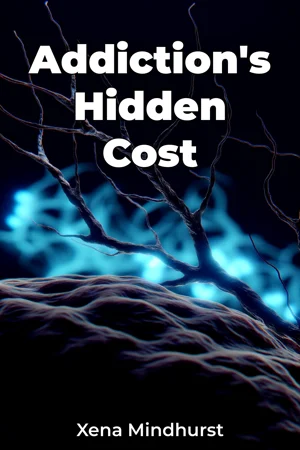
"Addiction's Hidden Cost" opens with a stark revelation: the annual economic burden of addiction in developed nations exceeds $1 trillion, yet this figure captures only a fraction of its true societal impact. This comprehensive examination delves into the intricate neuroscience of addiction while simultaneously exploring its rippling effects through families, communities, and healthcare systems. The book presents three core themes: the biological mechanisms that drive addictive behaviors, the social dynamics that influence addiction patterns, and the evolving landscape of treatment approaches. These intersecting elements provide readers with a thorough understanding of how addiction functions both at cellular and societal levels. Drawing from decades of neuroscience research and social studies, the text examines how various substances and behaviors trigger reward pathways in the brain, leading to dependence. The author integrates recent findings from longitudinal studies, brain imaging research, and public health data to construct a complete picture of addiction's mechanisms and consequences. The central thesis argues that addiction represents a complex interplay between biological vulnerability and social conditions, requiring a integrated approach to both treatment and prevention. This perspective challenges traditional views that treat addiction solely as either a medical condition or a personal choice. The book is structured in three main sections. The first explores the neurobiology of addiction, including genetic predisposition and brain chemistry alterations. The second section examines social factors, from family dynamics to economic conditions, that influence addiction rates. The final section presents current treatment methodologies and their effectiveness rates, incorporating both traditional and innovative approaches. Research support comes from multiple sources, including NIH-funded studies, international addiction research centers, and long-term population studies. The author incorporates case studies from various socioeconomic backgrounds to illustrate key concepts and their real-world applications. The work connects psychology, sociology, and public health policy, demonstrating how these fields must work in concert to address addiction effectively. It particularly emphasizes the role of economic policies and healthcare systems in both perpetuating and potentially alleviating addiction cycles. This book distinguishes itself through its data-driven analysis of both individual and societal costs, presenting addiction as a public health issue rather than a moral failing. It maintains an objective, research-based tone while remaining accessible to non-specialist readers. Written in an academic yet engaging style, the text uses clear language to explain complex concepts, making it suitable for healthcare professionals, policy makers, students, and informed general readers interested in understanding addiction's broader implications. The scope encompasses both substance and behavioral addictions, though it primarily focuses on those with the highest societal impact. While global in perspective, it draws heavily from research and case studies in developed nations. Practical applications include frameworks for healthcare providers, policy recommendations for community leaders, and strategies for families supporting individuals with addiction. The book addresses ongoing debates about harm reduction versus abstinence-based approaches, presenting evidence for various treatment modalities. This text fills a crucial gap in addiction literature by combining rigorous scientific analysis with practical social applications, providing readers with both theoretical understanding and actionable insights into one of society's most persistent challenges.
"Addiction's Hidden Cost" opens with a stark revelation: the annual economic burden of addiction in developed nations exceeds $1 trillion, yet this figure captures only a fraction of its true societal impact. This comprehensive examination delves into the intricate neuroscience of addiction while simultaneously exploring its rippling effects through families, communities, and healthcare systems. The book presents three core themes: the biological mechanisms that drive addictive behaviors, the social dynamics that influence addiction patterns, and the evolving landscape of treatment approaches. These intersecting elements provide readers with a thorough understanding of how addiction functions both at cellular and societal levels. Drawing from decades of neuroscience research and social studies, the text examines how various substances and behaviors trigger reward pathways in the brain, leading to dependence. The author integrates recent findings from longitudinal studies, brain imaging research, and public health data to construct a complete picture of addiction's mechanisms and consequences. The central thesis argues that addiction represents a complex interplay between biological vulnerability and social conditions, requiring a integrated approach to both treatment and prevention. This perspective challenges traditional views that treat addiction solely as either a medical condition or a personal choice. The book is structured in three main sections. The first explores the neurobiology of addiction, including genetic predisposition and brain chemistry alterations. The second section examines social factors, from family dynamics to economic conditions, that influence addiction rates. The final section presents current treatment methodologies and their effectiveness rates, incorporating both traditional and innovative approaches. Research support comes from multiple sources, including NIH-funded studies, international addiction research centers, and long-term population studies. The author incorporates case studies from various socioeconomic backgrounds to illustrate key concepts and their real-world applications. The work connects psychology, sociology, and public health policy, demonstrating how these fields must work in concert to address addiction effectively. It particularly emphasizes the role of economic policies and healthcare systems in both perpetuating and potentially alleviating addiction cycles. This book distinguishes itself through its data-driven analysis of both individual and societal costs, presenting addiction as a public health issue rather than a moral failing. It maintains an objective, research-based tone while remaining accessible to non-specialist readers. Written in an academic yet engaging style, the text uses clear language to explain complex concepts, making it suitable for healthcare professionals, policy makers, students, and informed general readers interested in understanding addiction's broader implications. The scope encompasses both substance and behavioral addictions, though it primarily focuses on those with the highest societal impact. While global in perspective, it draws heavily from research and case studies in developed nations. Practical applications include frameworks for healthcare providers, policy recommendations for community leaders, and strategies for families supporting individuals with addiction. The book addresses ongoing debates about harm reduction versus abstinence-based approaches, presenting evidence for various treatment modalities. This text fills a crucial gap in addiction literature by combining rigorous scientific analysis with practical social applications, providing readers with both theoretical understanding and actionable insights into one of society's most persistent challenges.
"Addiction's Hidden Cost" presents a groundbreaking exploration of addiction's far-reaching impact, revealing how this complex phenomenon costs developed nations over $1 trillion annually while affecting countless lives at both individual and societal levels. The book masterfully weaves together three critical perspectives: the neurobiological mechanisms driving addiction, the social factors influencing its development, and contemporary treatment approaches that address this multifaceted challenge. Through a careful examination of neuroscience research, brain imaging studies, and extensive public health data, the book illuminates how various substances and behaviors trigger the brain's reward pathways, leading to dependency. What sets this work apart is its integrated approach, challenging traditional viewpoints by demonstrating how addiction emerges from the intricate interplay between biological vulnerabilities and social conditions. The author expertly balances scientific rigor with accessibility, using clear language and real-world case studies to illustrate complex concepts. The book's three-part structure progressively builds understanding, beginning with the neurobiology of addiction and genetic predispositions, moving through social and economic influences, and culminating in an analysis of current treatment methodologies. This comprehensive approach makes it invaluable for healthcare professionals, policymakers, and general readers seeking to understand addiction's broader implications. By combining rigorous scientific analysis with practical applications, the book offers both theoretical insights and actionable strategies for addressing one of society's most persistent challenges.
Book Details
ISBN
9788233940485
Publisher
Publifye AS
Your Licenses
You don't own any licenses for this book
Purchase a license below to unlock this book and download the EPUB.
Purchase License
Select a tier to unlock this book
Need bulk licensing?
Contact us for enterprise agreements.