
About This Book
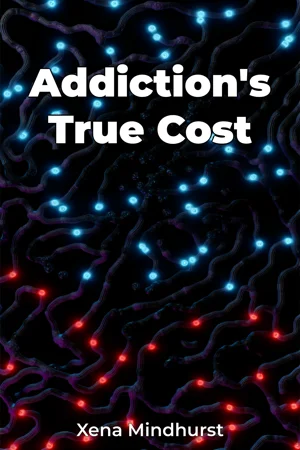
Every day, addiction reshapes millions of lives, generating costs that extend far beyond the individual to impact families, communities, and entire economies. "Addiction's True Cost" presents a comprehensive examination of both substance and behavioral addictions, revealing their intricate web of consequences and the evolving landscape of treatment approaches. Drawing from decades of clinical research and social analysis, this book illuminates three fundamental dimensions of addiction: its neurobiological mechanisms, its socioeconomic ripple effects, and the evolution of treatment methodologies. Through an evidence-based framework, readers gain insight into how addiction functions as both a medical condition and a social phenomenon, challenging traditional perspectives that have often oversimplified this complex issue. The book begins by establishing a historical foundation, tracking how societal understanding of addiction has transformed from a moral failing to a recognized medical condition. This evolution sets the stage for examining current scientific knowledge, including breakthrough research in neuroscience and genetic predisposition studies. Statistical data from global health organizations, economic impact studies, and long-term population surveys provide robust support for the book's analysis. Central chapters explore the multilayered impact of addiction across society. From workplace productivity losses to healthcare system strain, from criminal justice costs to family system disruption, the book quantifies these effects through current research and case studies. Special attention is given to emerging challenges, such as the gaming addiction epidemic and the opioid crisis, examining how these modern manifestations reflect broader societal changes. The work's core argument maintains that effective addiction management requires an integrated approach combining medical treatment, social support systems, and policy reform. This position is supported by comparative studies of various international treatment models and their outcomes. The book presents evidence from successful harm-reduction programs, analyzing their cost-effectiveness and social impact. Interdisciplinary connections link addiction science to economics, public policy, and social psychology, demonstrating how these fields collectively inform our understanding of addiction's true scope. The text maintains an accessible yet authoritative tone, making complex medical and social science concepts comprehensible to general readers while providing sufficient depth for healthcare professionals and policy makers. The final sections focus on practical applications, offering evidence-based strategies for both prevention and treatment. These include emerging therapeutic approaches, community-based interventions, and policy recommendations supported by outcome data. The book addresses ongoing debates in the field, such as the role of medication-assisted treatment and the balance between harm reduction and abstinence-based approaches. Written for healthcare providers, policy makers, social workers, and informed general readers, this book serves as both a comprehensive reference and an actionable guide. It avoids sensationalism in favor of factual analysis, presenting research findings and expert insights in clear, practical terms. While the scope encompasses both substance and behavioral addictions, the book acknowledges its limitations, particularly regarding emerging forms of technology-related dependencies where research is still developing. Throughout, it maintains a balance between scientific rigor and practical application, ensuring readers gain both understanding and applicable knowledge in addressing addiction's challenges.
Every day, addiction reshapes millions of lives, generating costs that extend far beyond the individual to impact families, communities, and entire economies. "Addiction's True Cost" presents a comprehensive examination of both substance and behavioral addictions, revealing their intricate web of consequences and the evolving landscape of treatment approaches. Drawing from decades of clinical research and social analysis, this book illuminates three fundamental dimensions of addiction: its neurobiological mechanisms, its socioeconomic ripple effects, and the evolution of treatment methodologies. Through an evidence-based framework, readers gain insight into how addiction functions as both a medical condition and a social phenomenon, challenging traditional perspectives that have often oversimplified this complex issue. The book begins by establishing a historical foundation, tracking how societal understanding of addiction has transformed from a moral failing to a recognized medical condition. This evolution sets the stage for examining current scientific knowledge, including breakthrough research in neuroscience and genetic predisposition studies. Statistical data from global health organizations, economic impact studies, and long-term population surveys provide robust support for the book's analysis. Central chapters explore the multilayered impact of addiction across society. From workplace productivity losses to healthcare system strain, from criminal justice costs to family system disruption, the book quantifies these effects through current research and case studies. Special attention is given to emerging challenges, such as the gaming addiction epidemic and the opioid crisis, examining how these modern manifestations reflect broader societal changes. The work's core argument maintains that effective addiction management requires an integrated approach combining medical treatment, social support systems, and policy reform. This position is supported by comparative studies of various international treatment models and their outcomes. The book presents evidence from successful harm-reduction programs, analyzing their cost-effectiveness and social impact. Interdisciplinary connections link addiction science to economics, public policy, and social psychology, demonstrating how these fields collectively inform our understanding of addiction's true scope. The text maintains an accessible yet authoritative tone, making complex medical and social science concepts comprehensible to general readers while providing sufficient depth for healthcare professionals and policy makers. The final sections focus on practical applications, offering evidence-based strategies for both prevention and treatment. These include emerging therapeutic approaches, community-based interventions, and policy recommendations supported by outcome data. The book addresses ongoing debates in the field, such as the role of medication-assisted treatment and the balance between harm reduction and abstinence-based approaches. Written for healthcare providers, policy makers, social workers, and informed general readers, this book serves as both a comprehensive reference and an actionable guide. It avoids sensationalism in favor of factual analysis, presenting research findings and expert insights in clear, practical terms. While the scope encompasses both substance and behavioral addictions, the book acknowledges its limitations, particularly regarding emerging forms of technology-related dependencies where research is still developing. Throughout, it maintains a balance between scientific rigor and practical application, ensuring readers gain both understanding and applicable knowledge in addressing addiction's challenges.
"Addiction's True Cost" delivers a groundbreaking exploration of addiction's far-reaching impact, examining both substance and behavioral dependencies through the lens of modern science and societal implications. The book uniquely weaves together three critical perspectives: the neurobiological foundations of addiction, its widespread socioeconomic effects, and the evolution of treatment approaches, offering readers a comprehensive understanding of this complex issue. The narrative progresses from a historical overview of addiction's perception in society to cutting-edge neuroscientific discoveries and genetic research. Through evidence-based analysis, the book reveals striking insights about addiction's ripple effects, from workplace productivity losses to healthcare system burdens. Particularly noteworthy is its examination of emerging challenges like gaming addiction and the opioid crisis, demonstrating how modern societal changes influence addiction patterns. The book stands out for its practical, integrated approach to addiction management, comparing international treatment models and their outcomes. It masterfully bridges the gap between complex medical concepts and accessible information, making it valuable for both healthcare professionals and general readers. The final chapters focus on actionable strategies, presenting evidence-based prevention methods and treatment approaches while addressing ongoing debates in the field, such as the effectiveness of medication-assisted treatment versus abstinence-based programs.
Book Details
ISBN
9788233940386
Publisher
Publifye AS
Your Licenses
You don't own any licenses for this book
Purchase a license below to unlock this book and download the EPUB.
Purchase License
Select a tier to unlock this book
Need bulk licensing?
Contact us for enterprise agreements.