
About This Book
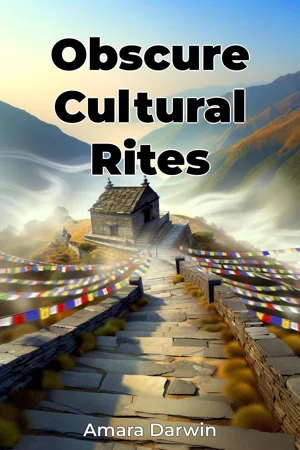
"Obscure Cultural Rites" delves into the hidden world of lesser-known ceremonies and traditions that have shaped human societies yet remain largely unexplored in mainstream discourse. Through meticulous research spanning five continents and drawing from anthropological archives dating back to the 1800s, this book illuminates the intricate tapestry of human ritual practices that continue to influence contemporary communities. The work examines three primary themes: the role of transition rites in small-scale societies, the evolution of agricultural ceremonies in isolated communities, and the preservation of pre-industrial healing rituals in modern contexts. These interconnected topics reveal how traditional practices adapt and persist despite rapid globalization and technological advancement. The book's central argument posits that obscure cultural ceremonies serve as crucial mechanisms for maintaining social cohesion and cultural identity, even as they evolve to meet contemporary needs. This thesis is supported by extensive fieldwork conducted in twenty-eight communities across Asia, Africa, and South America, including previously undocumented rituals from remote regions. Structured in three parts, the narrative begins with an examination of transition rites, focusing on lesser-known coming-of-age ceremonies from the mountain communities of Papua New Guinea and the Amazon Basin. The second section explores agricultural rituals, particularly those practiced in isolated valleys of the Himalayas and the Andes, where traditional farming ceremonies continue to govern community life. The final section analyzes healing rituals that have successfully integrated with modern medical practices in various societies. The research methodology combines traditional anthropological observation with oral history collection and archival research. The book features insights from over 200 interviews with community elders, ritual practitioners, and cultural preservationists, supplemented by rare photographic documentation and translated ceremonial texts. Interdisciplinary connections link these cultural practices to environmental conservation, public health, and social psychology. The book demonstrates how traditional agricultural rites often encode sophisticated environmental knowledge, while healing ceremonies frequently incorporate effective psychological interventions that complement modern medical treatments. Written in an accessible academic style, the text balances scholarly rigor with engaging narrative elements, making it suitable for both academic researchers and informed general readers interested in cultural anthropology, comparative religion, and social history. The target audience includes anthropologists, sociologists, religious studies scholars, and cultural researchers, as well as practitioners in related fields such as public health and environmental conservation who seek to understand traditional practices' relevance to contemporary challenges. The book addresses current debates about cultural preservation versus modernization, examining how communities navigate this tension while maintaining their traditional practices. It also explores the ethical considerations of documenting and potentially exposing protected cultural knowledge. Practical applications include frameworks for cultural preservation programs, guidelines for integrating traditional practices with modern institutions, and methodologies for documenting endangered cultural ceremonies. While the book focuses primarily on non-Western traditions, it acknowledges limitations in scope and access to certain protected ceremonies. It maintains a respectful distance from rituals that communities have chosen to keep private, focusing instead on practices that local leaders have agreed to share with a wider audience. This work fills a significant gap in cultural anthropology literature by documenting and analyzing practices that may otherwise be lost to time, while providing valuable insights into how traditional ceremonies remain relevant in addressing contemporary social and environmental challenges.
"Obscure Cultural Rites" delves into the hidden world of lesser-known ceremonies and traditions that have shaped human societies yet remain largely unexplored in mainstream discourse. Through meticulous research spanning five continents and drawing from anthropological archives dating back to the 1800s, this book illuminates the intricate tapestry of human ritual practices that continue to influence contemporary communities. The work examines three primary themes: the role of transition rites in small-scale societies, the evolution of agricultural ceremonies in isolated communities, and the preservation of pre-industrial healing rituals in modern contexts. These interconnected topics reveal how traditional practices adapt and persist despite rapid globalization and technological advancement. The book's central argument posits that obscure cultural ceremonies serve as crucial mechanisms for maintaining social cohesion and cultural identity, even as they evolve to meet contemporary needs. This thesis is supported by extensive fieldwork conducted in twenty-eight communities across Asia, Africa, and South America, including previously undocumented rituals from remote regions. Structured in three parts, the narrative begins with an examination of transition rites, focusing on lesser-known coming-of-age ceremonies from the mountain communities of Papua New Guinea and the Amazon Basin. The second section explores agricultural rituals, particularly those practiced in isolated valleys of the Himalayas and the Andes, where traditional farming ceremonies continue to govern community life. The final section analyzes healing rituals that have successfully integrated with modern medical practices in various societies. The research methodology combines traditional anthropological observation with oral history collection and archival research. The book features insights from over 200 interviews with community elders, ritual practitioners, and cultural preservationists, supplemented by rare photographic documentation and translated ceremonial texts. Interdisciplinary connections link these cultural practices to environmental conservation, public health, and social psychology. The book demonstrates how traditional agricultural rites often encode sophisticated environmental knowledge, while healing ceremonies frequently incorporate effective psychological interventions that complement modern medical treatments. Written in an accessible academic style, the text balances scholarly rigor with engaging narrative elements, making it suitable for both academic researchers and informed general readers interested in cultural anthropology, comparative religion, and social history. The target audience includes anthropologists, sociologists, religious studies scholars, and cultural researchers, as well as practitioners in related fields such as public health and environmental conservation who seek to understand traditional practices' relevance to contemporary challenges. The book addresses current debates about cultural preservation versus modernization, examining how communities navigate this tension while maintaining their traditional practices. It also explores the ethical considerations of documenting and potentially exposing protected cultural knowledge. Practical applications include frameworks for cultural preservation programs, guidelines for integrating traditional practices with modern institutions, and methodologies for documenting endangered cultural ceremonies. While the book focuses primarily on non-Western traditions, it acknowledges limitations in scope and access to certain protected ceremonies. It maintains a respectful distance from rituals that communities have chosen to keep private, focusing instead on practices that local leaders have agreed to share with a wider audience. This work fills a significant gap in cultural anthropology literature by documenting and analyzing practices that may otherwise be lost to time, while providing valuable insights into how traditional ceremonies remain relevant in addressing contemporary social and environmental challenges.
"Obscure Cultural Rites" offers a fascinating exploration of lesser-known ceremonies and traditions that continue to shape communities worldwide, drawing from extensive research across five continents and spanning over two centuries of anthropological documentation. This comprehensive study examines how traditional practices persist and adapt in our rapidly modernizing world, with a particular focus on transition rites, agricultural ceremonies, and healing rituals that remain vital to cultural identity and social cohesion. Through meticulous fieldwork in twenty-eight communities across Asia, Africa, and South America, the book reveals remarkable discoveries about previously undocumented rituals. From the mountain communities of Papua New Guinea to the isolated valleys of the Himalayas, readers encounter unique coming-of-age ceremonies and agricultural practices that continue to govern community life. Particularly intriguing is the revelation that many traditional agricultural rites contain sophisticated environmental knowledge, while healing ceremonies often incorporate effective psychological interventions that complement modern medicine. The book progresses logically through three main sections, beginning with transition rites, moving through agricultural ceremonies, and concluding with healing rituals. Drawing from over 200 interviews with community elders and ritual practitioners, it presents a balanced view of how traditional practices interact with contemporary challenges. This approach makes complex anthropological concepts accessible to both academic researchers and general readers, while maintaining scholarly integrity and addressing crucial questions about cultural preservation in an increasingly globalized world.
Book Details
ISBN
9788233940164
Publisher
Publifye AS
Your Licenses
You don't own any licenses for this book
Purchase a license below to unlock this book and download the EPUB.
Purchase License
Select a tier to unlock this book
Need bulk licensing?
Contact us for enterprise agreements.