
About This Book
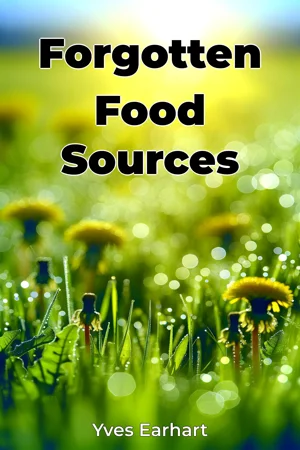
"Forgotten Food Sources" challenges our modern understanding of edible plants by examining historically significant food sources that have fallen into obscurity. Through meticulous research spanning botanical archives, historical documents, and ethnographic studies, this book reveals how numerous nutritious and readily available plants have been overlooked in contemporary food systems. The book begins by exploring the historical significance of common plants like dandelions, which were once prized in European gardens, and lamb's quarters, a nutrient-rich green that sustained various indigenous populations across North America. These examples set the foundation for understanding how cultural shifts and industrialization have narrowed our food choices despite the abundance of edible options in our environment. Three main sections structure the narrative: "Lost Staples," "Wild Abundance," and "Revival Strategies." The first section documents formerly common food plants that were integral to various civilizations, including forgotten grains like amaranth and multiple varieties of obsolete root vegetables. "Wild Abundance" catalogs readily available plants in different ecosystems, providing detailed nutritional analyses and traditional preparation methods. The final section presents practical approaches for reintegrating these foods into modern diets and agricultural systems. The research draws from archaeological findings, historical agricultural records, and contemporary botanical studies. The author collaborates with ethnobotanists, food historians, and indigenous knowledge keepers to present a comprehensive understanding of these overlooked food sources. Each plant profile includes botanical identification guides, nutritional data, cultivation information, and traditional preparation methods verified through both scientific analysis and historical documentation. The book connects multiple disciplines, linking agricultural history with climate science to demonstrate how forgotten foods might address current sustainability challenges. It explores the intersection of nutrition science and cultural preservation, showing how traditional food knowledge often anticipates modern scientific discoveries about health benefits. Written in an accessible, research-based style, the text balances scholarly rigor with practical application. Technical botanical terms are clearly explained, making the content accessible to both academic readers and home gardeners. Each chapter includes detailed photographs, botanical illustrations, and step-by-step guides for identification and preparation. The target audience includes foragers, sustainable food advocates, nutritionists, and anyone interested in expanding their dietary options through historically verified sources. The book addresses current debates about food security, biodiversity conservation, and sustainable agriculture by presenting forgotten food sources as potential solutions to modern challenges. Practical applications include guidance for identifying and harvesting wild foods safely, methods for incorporating forgotten plants into modern gardens, and techniques for preparing these foods in contemporary kitchens. The book acknowledges limitations in availability based on geography and seasonality, providing regional alternatives and preservation methods. Rather than promoting a complete return to historical diets, the book advocates for broadening our current food systems by reintegrating proven, nutritious options that have been historically successful. It addresses concerns about food safety through clear guidelines for identification and preparation, while discussing the regulatory challenges of integrating wild foods into commercial food systems. The work stands out through its combination of rigorous historical research, practical application, and forward-looking solutions for food system resilience. By examining the intersection of traditional knowledge and modern nutritional science, it presents a well-documented case for diversifying our food sources using time-tested options that have sustained populations throughout history.
"Forgotten Food Sources" challenges our modern understanding of edible plants by examining historically significant food sources that have fallen into obscurity. Through meticulous research spanning botanical archives, historical documents, and ethnographic studies, this book reveals how numerous nutritious and readily available plants have been overlooked in contemporary food systems. The book begins by exploring the historical significance of common plants like dandelions, which were once prized in European gardens, and lamb's quarters, a nutrient-rich green that sustained various indigenous populations across North America. These examples set the foundation for understanding how cultural shifts and industrialization have narrowed our food choices despite the abundance of edible options in our environment. Three main sections structure the narrative: "Lost Staples," "Wild Abundance," and "Revival Strategies." The first section documents formerly common food plants that were integral to various civilizations, including forgotten grains like amaranth and multiple varieties of obsolete root vegetables. "Wild Abundance" catalogs readily available plants in different ecosystems, providing detailed nutritional analyses and traditional preparation methods. The final section presents practical approaches for reintegrating these foods into modern diets and agricultural systems. The research draws from archaeological findings, historical agricultural records, and contemporary botanical studies. The author collaborates with ethnobotanists, food historians, and indigenous knowledge keepers to present a comprehensive understanding of these overlooked food sources. Each plant profile includes botanical identification guides, nutritional data, cultivation information, and traditional preparation methods verified through both scientific analysis and historical documentation. The book connects multiple disciplines, linking agricultural history with climate science to demonstrate how forgotten foods might address current sustainability challenges. It explores the intersection of nutrition science and cultural preservation, showing how traditional food knowledge often anticipates modern scientific discoveries about health benefits. Written in an accessible, research-based style, the text balances scholarly rigor with practical application. Technical botanical terms are clearly explained, making the content accessible to both academic readers and home gardeners. Each chapter includes detailed photographs, botanical illustrations, and step-by-step guides for identification and preparation. The target audience includes foragers, sustainable food advocates, nutritionists, and anyone interested in expanding their dietary options through historically verified sources. The book addresses current debates about food security, biodiversity conservation, and sustainable agriculture by presenting forgotten food sources as potential solutions to modern challenges. Practical applications include guidance for identifying and harvesting wild foods safely, methods for incorporating forgotten plants into modern gardens, and techniques for preparing these foods in contemporary kitchens. The book acknowledges limitations in availability based on geography and seasonality, providing regional alternatives and preservation methods. Rather than promoting a complete return to historical diets, the book advocates for broadening our current food systems by reintegrating proven, nutritious options that have been historically successful. It addresses concerns about food safety through clear guidelines for identification and preparation, while discussing the regulatory challenges of integrating wild foods into commercial food systems. The work stands out through its combination of rigorous historical research, practical application, and forward-looking solutions for food system resilience. By examining the intersection of traditional knowledge and modern nutritional science, it presents a well-documented case for diversifying our food sources using time-tested options that have sustained populations throughout history.
"Forgotten Food Sources" explores the fascinating world of overlooked edible plants that once played crucial roles in human nutrition and survival. This comprehensive work bridges the gap between historical food knowledge and modern dietary needs, revealing how numerous nutritious plants have been largely abandoned despite their potential to address contemporary food security and sustainability challenges. Through a well-structured journey across three main sections - "Lost Staples," "Wild Abundance," and "Revival Strategies" - the book uncovers the hidden potential of common plants like dandelions and lamb's quarters, which were once dietary staples. The author combines insights from ethnobotanists, food historians, and indigenous knowledge keepers to present detailed profiles of forgotten food plants, complete with nutritional data, cultivation information, and traditional preparation methods. Each profile is supported by both scientific analysis and historical documentation, making the information both credible and practical. What sets this book apart is its balanced approach to reintegrating these forgotten foods into modern diets. Rather than advocating for a complete return to historical eating patterns, it provides practical guidance for identifying, harvesting, and preparing these plants in contemporary settings. The work seamlessly combines archaeological findings with current botanical research, offering solutions to modern challenges while acknowledging the importance of food safety and regional availability. This makes it an invaluable resource for foragers, sustainable food advocates, and anyone interested in expanding their dietary options through historically verified sources.
Book Details
ISBN
9788233940119
Publisher
Publifye AS
Your Licenses
You don't own any licenses for this book
Purchase a license below to unlock this book and download the EPUB.
Purchase License
Select a tier to unlock this book
Need bulk licensing?
Contact us for enterprise agreements.