
About This Book
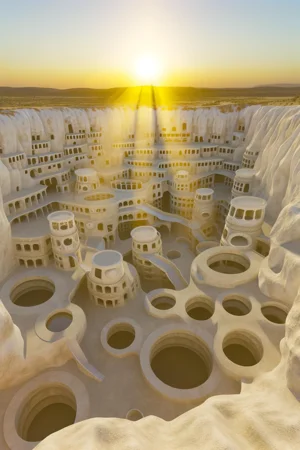
"Underground City Tales" explores humanity's enduring relationship with subterranean architecture, examining how communities across time have transformed the world beneath our feet into vibrant living spaces. From the ancient cave dwellings of Cappadocia to modern-day underground cities in Montreal and Helsinki, this book reveals the practical, cultural, and technological dimensions of subsurface habitation. The work presents three central themes: the historical evolution of underground architecture, the engineering principles that make underground living possible, and the social dynamics that emerge in below-ground communities. These interconnected aspects demonstrate how subterranean spaces have consistently provided solutions to environmental challenges, security concerns, and urban density issues throughout human history. Drawing from archaeological records, architectural blueprints, and contemporary case studies, the book establishes that underground dwellings represent not merely places of refuge but sophisticated responses to geographical, climatic, and social pressures. The research incorporates findings from recent geological surveys, architectural preservation efforts, and urban planning initiatives, providing readers with current insights into subterranean design and construction. The narrative is structured in three main sections. The first examines ancient underground cities, including the complex networks beneath Edinburgh and the desert cave homes of Tunisia, analyzing their construction methods and social organization. The second section focuses on modern underground architecture, from subway-connected shopping complexes in Japan to nuclear bunker communities in Switzerland, exploring how contemporary technology enhances underground living. The final section looks toward future applications, discussing sustainable underground urban development and its role in addressing climate change and population growth. The book connects architecture with anthropology, engineering, and environmental science, demonstrating how underground spaces influence human behavior, require innovative construction solutions, and contribute to environmental sustainability. Original interviews with urban planners, architects, and residents of underground communities provide first-hand perspectives on the challenges and benefits of subsurface living. Written in an analytical style that balances technical detail with accessible explanations, the work serves architects, urban planners, historians, and general readers interested in alternative living spaces. Each chapter includes detailed illustrations, architectural drawings, and photographs that clarify complex concepts and showcase the diversity of underground structures. The research addresses practical considerations such as ventilation systems, natural light integration, and psychological adaptation to underground environments. It examines ongoing debates about the role of underground development in future cities, including questions of cost-effectiveness, environmental impact, and social acceptance. While focusing primarily on permanent underground dwellings, the book acknowledges but does not extensively cover temporary underground structures or mines. Instead, it concentrates on habitable spaces designed for long-term human occupation, analyzing their development, functionality, and impact on community life. The work provides valuable insights for urban planners considering underground development, architects interested in sustainable design, and professionals involved in public infrastructure. It addresses current discussions about urban density, energy efficiency, and climate resilience, offering underground architecture as a practical solution to these modern challenges. By examining both successful and failed underground city projects, the book presents a balanced analysis of subterranean living's potential and limitations, providing readers with comprehensive understanding of this distinctive architectural approach and its significance in both historical and contemporary contexts.
"Underground City Tales" explores humanity's enduring relationship with subterranean architecture, examining how communities across time have transformed the world beneath our feet into vibrant living spaces. From the ancient cave dwellings of Cappadocia to modern-day underground cities in Montreal and Helsinki, this book reveals the practical, cultural, and technological dimensions of subsurface habitation. The work presents three central themes: the historical evolution of underground architecture, the engineering principles that make underground living possible, and the social dynamics that emerge in below-ground communities. These interconnected aspects demonstrate how subterranean spaces have consistently provided solutions to environmental challenges, security concerns, and urban density issues throughout human history. Drawing from archaeological records, architectural blueprints, and contemporary case studies, the book establishes that underground dwellings represent not merely places of refuge but sophisticated responses to geographical, climatic, and social pressures. The research incorporates findings from recent geological surveys, architectural preservation efforts, and urban planning initiatives, providing readers with current insights into subterranean design and construction. The narrative is structured in three main sections. The first examines ancient underground cities, including the complex networks beneath Edinburgh and the desert cave homes of Tunisia, analyzing their construction methods and social organization. The second section focuses on modern underground architecture, from subway-connected shopping complexes in Japan to nuclear bunker communities in Switzerland, exploring how contemporary technology enhances underground living. The final section looks toward future applications, discussing sustainable underground urban development and its role in addressing climate change and population growth. The book connects architecture with anthropology, engineering, and environmental science, demonstrating how underground spaces influence human behavior, require innovative construction solutions, and contribute to environmental sustainability. Original interviews with urban planners, architects, and residents of underground communities provide first-hand perspectives on the challenges and benefits of subsurface living. Written in an analytical style that balances technical detail with accessible explanations, the work serves architects, urban planners, historians, and general readers interested in alternative living spaces. Each chapter includes detailed illustrations, architectural drawings, and photographs that clarify complex concepts and showcase the diversity of underground structures. The research addresses practical considerations such as ventilation systems, natural light integration, and psychological adaptation to underground environments. It examines ongoing debates about the role of underground development in future cities, including questions of cost-effectiveness, environmental impact, and social acceptance. While focusing primarily on permanent underground dwellings, the book acknowledges but does not extensively cover temporary underground structures or mines. Instead, it concentrates on habitable spaces designed for long-term human occupation, analyzing their development, functionality, and impact on community life. The work provides valuable insights for urban planners considering underground development, architects interested in sustainable design, and professionals involved in public infrastructure. It addresses current discussions about urban density, energy efficiency, and climate resilience, offering underground architecture as a practical solution to these modern challenges. By examining both successful and failed underground city projects, the book presents a balanced analysis of subterranean living's potential and limitations, providing readers with comprehensive understanding of this distinctive architectural approach and its significance in both historical and contemporary contexts.
"Underground City Tales" offers a fascinating exploration of humanity's relationship with subterranean architecture, from ancient cave dwellings to modern underground metropolises. This comprehensive work examines how communities throughout history have adapted underground spaces into sophisticated living environments, presenting a unique perspective on architectural innovation and human adaptation. The book weaves together three compelling narratives: the historical evolution of underground cities, the engineering challenges of subsurface construction, and the social dynamics of below-ground communities. Through detailed case studies ranging from Cappadocia's ancient cave homes to Montreal's modern underground complexes, readers discover how these spaces have provided innovative solutions to environmental challenges, security concerns, and urban density issues. The author skillfully integrates archaeological findings, architectural blueprints, and contemporary research to demonstrate the sophistication of underground dwellings. Progressing from ancient underground cities to future applications, the book combines technical expertise with accessible explanations, making complex architectural concepts understandable to both professionals and general readers. What sets this work apart is its holistic approach, incorporating original interviews with urban planners and residents, while examining practical considerations such as ventilation systems and psychological adaptation to underground living. The analysis of successful and failed underground projects provides valuable insights for urban planners, architects, and anyone interested in sustainable urban development solutions for our changing world.
Book Details
ISBN
9788233940102
Publisher
Publifye AS
Your Licenses
You don't own any licenses for this book
Purchase a license below to unlock this book and download the EPUB.
Purchase License
Select a tier to unlock this book
Need bulk licensing?
Contact us for enterprise agreements.