
About This Book
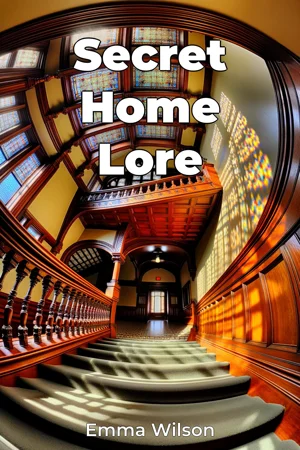
"Secret Home Lore" uncovers the intricate relationship between family customs and residential architecture, revealing how generations of families have shaped their living spaces through distinct traditions and architectural adaptations. This examination of domestic life spans from the 1800s to the present, focusing on how family rituals influence home design and vice versa. The book explores two primary themes: the evolution of family-specific architectural modifications and the preservation of generational customs through deliberate spatial design. Through extensive research in family archives, architectural records, and oral histories from over 200 families across different regions, the work presents a detailed analysis of how domestic spaces reflect and perpetuate family traditions. Drawing from architectural anthropology and social history, the text documents specific cases where families modified their homes to accommodate unique customs. For instance, the practice of creating "memory rooms" - spaces dedicated to preserving family artifacts and continuing specific traditions - emerged as a common pattern across different cultures and socioeconomic backgrounds. The book is structured in three main sections. The first examines the historical context of family-influenced architecture, analyzing how immigration patterns and cultural preservation shaped home modifications. The second section presents detailed case studies of families who maintained distinct architectural features over multiple generations, such as specialized cooking spaces or multi-purpose gathering areas. The final section provides practical insights for modern homeowners on incorporating family traditions into contemporary home design. Supporting evidence comes from building permits, family diaries, architectural drawings, and interviews with multiple generations of family members. The research methodology combines architectural documentation with ethnographic studies, creating a comprehensive picture of how families interact with their living spaces. The work makes significant connections between architecture, sociology, and cultural anthropology, demonstrating how physical spaces influence family dynamics and cultural preservation. It challenges conventional architectural history by highlighting the role of occupants in shaping residential spaces beyond their initial design. Written in an academic yet accessible style, the book incorporates detailed floor plans, photographs, and family narratives to illustrate its points. It addresses both scholars interested in domestic architecture and families seeking to understand or preserve their own residential traditions. The target audience includes architects, social historians, and families interested in home renovation or cultural preservation. The book provides practical guidelines for incorporating family traditions into home design while maintaining modern functionality. The scope encompasses both urban and rural settings across various cultural contexts, though it focuses primarily on residential architecture from the past two centuries. It examines how families adapt standard house plans to meet specific needs and how these adaptations become part of their cultural legacy. The work addresses ongoing debates in architectural preservation, questioning the balance between maintaining historical integrity and accommodating evolving family needs. It presents case studies of successful compromises between preservation and adaptation. Real-world applications include guidance for home renovation planning, methods for documenting family spatial traditions, and strategies for incorporating cultural practices into modern home design. The book provides tools for families to assess their spatial needs and make informed decisions about home modifications that support their traditions. This research contributes to the understanding of domestic architecture as a living, evolving element of family life rather than a static structural design, offering insights into how physical spaces shape and are shaped by the families who inhabit them.
"Secret Home Lore" uncovers the intricate relationship between family customs and residential architecture, revealing how generations of families have shaped their living spaces through distinct traditions and architectural adaptations. This examination of domestic life spans from the 1800s to the present, focusing on how family rituals influence home design and vice versa. The book explores two primary themes: the evolution of family-specific architectural modifications and the preservation of generational customs through deliberate spatial design. Through extensive research in family archives, architectural records, and oral histories from over 200 families across different regions, the work presents a detailed analysis of how domestic spaces reflect and perpetuate family traditions. Drawing from architectural anthropology and social history, the text documents specific cases where families modified their homes to accommodate unique customs. For instance, the practice of creating "memory rooms" - spaces dedicated to preserving family artifacts and continuing specific traditions - emerged as a common pattern across different cultures and socioeconomic backgrounds. The book is structured in three main sections. The first examines the historical context of family-influenced architecture, analyzing how immigration patterns and cultural preservation shaped home modifications. The second section presents detailed case studies of families who maintained distinct architectural features over multiple generations, such as specialized cooking spaces or multi-purpose gathering areas. The final section provides practical insights for modern homeowners on incorporating family traditions into contemporary home design. Supporting evidence comes from building permits, family diaries, architectural drawings, and interviews with multiple generations of family members. The research methodology combines architectural documentation with ethnographic studies, creating a comprehensive picture of how families interact with their living spaces. The work makes significant connections between architecture, sociology, and cultural anthropology, demonstrating how physical spaces influence family dynamics and cultural preservation. It challenges conventional architectural history by highlighting the role of occupants in shaping residential spaces beyond their initial design. Written in an academic yet accessible style, the book incorporates detailed floor plans, photographs, and family narratives to illustrate its points. It addresses both scholars interested in domestic architecture and families seeking to understand or preserve their own residential traditions. The target audience includes architects, social historians, and families interested in home renovation or cultural preservation. The book provides practical guidelines for incorporating family traditions into home design while maintaining modern functionality. The scope encompasses both urban and rural settings across various cultural contexts, though it focuses primarily on residential architecture from the past two centuries. It examines how families adapt standard house plans to meet specific needs and how these adaptations become part of their cultural legacy. The work addresses ongoing debates in architectural preservation, questioning the balance between maintaining historical integrity and accommodating evolving family needs. It presents case studies of successful compromises between preservation and adaptation. Real-world applications include guidance for home renovation planning, methods for documenting family spatial traditions, and strategies for incorporating cultural practices into modern home design. The book provides tools for families to assess their spatial needs and make informed decisions about home modifications that support their traditions. This research contributes to the understanding of domestic architecture as a living, evolving element of family life rather than a static structural design, offering insights into how physical spaces shape and are shaped by the families who inhabit them.
"Secret Home Lore" explores the fascinating intersection between family traditions and residential architecture, revealing how generations have shaped their living spaces to reflect and preserve their unique customs. Through extensive research spanning from the 1800s to present day, the book examines how over 200 families across different regions have modified their homes to accommodate specific cultural practices and family rituals. The emergence of "memory rooms" - dedicated spaces for preserving family artifacts and traditions - stands out as a particularly intriguing pattern observed across various cultures and economic backgrounds. The book progresses through three main sections, beginning with a historical analysis of how immigration and cultural preservation influenced home modifications. It then delves into detailed case studies of families who maintained distinct architectural features across generations, such as specialized cooking spaces and gathering areas. The final section bridges past and present by offering practical guidance for modern homeowners looking to incorporate family traditions into contemporary home design. What makes this work particularly valuable is its unique combination of architectural documentation and ethnographic research, supported by building permits, family diaries, and multi-generational interviews. The text challenges traditional architectural history by emphasizing the active role of occupants in shaping their living spaces, while providing practical tools for families to assess their spatial needs and make informed decisions about home modifications that honor their cultural heritage. Through accessible language and rich illustrations, the book serves both academic researchers and families interested in preserving their residential traditions.
Book Details
ISBN
9788233940003
Publisher
Publifye AS
Your Licenses
You don't own any licenses for this book
Purchase a license below to unlock this book and download the EPUB.
Purchase License
Select a tier to unlock this book
Need bulk licensing?
Contact us for enterprise agreements.