
About This Book
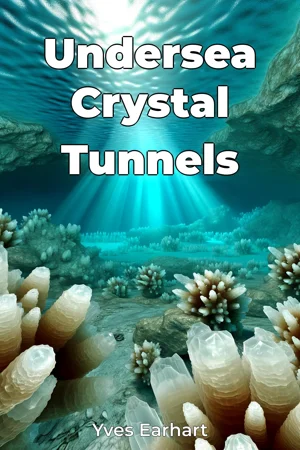
Beneath the ocean's surface lies a hidden world where geology and biology intersect in remarkable ways. "Undersea Crystal Tunnels" explores the complex network of submarine caves that harbor unique mineral formations and specialized life forms, offering readers a comprehensive examination of these little-studied marine environments. The book presents three core topics: the geological processes that form underwater cave systems, the chemistry behind crystal formation in marine environments, and the biological adaptations of cave-dwelling organisms. These interconnected subjects reveal how submarine caves serve as natural laboratories for understanding mineral growth, biological evolution, and ocean chemistry. Drawing from recent marine geological surveys and biological studies, the text examines how tectonic activity and chemical erosion create extensive underwater cave networks. Readers learn how changing sea levels throughout Earth's history have influenced cave formation, with detailed analysis of current cave systems from the Caribbean to the Mediterranean. The book's central thesis demonstrates how submarine caves represent crucial interfaces between biological and geological processes, serving as indicators of past climate conditions while supporting present-day marine biodiversity. This understanding becomes increasingly relevant as scientists study these environments for insights into ocean acidification and climate change. Structured in three main sections, the content progresses from physical cave formation to mineral growth processes, culminating in the examination of cave biodiversity. The first section details how underwater caves form through limestone dissolution and tectonic activity. The second explores the precise conditions required for various crystal formations, including aragonite and calcite structures. The final section documents the specialized organisms that inhabit these environments, from bacterial colonies to blind cave fish. Research evidence includes data from submersible expeditions, chemical analysis of water samples, and long-term studies of crystal growth rates. The book incorporates findings from international cave mapping projects and marine biology research programs, providing current scientific understanding of these environments. The work connects marine geology with evolution, chemistry, and climate science, demonstrating how submarine caves serve as natural archives of environmental change. These connections help readers understand broader concepts in ocean science and global environmental systems. Written in an academic yet accessible style, the text balances technical detail with clear explanations, making complex concepts understandable for readers with basic scientific knowledge. The book targets marine science students, geologists, and environmental researchers while remaining accessible to informed general readers interested in ocean environments. The scope encompasses both shallow and deep-water cave systems, focusing on areas where mineral formation actively occurs. While primarily examining modern cave systems, the book includes relevant historical data from paleontological studies of ancient submarine caves. Practical applications include implications for marine conservation, understanding karst aquifer systems, and developing new approaches to studying ocean chemistry. The work addresses ongoing debates about the rate of ocean acidification and its effects on marine calcium carbonate formations. For Earth science professionals and students, the book provides methodologies for studying submarine environments and interpreting geological evidence. For conservation managers, it offers insights into protecting these sensitive ecosystems and their unique biodiversity. By maintaining focus on documented research and verified scientific findings, "Undersea Crystal Tunnels" presents a rigorous examination of submarine cave systems while highlighting their significance in understanding Earth's geological and biological processes.
Beneath the ocean's surface lies a hidden world where geology and biology intersect in remarkable ways. "Undersea Crystal Tunnels" explores the complex network of submarine caves that harbor unique mineral formations and specialized life forms, offering readers a comprehensive examination of these little-studied marine environments. The book presents three core topics: the geological processes that form underwater cave systems, the chemistry behind crystal formation in marine environments, and the biological adaptations of cave-dwelling organisms. These interconnected subjects reveal how submarine caves serve as natural laboratories for understanding mineral growth, biological evolution, and ocean chemistry. Drawing from recent marine geological surveys and biological studies, the text examines how tectonic activity and chemical erosion create extensive underwater cave networks. Readers learn how changing sea levels throughout Earth's history have influenced cave formation, with detailed analysis of current cave systems from the Caribbean to the Mediterranean. The book's central thesis demonstrates how submarine caves represent crucial interfaces between biological and geological processes, serving as indicators of past climate conditions while supporting present-day marine biodiversity. This understanding becomes increasingly relevant as scientists study these environments for insights into ocean acidification and climate change. Structured in three main sections, the content progresses from physical cave formation to mineral growth processes, culminating in the examination of cave biodiversity. The first section details how underwater caves form through limestone dissolution and tectonic activity. The second explores the precise conditions required for various crystal formations, including aragonite and calcite structures. The final section documents the specialized organisms that inhabit these environments, from bacterial colonies to blind cave fish. Research evidence includes data from submersible expeditions, chemical analysis of water samples, and long-term studies of crystal growth rates. The book incorporates findings from international cave mapping projects and marine biology research programs, providing current scientific understanding of these environments. The work connects marine geology with evolution, chemistry, and climate science, demonstrating how submarine caves serve as natural archives of environmental change. These connections help readers understand broader concepts in ocean science and global environmental systems. Written in an academic yet accessible style, the text balances technical detail with clear explanations, making complex concepts understandable for readers with basic scientific knowledge. The book targets marine science students, geologists, and environmental researchers while remaining accessible to informed general readers interested in ocean environments. The scope encompasses both shallow and deep-water cave systems, focusing on areas where mineral formation actively occurs. While primarily examining modern cave systems, the book includes relevant historical data from paleontological studies of ancient submarine caves. Practical applications include implications for marine conservation, understanding karst aquifer systems, and developing new approaches to studying ocean chemistry. The work addresses ongoing debates about the rate of ocean acidification and its effects on marine calcium carbonate formations. For Earth science professionals and students, the book provides methodologies for studying submarine environments and interpreting geological evidence. For conservation managers, it offers insights into protecting these sensitive ecosystems and their unique biodiversity. By maintaining focus on documented research and verified scientific findings, "Undersea Crystal Tunnels" presents a rigorous examination of submarine cave systems while highlighting their significance in understanding Earth's geological and biological processes.
"Undersea Crystal Tunnels" delves into the fascinating world of submarine caves, where geology meets biology in complex and surprising ways. These underwater caverns serve as natural laboratories for studying mineral formation, biological adaptation, and ocean chemistry, offering crucial insights into both Earth's past and present environmental conditions. The book uniquely weaves together three fundamental aspects: the geological processes behind cave formation, the intricate chemistry of underwater crystal growth, and the remarkable adaptations of cave-dwelling organisms. Through a carefully structured approach, readers journey from the physical formation of these caves through limestone dissolution and tectonic activity to the delicate conditions required for crystal development. The text examines active cave systems from the Caribbean to the Mediterranean, incorporating data from submersible expeditions and long-term research studies. Of particular interest are the specialized life forms that have evolved to thrive in these environments, from bacterial colonies to blind cave fish, demonstrating the remarkable adaptability of marine life. The book stands out for its comprehensive integration of marine geology, evolution, and climate science, making complex scientific concepts accessible to both academic and general audiences. By examining how these underwater caves function as indicators of climate change and ocean acidification, the text demonstrates their vital role in understanding broader environmental systems. This approach provides valuable insights for marine conservation efforts while contributing to our knowledge of Earth's geological and biological processes.
Book Details
ISBN
9788233939984
Publisher
Publifye AS
Your Licenses
You don't own any licenses for this book
Purchase a license below to unlock this book and download the EPUB.
Purchase License
Select a tier to unlock this book
Need bulk licensing?
Contact us for enterprise agreements.