
About This Book
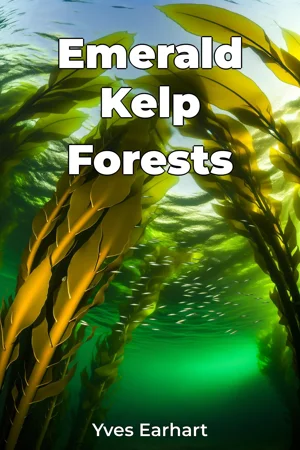
"Emerald Kelp Forests" unveils the intricate dynamics of one of Earth's most productive marine ecosystems, where kelp species grow up to 100 feet tall, creating vast underwater forests that rival terrestrial rainforests in ecological significance. The book examines three primary aspects of kelp forest ecosystems: their physical structure and formation, their role as biodiversity hotspots, and their critical function in coastal ecosystem stability. Through detailed scientific analysis, readers discover how these marine forests serve as natural laboratories for understanding complex ecological interactions and climate change impacts on ocean systems. Beginning with the evolutionary history of kelp species, the text establishes how these algae adapted to form complex three-dimensional habitats over millions of years. This foundation helps readers grasp the sophisticated relationships between kelp forests and ocean chemistry, water movement, and light penetration - fundamental concepts that shape marine ecosystem function. The central thesis demonstrates that kelp forests represent critical intersection points between biological and physical oceanography, serving as vital indicators of ocean health while providing essential ecosystem services. This argument is developed through systematic examination of kelp forest dynamics across global marine environments. Structured in three main sections, the book first explores kelp forest architecture and physiology, including detailed analyses of growth patterns and reproductive strategies. The second section investigates the complex food webs and species interactions within these systems, from microscopic organisms to marine mammals. The final section addresses conservation challenges and management strategies, incorporating current research on climate change impacts and restoration efforts. The research presented draws from long-term ecological monitoring data, satellite imagery analysis, and cutting-edge molecular studies. Field research from major kelp forest systems worldwide - including California's Channel Islands, Tasmania's eastern coast, and Norway's coastal waters - provides comparative insights into these ecosystems' function and vulnerability. The text integrates concepts from oceanography, climate science, and marine biology, while making connections to coastal economics and resource management. This interdisciplinary approach illustrates how kelp forest health directly influences fisheries productivity, coastal protection, and carbon sequestration. Written in an academic yet accessible style, the book employs clear explanations of scientific concepts, supported by detailed illustrations and data visualizations. This approach makes complex ecological principles comprehensible to both students and practitioners in marine sciences. The primary audience includes marine biology students, conservation professionals, and environmental managers, though the content remains accessible to informed general readers interested in marine ecosystems and conservation biology. The scope encompasses both temperate and cold-water kelp forest systems globally, while acknowledging regional variations and specific challenges faced by different species and locations. Current debates regarding kelp forest restoration techniques and management approaches are addressed through evidence-based analysis of various international case studies. Practical applications include protocols for kelp forest monitoring, guidelines for marine protected area design, and frameworks for assessing ecosystem health. The book provides tools for readers to engage in citizen science initiatives and contribute to kelp forest conservation efforts. The text maintains scientific rigor while presenting information in a logical progression that builds reader understanding of these complex marine systems. Through this comprehensive examination, "Emerald Kelp Forests" serves as both an academic reference and a practical guide to understanding and protecting these vital marine ecosystems.
"Emerald Kelp Forests" unveils the intricate dynamics of one of Earth's most productive marine ecosystems, where kelp species grow up to 100 feet tall, creating vast underwater forests that rival terrestrial rainforests in ecological significance. The book examines three primary aspects of kelp forest ecosystems: their physical structure and formation, their role as biodiversity hotspots, and their critical function in coastal ecosystem stability. Through detailed scientific analysis, readers discover how these marine forests serve as natural laboratories for understanding complex ecological interactions and climate change impacts on ocean systems. Beginning with the evolutionary history of kelp species, the text establishes how these algae adapted to form complex three-dimensional habitats over millions of years. This foundation helps readers grasp the sophisticated relationships between kelp forests and ocean chemistry, water movement, and light penetration - fundamental concepts that shape marine ecosystem function. The central thesis demonstrates that kelp forests represent critical intersection points between biological and physical oceanography, serving as vital indicators of ocean health while providing essential ecosystem services. This argument is developed through systematic examination of kelp forest dynamics across global marine environments. Structured in three main sections, the book first explores kelp forest architecture and physiology, including detailed analyses of growth patterns and reproductive strategies. The second section investigates the complex food webs and species interactions within these systems, from microscopic organisms to marine mammals. The final section addresses conservation challenges and management strategies, incorporating current research on climate change impacts and restoration efforts. The research presented draws from long-term ecological monitoring data, satellite imagery analysis, and cutting-edge molecular studies. Field research from major kelp forest systems worldwide - including California's Channel Islands, Tasmania's eastern coast, and Norway's coastal waters - provides comparative insights into these ecosystems' function and vulnerability. The text integrates concepts from oceanography, climate science, and marine biology, while making connections to coastal economics and resource management. This interdisciplinary approach illustrates how kelp forest health directly influences fisheries productivity, coastal protection, and carbon sequestration. Written in an academic yet accessible style, the book employs clear explanations of scientific concepts, supported by detailed illustrations and data visualizations. This approach makes complex ecological principles comprehensible to both students and practitioners in marine sciences. The primary audience includes marine biology students, conservation professionals, and environmental managers, though the content remains accessible to informed general readers interested in marine ecosystems and conservation biology. The scope encompasses both temperate and cold-water kelp forest systems globally, while acknowledging regional variations and specific challenges faced by different species and locations. Current debates regarding kelp forest restoration techniques and management approaches are addressed through evidence-based analysis of various international case studies. Practical applications include protocols for kelp forest monitoring, guidelines for marine protected area design, and frameworks for assessing ecosystem health. The book provides tools for readers to engage in citizen science initiatives and contribute to kelp forest conservation efforts. The text maintains scientific rigor while presenting information in a logical progression that builds reader understanding of these complex marine systems. Through this comprehensive examination, "Emerald Kelp Forests" serves as both an academic reference and a practical guide to understanding and protecting these vital marine ecosystems.
"Emerald Kelp Forests" offers a comprehensive exploration of one of Earth's most remarkable marine ecosystems, where towering kelp species create underwater forests that rival rainforests in their ecological importance. These marine giants, growing up to 100 feet tall, form intricate habitats that serve as both natural laboratories for understanding ocean health and critical zones for marine biodiversity. The book skillfully weaves together insights from oceanography, climate science, and marine biology to present a complete picture of these fascinating ecosystems. The text progresses logically through three main sections, beginning with kelp forest architecture and physiology, moving into the complex web of species interactions, and concluding with pressing conservation challenges. Drawing from extensive research across global locations including California's Channel Islands, Tasmania, and Norway's coastal waters, the book presents compelling evidence of how these underwater forests influence everything from fisheries productivity to coastal protection and carbon sequestration. What makes this work particularly valuable is its balanced approach to presenting scientific concepts, using clear explanations supported by detailed illustrations and real-world data. While maintaining academic rigor, the book remains accessible to both specialists and informed general readers, offering practical tools for ecosystem monitoring and conservation efforts. This comprehensive examination serves as both a crucial academic reference and an actionable guide for understanding and protecting these vital marine ecosystems, which act as key indicators of ocean health in our changing climate.
Book Details
ISBN
9788233939953
Publisher
Publifye AS
Your Licenses
You don't own any licenses for this book
Purchase a license below to unlock this book and download the EPUB.
Purchase License
Select a tier to unlock this book
Need bulk licensing?
Contact us for enterprise agreements.