
About This Book
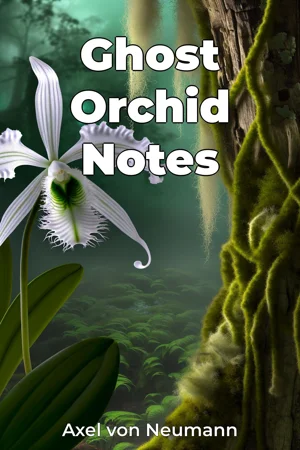
"Ghost Orchid Notes" delves into the cryptic world of Dendrophylax lindenii, a rare orchid species that challenges our understanding of plant survival and adaptation. This leafless orchid, surviving through an intricate network of photosynthetic roots, represents one of botany's most compelling studies in plant evolution and reproduction. The book presents three core topics: the orchid's unique leafless physiology, its specific habitat requirements within subtropical swamps, and its complex pollination mechanisms involving nocturnal moths. These subjects illuminate broader concepts in plant adaptation, ecosystem interdependence, and species conservation. Drawing from two decades of field research across Florida's wetlands and Cuba's swamps, the text establishes how this ghost orchid has evolved to thrive without leaves, utilizing modified green roots for both anchoring and photosynthesis. The author demonstrates how this adaptation influences the species' restricted distribution and its vulnerability to environmental changes. The central thesis argues that the ghost orchid serves as a crucial indicator species for wetland health while exemplifying the intricate relationships between specialized plants and their pollinators. This understanding becomes particularly relevant as climate change and habitat loss threaten these delicate ecological partnerships. The book's structure progresses through three major sections: First, it examines the orchid's morphological adaptations and physiological processes. Second, it explores the specific microhabitat requirements, including air quality, humidity levels, and host tree characteristics. Third, it details the pollination biology, focusing on the giant sphinx moth's role and the precise timing required for successful reproduction. Research evidence includes long-term monitoring data, infrared photography of nocturnal pollination events, and detailed botanical surveys. The methodology combines traditional field observation with modern genetic analysis and environmental monitoring techniques. The work connects biology with climatology, conservation science, and environmental policy, demonstrating how single-species studies inform broader ecological understanding. These interdisciplinary links provide context for current conservation efforts and future habitat protection strategies. The book maintains an academic foundation while employing narrative elements to convey complex botanical concepts. Technical terminology is carefully introduced and explained, making the content accessible to both scientists and informed general readers. The target audience includes botanists, conservation biologists, environmental scientists, and dedicated naturalists. The book serves as a comprehensive reference for researchers while remaining accessible to college-level readers interested in plant biology and ecology. The scope focuses specifically on North American ghost orchid populations, acknowledging that related species exist elsewhere but maintaining a concentrated geographical focus for depth of analysis. Practical applications include protocols for habitat assessment, conservation planning, and monitoring methods for similar endangered plant species. The text provides specific guidelines for land managers and conservation practitioners. Current debates addressed include the impact of climate change on specialized plant-pollinator relationships and the effectiveness of current conservation strategies for protecting orchid habitats. This research contributes to ongoing discussions about species interdependence, habitat preservation, and the cascading effects of environmental change on specialized species. The work stands as a detailed case study in plant adaptation and survival under highly specific conditions. The book concludes by examining future research directions and conservation implications, emphasizing the ghost orchid's role in understanding broader patterns of plant evolution and adaptation in changing environments.
"Ghost Orchid Notes" delves into the cryptic world of Dendrophylax lindenii, a rare orchid species that challenges our understanding of plant survival and adaptation. This leafless orchid, surviving through an intricate network of photosynthetic roots, represents one of botany's most compelling studies in plant evolution and reproduction. The book presents three core topics: the orchid's unique leafless physiology, its specific habitat requirements within subtropical swamps, and its complex pollination mechanisms involving nocturnal moths. These subjects illuminate broader concepts in plant adaptation, ecosystem interdependence, and species conservation. Drawing from two decades of field research across Florida's wetlands and Cuba's swamps, the text establishes how this ghost orchid has evolved to thrive without leaves, utilizing modified green roots for both anchoring and photosynthesis. The author demonstrates how this adaptation influences the species' restricted distribution and its vulnerability to environmental changes. The central thesis argues that the ghost orchid serves as a crucial indicator species for wetland health while exemplifying the intricate relationships between specialized plants and their pollinators. This understanding becomes particularly relevant as climate change and habitat loss threaten these delicate ecological partnerships. The book's structure progresses through three major sections: First, it examines the orchid's morphological adaptations and physiological processes. Second, it explores the specific microhabitat requirements, including air quality, humidity levels, and host tree characteristics. Third, it details the pollination biology, focusing on the giant sphinx moth's role and the precise timing required for successful reproduction. Research evidence includes long-term monitoring data, infrared photography of nocturnal pollination events, and detailed botanical surveys. The methodology combines traditional field observation with modern genetic analysis and environmental monitoring techniques. The work connects biology with climatology, conservation science, and environmental policy, demonstrating how single-species studies inform broader ecological understanding. These interdisciplinary links provide context for current conservation efforts and future habitat protection strategies. The book maintains an academic foundation while employing narrative elements to convey complex botanical concepts. Technical terminology is carefully introduced and explained, making the content accessible to both scientists and informed general readers. The target audience includes botanists, conservation biologists, environmental scientists, and dedicated naturalists. The book serves as a comprehensive reference for researchers while remaining accessible to college-level readers interested in plant biology and ecology. The scope focuses specifically on North American ghost orchid populations, acknowledging that related species exist elsewhere but maintaining a concentrated geographical focus for depth of analysis. Practical applications include protocols for habitat assessment, conservation planning, and monitoring methods for similar endangered plant species. The text provides specific guidelines for land managers and conservation practitioners. Current debates addressed include the impact of climate change on specialized plant-pollinator relationships and the effectiveness of current conservation strategies for protecting orchid habitats. This research contributes to ongoing discussions about species interdependence, habitat preservation, and the cascading effects of environmental change on specialized species. The work stands as a detailed case study in plant adaptation and survival under highly specific conditions. The book concludes by examining future research directions and conservation implications, emphasizing the ghost orchid's role in understanding broader patterns of plant evolution and adaptation in changing environments.
"Ghost Orchid Notes" explores the fascinating world of Dendrophylax lindenii, a remarkable leafless orchid that has captivated botanists and naturalists alike. This comprehensive study reveals how this rare species survives through an innovative network of photosynthetic roots, challenging traditional understanding of plant adaptation. The book weaves together two decades of meticulous field research from Florida's wetlands and Cuban swamps, presenting a compelling narrative about plant evolution, survival strategies, and the delicate balance of ecosystem relationships. The text progresses methodically through three crucial aspects of the ghost orchid's existence: its unique leafless physiology, its specific habitat requirements in subtropical swamps, and its intricate pollination relationship with nocturnal moths, particularly the giant sphinx moth. Through a combination of traditional field observations and modern research techniques, including infrared photography and genetic analysis, the author presents evidence of the orchid's remarkable adaptations and its role as an indicator species for wetland health. While maintaining scientific rigor, the book remains accessible to both academic and general audiences interested in botanical sciences. It effectively demonstrates how this single species exemplifies broader concepts in conservation biology and environmental science, particularly in the context of climate change and habitat preservation. The author's approach brilliantly connects individual plant adaptation with larger ecological principles, making this work valuable for researchers, conservation practitioners, and nature enthusiasts alike.
Book Details
ISBN
9788233939830
Publisher
Publifye AS
Your Licenses
You don't own any licenses for this book
Purchase a license below to unlock this book and download the EPUB.
Purchase License
Select a tier to unlock this book
Need bulk licensing?
Contact us for enterprise agreements.