
About This Book
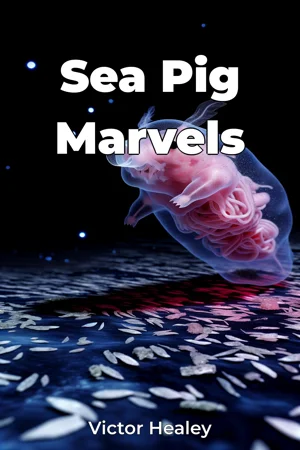
"Sea Pig Marvels" delves into the hidden world of holothurians, commonly known as sea cucumbers, with a specific focus on the deep-sea dwelling sea pigs. These soft-bodied echinoderms, found at depths of up to 6,000 meters, play a crucial role in ocean floor ecosystems through their unique feeding behaviors and biological adaptations. The book examines three primary aspects of sea pig biology: their specialized locomotion methods, feeding mechanisms, and their significance in deep-sea nutrient cycling. These topics provide insights into how these organisms have adapted to extreme pressure environments and contribute to marine ecosystem health. Drawing from recent deep-sea expedition data and long-term observational studies, the text presents research conducted through submersible vehicles and remote sensing technologies. The author combines historical knowledge dating back to the first deep-sea expeditions of the 1800s with current scientific understanding, offering readers a comprehensive view of how our knowledge of these creatures has evolved. The central thesis demonstrates how sea pigs serve as indicators of deep-sea ecosystem health while challenging previous assumptions about simple marine organisms. Through detailed analysis of their feeding patterns, the book reveals how these animals process organic matter on the ocean floor, effectively serving as natural recyclers in marine environments. Structured in three main sections, the book begins with an overview of sea pig anatomy and physiology, progresses through their behavioral patterns and ecological roles, and concludes with their significance in marine conservation. Each chapter incorporates high-resolution photographs and detailed illustrations of sea pig anatomy and behavior patterns. The research presented relies on data from multiple sources, including deep-sea cameras, sediment analysis, and laboratory studies of related species. The methodology includes both observational and experimental approaches, providing readers with a robust understanding of how scientists study deep-sea organisms. The book connects marine biology with chemistry, physics, and environmental science, showing how sea pig behavior influences ocean floor chemistry and how physical adaptations allow survival under extreme pressure. These connections highlight the interdisciplinary nature of marine research. Written in an accessible academic style, the text maintains scientific accuracy while engaging readers through clear explanations and real-world examples. Technical terms are carefully defined and contextualized, making the content accessible to both students and interested general readers. The target audience includes marine biology students, ocean science enthusiasts, and conservation professionals. The book serves as both an academic reference and an informative resource for those interested in deep-sea ecosystems. Current debates addressed include the impact of deep-sea mining on holothurian populations and their role in carbon sequestration. The book presents evidence-based discussions of these topics while acknowledging areas where further research is needed. Practical applications include insights for marine conservation efforts, deep-sea resource management, and biotechnology research. The book provides specific examples of how understanding sea pig biology contributes to these fields. The scope focuses specifically on deep-sea holothurians, with particular emphasis on the genus Scotoplanes, while acknowledging related species and their ecological relationships. This focused approach allows for detailed examination of specific adaptations and behaviors while maintaining clear boundaries in content coverage. Readers will gain practical knowledge about marine ecosystem dynamics, deep-sea research methods, and the interconnected nature of ocean systems. The information presented supports both academic understanding and practical applications in marine science and conservation efforts.
"Sea Pig Marvels" delves into the hidden world of holothurians, commonly known as sea cucumbers, with a specific focus on the deep-sea dwelling sea pigs. These soft-bodied echinoderms, found at depths of up to 6,000 meters, play a crucial role in ocean floor ecosystems through their unique feeding behaviors and biological adaptations. The book examines three primary aspects of sea pig biology: their specialized locomotion methods, feeding mechanisms, and their significance in deep-sea nutrient cycling. These topics provide insights into how these organisms have adapted to extreme pressure environments and contribute to marine ecosystem health. Drawing from recent deep-sea expedition data and long-term observational studies, the text presents research conducted through submersible vehicles and remote sensing technologies. The author combines historical knowledge dating back to the first deep-sea expeditions of the 1800s with current scientific understanding, offering readers a comprehensive view of how our knowledge of these creatures has evolved. The central thesis demonstrates how sea pigs serve as indicators of deep-sea ecosystem health while challenging previous assumptions about simple marine organisms. Through detailed analysis of their feeding patterns, the book reveals how these animals process organic matter on the ocean floor, effectively serving as natural recyclers in marine environments. Structured in three main sections, the book begins with an overview of sea pig anatomy and physiology, progresses through their behavioral patterns and ecological roles, and concludes with their significance in marine conservation. Each chapter incorporates high-resolution photographs and detailed illustrations of sea pig anatomy and behavior patterns. The research presented relies on data from multiple sources, including deep-sea cameras, sediment analysis, and laboratory studies of related species. The methodology includes both observational and experimental approaches, providing readers with a robust understanding of how scientists study deep-sea organisms. The book connects marine biology with chemistry, physics, and environmental science, showing how sea pig behavior influences ocean floor chemistry and how physical adaptations allow survival under extreme pressure. These connections highlight the interdisciplinary nature of marine research. Written in an accessible academic style, the text maintains scientific accuracy while engaging readers through clear explanations and real-world examples. Technical terms are carefully defined and contextualized, making the content accessible to both students and interested general readers. The target audience includes marine biology students, ocean science enthusiasts, and conservation professionals. The book serves as both an academic reference and an informative resource for those interested in deep-sea ecosystems. Current debates addressed include the impact of deep-sea mining on holothurian populations and their role in carbon sequestration. The book presents evidence-based discussions of these topics while acknowledging areas where further research is needed. Practical applications include insights for marine conservation efforts, deep-sea resource management, and biotechnology research. The book provides specific examples of how understanding sea pig biology contributes to these fields. The scope focuses specifically on deep-sea holothurians, with particular emphasis on the genus Scotoplanes, while acknowledging related species and their ecological relationships. This focused approach allows for detailed examination of specific adaptations and behaviors while maintaining clear boundaries in content coverage. Readers will gain practical knowledge about marine ecosystem dynamics, deep-sea research methods, and the interconnected nature of ocean systems. The information presented supports both academic understanding and practical applications in marine science and conservation efforts.
"Sea Pig Marvels" unveils the fascinating world of sea cucumbers, specifically focusing on the remarkable sea pigs that inhabit the ocean's deepest reaches. These soft-bodied creatures, found up to 6,000 meters below the surface, serve as crucial players in maintaining deep-sea ecosystem health through their unique feeding behaviors and biological adaptations. The book expertly weaves together historical knowledge from the 1800s with cutting-edge research from modern deep-sea expeditions, offering readers a comprehensive understanding of these mysterious marine organisms. Through detailed exploration of sea pig biology, the text progresses from basic anatomy and physiology to complex behavioral patterns and ecological significance. Readers discover how these animals have adapted to extreme pressure environments and function as natural recyclers of organic matter on the ocean floor. The book's approach combines high-resolution photographs and detailed illustrations with data from deep-sea cameras and sediment analysis, making complex scientific concepts accessible to both students and enthusiastic general readers. The narrative bridges multiple scientific disciplines, demonstrating how sea pig behavior influences ocean floor chemistry and contributes to marine conservation efforts. Current debates surrounding deep-sea mining impacts and carbon sequestration are thoughtfully addressed, while practical applications in marine resource management and biotechnology research are explored. This interdisciplinary approach, coupled with clear explanations and real-world examples, provides readers with a thorough understanding of how these remarkable creatures contribute to the health and sustainability of our oceans.
Book Details
ISBN
9788233939816
Publisher
Publifye AS
Your Licenses
You don't own any licenses for this book
Purchase a license below to unlock this book and download the EPUB.
Purchase License
Select a tier to unlock this book
Need bulk licensing?
Contact us for enterprise agreements.