
About This Book
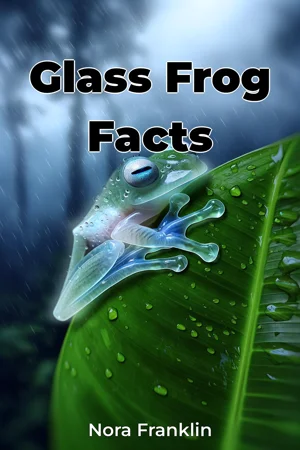
"Glass Frog Facts" unveils the hidden world of one of nature's most intriguing amphibians, whose translucent skin allows direct observation of their internal organs. This comprehensive exploration delves into the biology, behavior, and ecological significance of these remarkable tropical species. The book presents three core areas of focus: the physiological mechanics of translucent tissue, the evolutionary advantages of transparency in predator-prey relationships, and the specific habitat requirements that support glass frog populations. These topics provide readers with a thorough understanding of how these amphibians have adapted to their environmental niches. Beginning with a foundational overview of amphibian biology, the text guides readers through the unique anatomical features that distinguish glass frogs from other amphibian species. The historical context includes the first scientific documentation of glass frogs in 1872 and tracks the evolution of our understanding through modern research methodologies. The central thesis demonstrates how glass frogs represent a crucial example of evolutionary adaptation, offering insights into the development of camouflage strategies and the intricate relationships between form and function in nature. This understanding has implications for biodiversity conservation and the study of evolutionary processes. Structured in three main sections, the book first examines the physiological aspects of transparent tissue development, supported by recent microscopic imaging and genetic research. The second section explores behavioral patterns and survival strategies, while the final section addresses conservation challenges and habitat preservation. Research evidence includes field studies from Central and South American rainforests, laboratory analyses of skin tissue composition, and long-term population monitoring data. The book incorporates findings from multiple research institutions and includes the latest studies on glass frog biology. The text connects biology with chemistry, physics, and environmental science, demonstrating how the study of glass frogs contributes to our understanding of light refraction, cellular development, and ecosystem dynamics. These interdisciplinary links provide readers with a broader scientific context. The book employs a systematic approach to data presentation, using detailed illustrations, microscopic photographs, and habitat maps to support scientific explanations. Technical concepts are clearly explained through accessible language and practical examples. Written in an academic yet approachable style, the text balances scientific rigor with engaging narrative elements, making complex biological concepts accessible to both students and enthusiasts. The writing maintains professional terminology while providing clear definitions and context. The primary audience includes biology students, naturalists, and professional researchers, though the content remains accessible to interested general readers with basic scientific knowledge. The book serves as both a comprehensive reference and an educational resource. Following conventions of biological literature, each chapter includes detailed citations, taxonomic classifications, and standardized scientific nomenclature. Distribution maps and habitat data adhere to current biological mapping standards. The scope encompasses all currently known glass frog species, with particular emphasis on well-studied populations. Geographic coverage focuses on tropical regions where these species are found, acknowledging gaps in current research. Practical applications include protocols for habitat assessment, conservation planning, and field identification techniques. These tools benefit field researchers, conservation professionals, and environmental educators. The text addresses ongoing debates in amphibian conservation, including habitat fragmentation impacts and climate change effects on population dynamics. It presents current scientific consensus while acknowledging areas requiring further research. This comprehensive examination of glass frogs contributes to our understanding of tropical ecosystems and evolutionary adaptation, while providing practical tools for conservation efforts and future research directions.
"Glass Frog Facts" unveils the hidden world of one of nature's most intriguing amphibians, whose translucent skin allows direct observation of their internal organs. This comprehensive exploration delves into the biology, behavior, and ecological significance of these remarkable tropical species. The book presents three core areas of focus: the physiological mechanics of translucent tissue, the evolutionary advantages of transparency in predator-prey relationships, and the specific habitat requirements that support glass frog populations. These topics provide readers with a thorough understanding of how these amphibians have adapted to their environmental niches. Beginning with a foundational overview of amphibian biology, the text guides readers through the unique anatomical features that distinguish glass frogs from other amphibian species. The historical context includes the first scientific documentation of glass frogs in 1872 and tracks the evolution of our understanding through modern research methodologies. The central thesis demonstrates how glass frogs represent a crucial example of evolutionary adaptation, offering insights into the development of camouflage strategies and the intricate relationships between form and function in nature. This understanding has implications for biodiversity conservation and the study of evolutionary processes. Structured in three main sections, the book first examines the physiological aspects of transparent tissue development, supported by recent microscopic imaging and genetic research. The second section explores behavioral patterns and survival strategies, while the final section addresses conservation challenges and habitat preservation. Research evidence includes field studies from Central and South American rainforests, laboratory analyses of skin tissue composition, and long-term population monitoring data. The book incorporates findings from multiple research institutions and includes the latest studies on glass frog biology. The text connects biology with chemistry, physics, and environmental science, demonstrating how the study of glass frogs contributes to our understanding of light refraction, cellular development, and ecosystem dynamics. These interdisciplinary links provide readers with a broader scientific context. The book employs a systematic approach to data presentation, using detailed illustrations, microscopic photographs, and habitat maps to support scientific explanations. Technical concepts are clearly explained through accessible language and practical examples. Written in an academic yet approachable style, the text balances scientific rigor with engaging narrative elements, making complex biological concepts accessible to both students and enthusiasts. The writing maintains professional terminology while providing clear definitions and context. The primary audience includes biology students, naturalists, and professional researchers, though the content remains accessible to interested general readers with basic scientific knowledge. The book serves as both a comprehensive reference and an educational resource. Following conventions of biological literature, each chapter includes detailed citations, taxonomic classifications, and standardized scientific nomenclature. Distribution maps and habitat data adhere to current biological mapping standards. The scope encompasses all currently known glass frog species, with particular emphasis on well-studied populations. Geographic coverage focuses on tropical regions where these species are found, acknowledging gaps in current research. Practical applications include protocols for habitat assessment, conservation planning, and field identification techniques. These tools benefit field researchers, conservation professionals, and environmental educators. The text addresses ongoing debates in amphibian conservation, including habitat fragmentation impacts and climate change effects on population dynamics. It presents current scientific consensus while acknowledging areas requiring further research. This comprehensive examination of glass frogs contributes to our understanding of tropical ecosystems and evolutionary adaptation, while providing practical tools for conservation efforts and future research directions.
"Glass Frog Facts" offers a fascinating exploration of one of nature's most remarkable amphibians, whose transparent skin provides a literal window into their internal workings. This comprehensive guide examines how these unique creatures have evolved their extraordinary translucent tissue, which serves as both a masterpiece of biological adaptation and a crucial survival mechanism in their tropical habitats. The book weaves together cutting-edge research from Central and South American rainforests with detailed analyses of glass frog physiology, behavior, and conservation needs. The text progresses logically from fundamental amphibian biology through specialized adaptations, beginning with the groundbreaking first documentation of glass frogs in 1872 and extending to contemporary research findings. Through accessible language and practical examples, readers discover how these fascinating creatures employ their transparency for predator evasion and how their specific habitat requirements contribute to their survival in tropical ecosystems. The integration of microscopic imaging, genetic research, and field studies provides readers with a multi-faceted understanding of these remarkable amphibians. The book's three main sections effectively bridge the gap between technical scientific knowledge and general interest, examining physiological development, behavioral patterns, and conservation challenges. By connecting glass frog biology to broader concepts in chemistry, physics, and environmental science, the text demonstrates how these unique creatures contribute to our understanding of evolutionary adaptation and ecosystem dynamics. This approach makes complex biological concepts accessible while maintaining scientific accuracy, serving both academic and general audiences interested in natural history and conservation.
Book Details
ISBN
9788233939793
Publisher
Publifye AS
Your Licenses
You don't own any licenses for this book
Purchase a license below to unlock this book and download the EPUB.
Purchase License
Select a tier to unlock this book
Need bulk licensing?
Contact us for enterprise agreements.