
About This Book
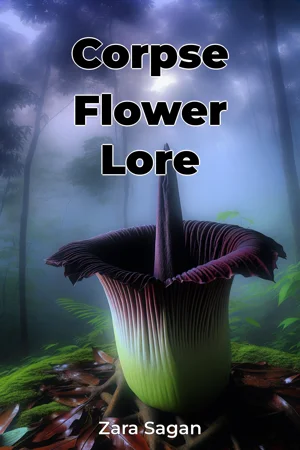
"Corpse Flower Lore" delves into the biological marvel of Amorphophallus titanum, a plant that produces the world's largest unbranched inflorescence and generates an unmistakable odor of decomposing flesh. This comprehensive examination begins with the fundamental question: How has a plant that blooms rarely and smells of death captured the attention of scientists and the public alike for over a century? The book presents three core areas of investigation: the plant's unique reproductive biology, its ecological relationships within Sumatra's rainforests, and current conservation efforts. These topics interconnect to reveal how this species has evolved such specific traits and why its preservation matters to global biodiversity. Readers journey through the historical context, starting with the corpse flower's 1878 discovery by Italian botanist Odoardo Beccari, through its first cultivated bloom in 1889 at Kew Gardens, to its current status as a flagship species for conservation. The text provides essential botanical concepts regarding plant reproduction and chemical ecology, making complex biological processes accessible to general readers. The central thesis argues that the corpse flower represents a crucial intersection of plant evolution, ecological relationships, and conservation biology, demonstrating how extreme adaptations can create both advantages and vulnerabilities for a species. The book's structure follows the plant's life cycle, examining: - The evolutionary development of its size and scent - The intricate relationships with pollinator species - The challenges and successes in cultivation - Current threats to wild populations Research evidence includes long-term studies from Indonesian research stations, chemical analysis of the flower's scent compounds, and data from botanical gardens worldwide. The text incorporates time-lapse photography, thermal imaging, and genetic studies that reveal new insights into the species' biology. The narrative connects biology with chemistry, examining the complex organic compounds that create the characteristic scent, and with conservation science, exploring habitat preservation techniques. These interdisciplinary links demonstrate how various scientific fields contribute to our understanding of this species. Written in an academic yet accessible style, the book maintains scientific accuracy while engaging readers through clear explanations and real-world examples. It targets both biology students and plant enthusiasts, offering valuable insights for conservation professionals while remaining accessible to interested lay readers. The text addresses current debates in conservation biology, including the role of botanical gardens in species preservation and the challenges of protecting organisms that flower infrequently. It explores various conservation approaches, from habitat protection to artificial cultivation techniques. Practical applications include protocols for botanical gardens, conservation strategies for similar species, and insights into plant-pollinator relationships that inform broader ecosystem management. The book also examines how studying the corpse flower has advanced our understanding of thermogenic plants and chemical ecology. The scope encompasses both wild and cultivated populations, focusing primarily on modern research while acknowledging historical observations. It addresses limitations in studying a species that blooms unpredictably and requires significant resources to maintain in cultivation. This work stands out through its integration of traditional botanical knowledge with cutting-edge research techniques, providing a complete picture of one of the plant kingdom's most intriguing species and its place in contemporary conservation biology.
"Corpse Flower Lore" delves into the biological marvel of Amorphophallus titanum, a plant that produces the world's largest unbranched inflorescence and generates an unmistakable odor of decomposing flesh. This comprehensive examination begins with the fundamental question: How has a plant that blooms rarely and smells of death captured the attention of scientists and the public alike for over a century? The book presents three core areas of investigation: the plant's unique reproductive biology, its ecological relationships within Sumatra's rainforests, and current conservation efforts. These topics interconnect to reveal how this species has evolved such specific traits and why its preservation matters to global biodiversity. Readers journey through the historical context, starting with the corpse flower's 1878 discovery by Italian botanist Odoardo Beccari, through its first cultivated bloom in 1889 at Kew Gardens, to its current status as a flagship species for conservation. The text provides essential botanical concepts regarding plant reproduction and chemical ecology, making complex biological processes accessible to general readers. The central thesis argues that the corpse flower represents a crucial intersection of plant evolution, ecological relationships, and conservation biology, demonstrating how extreme adaptations can create both advantages and vulnerabilities for a species. The book's structure follows the plant's life cycle, examining: - The evolutionary development of its size and scent - The intricate relationships with pollinator species - The challenges and successes in cultivation - Current threats to wild populations Research evidence includes long-term studies from Indonesian research stations, chemical analysis of the flower's scent compounds, and data from botanical gardens worldwide. The text incorporates time-lapse photography, thermal imaging, and genetic studies that reveal new insights into the species' biology. The narrative connects biology with chemistry, examining the complex organic compounds that create the characteristic scent, and with conservation science, exploring habitat preservation techniques. These interdisciplinary links demonstrate how various scientific fields contribute to our understanding of this species. Written in an academic yet accessible style, the book maintains scientific accuracy while engaging readers through clear explanations and real-world examples. It targets both biology students and plant enthusiasts, offering valuable insights for conservation professionals while remaining accessible to interested lay readers. The text addresses current debates in conservation biology, including the role of botanical gardens in species preservation and the challenges of protecting organisms that flower infrequently. It explores various conservation approaches, from habitat protection to artificial cultivation techniques. Practical applications include protocols for botanical gardens, conservation strategies for similar species, and insights into plant-pollinator relationships that inform broader ecosystem management. The book also examines how studying the corpse flower has advanced our understanding of thermogenic plants and chemical ecology. The scope encompasses both wild and cultivated populations, focusing primarily on modern research while acknowledging historical observations. It addresses limitations in studying a species that blooms unpredictably and requires significant resources to maintain in cultivation. This work stands out through its integration of traditional botanical knowledge with cutting-edge research techniques, providing a complete picture of one of the plant kingdom's most intriguing species and its place in contemporary conservation biology.
"Corpse Flower Lore" explores the fascinating world of Amorphophallus titanum, a remarkable plant species known for producing the world's largest unbranched flower structure and its distinctive rotting-flesh odor. This comprehensive examination traces the plant's journey from its 1878 discovery in Sumatra to its current status as a conservation flagship species, weaving together aspects of plant evolution, ecological relationships, and modern preservation efforts. The book unravels the corpse flower's complex biology, from its extraordinary size and scent production to its intricate relationships with pollinator species in rainforest ecosystems. Through accessible explanations of botanical concepts, readers learn how this peculiar plant has evolved such extreme characteristics and why these adaptations, while remarkable, also create vulnerability in today's changing environment. The text particularly shines in its exploration of the flower's chemical ecology, explaining how specific organic compounds create its infamous scent. Moving from fundamental biology to conservation science, the narrative progresses through the plant's life cycle while incorporating cutting-edge research techniques, including thermal imaging and genetic studies. The book uniquely bridges the gap between academic research and public interest, making complex biological processes understandable to both scientists and enthusiasts. By examining both wild and cultivated populations, it presents a compelling case for why this unusual species matters to global biodiversity and what its preservation teaches us about ecosystem management.
Book Details
ISBN
9788233939779
Publisher
Publifye AS
Your Licenses
You don't own any licenses for this book
Purchase a license below to unlock this book and download the EPUB.
Purchase License
Select a tier to unlock this book
Need bulk licensing?
Contact us for enterprise agreements.