
About This Book
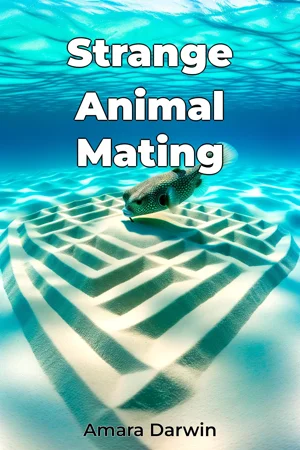
"Strange Animal Mating" unveils the complex and often counterintuitive reproductive strategies that have evolved across species, challenging our assumptions about natural selection and behavioral adaptations. This comprehensive examination of reproductive biology presents scientific evidence from field studies and laboratory research spanning five decades. The book systematically explores three core themes: the evolution of reproductive strategies, the role of sexual selection in shaping behavior, and the influence of environmental factors on mating patterns. Through detailed case studies, readers discover how peacock mantis shrimp use synchronized light signals for courtship, why certain deep-sea anglerfish females absorb their male partners, and how pufferfish create intricate sand patterns to attract mates. Drawing from behavioral ecology, evolutionary biology, and genetic research, the text presents evidence-based explanations for these reproductive adaptations. The book's structure progresses from simple to complex mating systems, beginning with direct sperm transfer and culminating in elaborate multi-step courtship rituals. Each chapter includes detailed illustrations, microscopy images, and data from recent scientific studies. The central argument posits that reproductive strategies reflect millions of years of evolutionary pressure, resulting in solutions that optimize genetic diversity and species survival, even when these solutions appear inefficient or bizarre to human observers. This perspective challenges traditional assumptions about natural selection always favoring simplicity. Scientific content is organized into four main sections: chemical communication in mating, physical adaptations for reproduction, behavioral patterns in courtship, and environmental influences on mate selection. The book incorporates research from marine biology, entomology, and vertebrate zoology, demonstrating how similar challenges have led to divergent solutions across species. The work connects to multiple disciplines, including chemistry (through pheromone analysis), physics (in the study of bioluminescent courtship displays), and environmental science (examining how habitat changes affect mating behavior). These interdisciplinary links provide context for understanding how various factors influence reproductive success. The writing maintains an academic foundation while employing clear, accessible language to explain complex concepts. Technical terms are introduced gradually and explained thoroughly, making the content accessible to both university students and interested general readers with basic biology knowledge. The target audience includes biology students, researchers, and nature enthusiasts seeking to understand the mechanisms driving reproductive diversity. The book serves as both a comprehensive reference and an engaging exploration of evolutionary adaptation. This work differs from traditional reproductive biology texts by focusing on the mechanistic aspects of unusual mating strategies rather than typical reproductive patterns. It includes recent research using advanced imaging techniques and genetic analysis to reveal previously unknown aspects of animal reproduction. The scope encompasses both vertebrate and invertebrate species across terrestrial, marine, and freshwater environments, though it primarily focuses on species with well-documented mating behaviors. The book addresses current scientific debates about the role of sexual selection in evolution and the impact of climate change on reproductive behavior. Practical applications include insights for conservation biology, animal husbandry, and understanding the broader implications of environmental changes on species reproduction. The text provides a foundation for researchers studying evolutionary adaptation and for conservation efforts focused on protecting species with specialized mating requirements. The book maintains scientific objectivity while examining controversial topics such as the role of female choice in sexual selection and the influence of human activity on animal mating systems. It presents multiple viewpoints where scientific consensus has not been reached, allowing readers to understand the complexity of ongoing research in reproductive biology.
"Strange Animal Mating" unveils the complex and often counterintuitive reproductive strategies that have evolved across species, challenging our assumptions about natural selection and behavioral adaptations. This comprehensive examination of reproductive biology presents scientific evidence from field studies and laboratory research spanning five decades. The book systematically explores three core themes: the evolution of reproductive strategies, the role of sexual selection in shaping behavior, and the influence of environmental factors on mating patterns. Through detailed case studies, readers discover how peacock mantis shrimp use synchronized light signals for courtship, why certain deep-sea anglerfish females absorb their male partners, and how pufferfish create intricate sand patterns to attract mates. Drawing from behavioral ecology, evolutionary biology, and genetic research, the text presents evidence-based explanations for these reproductive adaptations. The book's structure progresses from simple to complex mating systems, beginning with direct sperm transfer and culminating in elaborate multi-step courtship rituals. Each chapter includes detailed illustrations, microscopy images, and data from recent scientific studies. The central argument posits that reproductive strategies reflect millions of years of evolutionary pressure, resulting in solutions that optimize genetic diversity and species survival, even when these solutions appear inefficient or bizarre to human observers. This perspective challenges traditional assumptions about natural selection always favoring simplicity. Scientific content is organized into four main sections: chemical communication in mating, physical adaptations for reproduction, behavioral patterns in courtship, and environmental influences on mate selection. The book incorporates research from marine biology, entomology, and vertebrate zoology, demonstrating how similar challenges have led to divergent solutions across species. The work connects to multiple disciplines, including chemistry (through pheromone analysis), physics (in the study of bioluminescent courtship displays), and environmental science (examining how habitat changes affect mating behavior). These interdisciplinary links provide context for understanding how various factors influence reproductive success. The writing maintains an academic foundation while employing clear, accessible language to explain complex concepts. Technical terms are introduced gradually and explained thoroughly, making the content accessible to both university students and interested general readers with basic biology knowledge. The target audience includes biology students, researchers, and nature enthusiasts seeking to understand the mechanisms driving reproductive diversity. The book serves as both a comprehensive reference and an engaging exploration of evolutionary adaptation. This work differs from traditional reproductive biology texts by focusing on the mechanistic aspects of unusual mating strategies rather than typical reproductive patterns. It includes recent research using advanced imaging techniques and genetic analysis to reveal previously unknown aspects of animal reproduction. The scope encompasses both vertebrate and invertebrate species across terrestrial, marine, and freshwater environments, though it primarily focuses on species with well-documented mating behaviors. The book addresses current scientific debates about the role of sexual selection in evolution and the impact of climate change on reproductive behavior. Practical applications include insights for conservation biology, animal husbandry, and understanding the broader implications of environmental changes on species reproduction. The text provides a foundation for researchers studying evolutionary adaptation and for conservation efforts focused on protecting species with specialized mating requirements. The book maintains scientific objectivity while examining controversial topics such as the role of female choice in sexual selection and the influence of human activity on animal mating systems. It presents multiple viewpoints where scientific consensus has not been reached, allowing readers to understand the complexity of ongoing research in reproductive biology.
"Strange Animal Mating" delves into the fascinating world of unconventional reproductive strategies across the animal kingdom, revealing how evolution has crafted remarkable solutions for species survival. Through a systematic exploration of behavioral ecology and evolutionary biology, the book challenges common assumptions about natural selection by showcasing extraordinary examples of animal reproduction, from the synchronized light displays of peacock mantis shrimp to the bizarre fusion of deep-sea anglerfish mates. The book progresses logically from basic reproductive mechanisms to complex courtship rituals, organizing its findings into four key areas: chemical communication, physical adaptations, courtship behaviors, and environmental influences. Drawing from five decades of scientific research, it presents evidence-based explanations for seemingly counterintuitive mating strategies that have evolved to optimize genetic diversity and species survival. The text skillfully balances academic rigor with accessibility, making complex concepts understandable through detailed illustrations and real-world examples. What sets this work apart is its focus on the mechanistic aspects of unusual mating behaviors, supported by recent research using advanced imaging techniques and genetic analysis. The book serves multiple audiences, from biology students to nature enthusiasts, offering insights into how environmental pressures shape reproductive adaptations. By examining species across terrestrial, marine, and freshwater environments, it provides a comprehensive view of how different organisms have developed diverse solutions to the universal challenge of reproduction.
Book Details
ISBN
9788233939564
Publisher
Publifye AS
Your Licenses
You don't own any licenses for this book
Purchase a license below to unlock this book and download the EPUB.
Purchase License
Select a tier to unlock this book
Need bulk licensing?
Contact us for enterprise agreements.