
About This Book
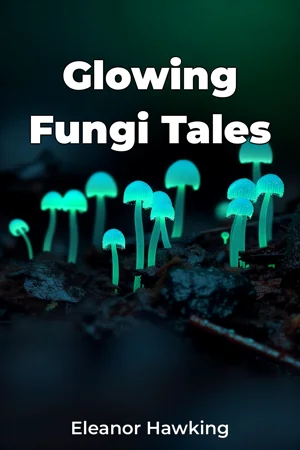
"Glowing Fungi Tales" reveals the hidden world of bioluminescent mushrooms, organisms that produce their own light through natural biochemical processes. This comprehensive exploration examines how these remarkable fungi influence forest ecosystems and contribute to scientific understanding of natural light production. The book presents three core topics: the biochemistry of fungal bioluminescence, the ecological relationships between light-producing mushrooms and forest inhabitants, and the evolutionary development of light-producing capabilities in fungi. These subjects interconnect to demonstrate how bioluminescent fungi serve as indicators of forest health and potential sources for biotechnology applications. Drawing from recent mycological research and field studies across temperate and tropical forests, the text establishes the historical context of bioluminescent fungi discovery, from early documentation by Ancient Greek naturalists to modern scientific understanding. Readers receive foundational knowledge about fungal biology and forest ecology to fully grasp the significance of these organisms. The central thesis argues that bioluminescent mushrooms function as crucial biomarkers in forest ecosystems, serving multiple roles from attracting spore-dispersing insects to indicating soil health and decomposition rates. This perspective challenges earlier views that fungal bioluminescence was merely a biological coincidence without ecological purpose. The book's structure progresses from basic mechanisms of light production through ecological relationships to practical applications. Key chapters examine the chemistry of luciferin-luciferase systems in fungi, document interactions between glowing mushrooms and nocturnal organisms, and explore potential applications in biotechnology and environmental monitoring. Research evidence includes data from laboratory studies of light-producing mechanisms, field observations of species interactions, and comparative analyses across different fungal species. The text incorporates findings from molecular biology, ecology, and biochemistry to present a comprehensive understanding of bioluminescent fungi. The work connects multiple disciplines, linking mycology with forest ecology, biochemistry, and evolution. These connections demonstrate how studying bioluminescent fungi provides insights into broader biological principles and environmental processes. Written in an accessible academic style, the book balances technical accuracy with clear explanations suitable for both scientists and informed general readers. It serves researchers, environmental professionals, and nature enthusiasts seeking to understand these organisms' roles in forest ecosystems. The text addresses ongoing scientific discussions about the adaptive advantages of fungal bioluminescence and its evolutionary origins. It presents current hypotheses and supporting evidence while acknowledging areas requiring further research. Practical applications discussed include using bioluminescent fungi as indicators of forest health, potential developments in biotechnology, and conservation implications. The book provides guidelines for identifying and documenting bioluminescent species while emphasizing responsible observation practices. The scope encompasses both well-studied and newly discovered bioluminescent fungi species, focusing on their ecological roles rather than mere cataloguing. While primarily examining forest ecosystems, the text acknowledges gaps in current knowledge about many species and their relationships. This work stands out through its integration of traditional mycological knowledge with modern molecular and ecological research methods. It presents fungi not as isolated organisms but as integral parts of complex forest systems, illuminating their roles in both literal and metaphorical ways.
"Glowing Fungi Tales" reveals the hidden world of bioluminescent mushrooms, organisms that produce their own light through natural biochemical processes. This comprehensive exploration examines how these remarkable fungi influence forest ecosystems and contribute to scientific understanding of natural light production. The book presents three core topics: the biochemistry of fungal bioluminescence, the ecological relationships between light-producing mushrooms and forest inhabitants, and the evolutionary development of light-producing capabilities in fungi. These subjects interconnect to demonstrate how bioluminescent fungi serve as indicators of forest health and potential sources for biotechnology applications. Drawing from recent mycological research and field studies across temperate and tropical forests, the text establishes the historical context of bioluminescent fungi discovery, from early documentation by Ancient Greek naturalists to modern scientific understanding. Readers receive foundational knowledge about fungal biology and forest ecology to fully grasp the significance of these organisms. The central thesis argues that bioluminescent mushrooms function as crucial biomarkers in forest ecosystems, serving multiple roles from attracting spore-dispersing insects to indicating soil health and decomposition rates. This perspective challenges earlier views that fungal bioluminescence was merely a biological coincidence without ecological purpose. The book's structure progresses from basic mechanisms of light production through ecological relationships to practical applications. Key chapters examine the chemistry of luciferin-luciferase systems in fungi, document interactions between glowing mushrooms and nocturnal organisms, and explore potential applications in biotechnology and environmental monitoring. Research evidence includes data from laboratory studies of light-producing mechanisms, field observations of species interactions, and comparative analyses across different fungal species. The text incorporates findings from molecular biology, ecology, and biochemistry to present a comprehensive understanding of bioluminescent fungi. The work connects multiple disciplines, linking mycology with forest ecology, biochemistry, and evolution. These connections demonstrate how studying bioluminescent fungi provides insights into broader biological principles and environmental processes. Written in an accessible academic style, the book balances technical accuracy with clear explanations suitable for both scientists and informed general readers. It serves researchers, environmental professionals, and nature enthusiasts seeking to understand these organisms' roles in forest ecosystems. The text addresses ongoing scientific discussions about the adaptive advantages of fungal bioluminescence and its evolutionary origins. It presents current hypotheses and supporting evidence while acknowledging areas requiring further research. Practical applications discussed include using bioluminescent fungi as indicators of forest health, potential developments in biotechnology, and conservation implications. The book provides guidelines for identifying and documenting bioluminescent species while emphasizing responsible observation practices. The scope encompasses both well-studied and newly discovered bioluminescent fungi species, focusing on their ecological roles rather than mere cataloguing. While primarily examining forest ecosystems, the text acknowledges gaps in current knowledge about many species and their relationships. This work stands out through its integration of traditional mycological knowledge with modern molecular and ecological research methods. It presents fungi not as isolated organisms but as integral parts of complex forest systems, illuminating their roles in both literal and metaphorical ways.
"Glowing Fungi Tales" unveils the fascinating world of bioluminescent mushrooms, organisms capable of producing their own light through natural biochemical processes. The book weaves together three fundamental aspects: the intricate biochemistry behind fungal light production, the complex ecological relationships these glowing fungi maintain within forest ecosystems, and their evolutionary journey to develop this remarkable capability. Through a blend of recent mycological research and field studies, readers discover how these mysterious organisms serve as crucial indicators of forest health while offering promising applications in biotechnology and environmental monitoring. The narrative progresses logically from the basic mechanisms of bioluminescence, exploring the luciferin-luciferase systems that enable fungi to glow, to their broader ecological significance. Particularly intriguing is the revelation that fungal bioluminescence isn't merely a biological coincidence but serves multiple purposes, from attracting spore-dispersing insects to indicating soil health. The book draws from studies across temperate and tropical forests, presenting evidence that challenges traditional understanding of these organisms' roles in forest ecosystems. Written in an accessible yet scientifically rigorous style, the text bridges multiple disciplines, from mycology to biochemistry and forest ecology. It provides both researchers and nature enthusiasts with a comprehensive understanding of how these remarkable fungi function within their environments. The book's approach balances technical accuracy with clear explanations, making complex concepts accessible while maintaining depth and scientific validity. This integration of traditional mycological knowledge with modern research methods offers readers a unique perspective on these fascinating organisms and their significance in forest ecosystems.
Book Details
ISBN
9788233939489
Publisher
Publifye AS
Your Licenses
You don't own any licenses for this book
Purchase a license below to unlock this book and download the EPUB.
Purchase License
Select a tier to unlock this book
Need bulk licensing?
Contact us for enterprise agreements.