
About This Book
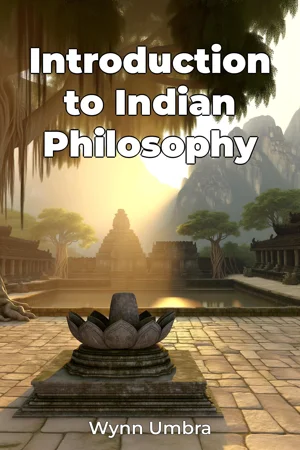
"Introduction to Indian Philosophy" opens with a fundamental question that has driven philosophical inquiry for millennia: How does the ancient wisdom of Indian thought systems address the universal human search for truth, consciousness, and purpose? This comprehensive examination of Indian philosophical traditions spans from the Vedic period to contemporary interpretations, offering readers a structured journey through the major schools of Indian thought. The book primarily focuses on three interconnected themes: the relationship between consciousness and reality, the nature of knowledge and valid means of knowing (pramana), and the pursuit of liberation (moksha). The text establishes essential historical context by tracing the development of Indian philosophy from the early Vedic period (1500-500 BCE) through the classical age of systematic philosophy (500 BCE-1000 CE). Readers are introduced to the six orthodox (astika) schools - Nyaya, Vaisheshika, Samkhya, Yoga, Mimamsa, and Vedanta - as well as the heterodox (nastika) traditions of Buddhism, Jainism, and Carvaka materialism. The central thesis argues that Indian philosophy offers unique epistemological and metaphysical frameworks that remain relevant to contemporary philosophical discourse and personal inquiry. This argument is developed through systematic analysis of key concepts such as dharma (cosmic order and duty), karma (causation and moral responsibility), and the nature of self (atman). The book's structure progresses from foundational concepts to advanced philosophical arguments. Early chapters establish the methodological principles and terminology essential for understanding Indian philosophy. Middle sections examine specific schools of thought, their arguments, and counter-arguments. Later chapters explore the practical applications of these philosophical systems in areas such as ethics, psychology, and spiritual practice. Supporting evidence draws from primary sources including the Upanishads, Bhagavad Gita, and philosophical sutras, complemented by contemporary academic scholarship and comparative analysis. The book employs both textual interpretation and logical analysis to examine philosophical arguments. Interdisciplinary connections link Indian philosophy to modern psychology, cognitive science, and quantum physics, particularly in discussions of consciousness and reality. The text also explores connections with Western philosophical traditions, highlighting both similarities and distinct contributions of Indian thought. Written in an academic yet accessible style, the book maintains scholarly rigor while making complex concepts comprehensible to readers new to Indian philosophy. Technical terms are carefully defined and explained in context, with practical examples illustrating abstract concepts. The target audience includes university students, philosophy enthusiasts, and practitioners of yoga or meditation seeking deeper understanding of Indian thought systems. The book serves as both an academic reference and a guide for personal philosophical inquiry. Within the philosophy genre, the text adheres to academic standards while incorporating elements of comparative religion and cultural studies. The scope encompasses major philosophical systems while acknowledging that entire volumes could be devoted to each school of thought. The book addresses ongoing debates in interpretation and translation of classical texts, tensions between traditional and modern interpretations, and the challenge of presenting ancient ideas to contemporary readers. It maintains objectivity while examining competing philosophical views and their modern applications. Real-world applications include frameworks for ethical decision-making, techniques for mental cultivation, and approaches to understanding consciousness and human experience. The book demonstrates how Indian philosophical concepts can inform modern approaches to psychology, ethics, and personal development.
"Introduction to Indian Philosophy" opens with a fundamental question that has driven philosophical inquiry for millennia: How does the ancient wisdom of Indian thought systems address the universal human search for truth, consciousness, and purpose? This comprehensive examination of Indian philosophical traditions spans from the Vedic period to contemporary interpretations, offering readers a structured journey through the major schools of Indian thought. The book primarily focuses on three interconnected themes: the relationship between consciousness and reality, the nature of knowledge and valid means of knowing (pramana), and the pursuit of liberation (moksha). The text establishes essential historical context by tracing the development of Indian philosophy from the early Vedic period (1500-500 BCE) through the classical age of systematic philosophy (500 BCE-1000 CE). Readers are introduced to the six orthodox (astika) schools - Nyaya, Vaisheshika, Samkhya, Yoga, Mimamsa, and Vedanta - as well as the heterodox (nastika) traditions of Buddhism, Jainism, and Carvaka materialism. The central thesis argues that Indian philosophy offers unique epistemological and metaphysical frameworks that remain relevant to contemporary philosophical discourse and personal inquiry. This argument is developed through systematic analysis of key concepts such as dharma (cosmic order and duty), karma (causation and moral responsibility), and the nature of self (atman). The book's structure progresses from foundational concepts to advanced philosophical arguments. Early chapters establish the methodological principles and terminology essential for understanding Indian philosophy. Middle sections examine specific schools of thought, their arguments, and counter-arguments. Later chapters explore the practical applications of these philosophical systems in areas such as ethics, psychology, and spiritual practice. Supporting evidence draws from primary sources including the Upanishads, Bhagavad Gita, and philosophical sutras, complemented by contemporary academic scholarship and comparative analysis. The book employs both textual interpretation and logical analysis to examine philosophical arguments. Interdisciplinary connections link Indian philosophy to modern psychology, cognitive science, and quantum physics, particularly in discussions of consciousness and reality. The text also explores connections with Western philosophical traditions, highlighting both similarities and distinct contributions of Indian thought. Written in an academic yet accessible style, the book maintains scholarly rigor while making complex concepts comprehensible to readers new to Indian philosophy. Technical terms are carefully defined and explained in context, with practical examples illustrating abstract concepts. The target audience includes university students, philosophy enthusiasts, and practitioners of yoga or meditation seeking deeper understanding of Indian thought systems. The book serves as both an academic reference and a guide for personal philosophical inquiry. Within the philosophy genre, the text adheres to academic standards while incorporating elements of comparative religion and cultural studies. The scope encompasses major philosophical systems while acknowledging that entire volumes could be devoted to each school of thought. The book addresses ongoing debates in interpretation and translation of classical texts, tensions between traditional and modern interpretations, and the challenge of presenting ancient ideas to contemporary readers. It maintains objectivity while examining competing philosophical views and their modern applications. Real-world applications include frameworks for ethical decision-making, techniques for mental cultivation, and approaches to understanding consciousness and human experience. The book demonstrates how Indian philosophical concepts can inform modern approaches to psychology, ethics, and personal development.
"Introduction to Indian Philosophy" presents a comprehensive exploration of ancient Indian wisdom and its enduring relevance to humanity's fundamental questions about truth, consciousness, and purpose. The book traces the evolution of Indian philosophical thought from the Vedic period through to contemporary interpretations, offering readers a structured journey through both orthodox schools (including Nyaya, Vedanta, and Yoga) and heterodox traditions like Buddhism and Jainism. At its core, the book examines three interconnected themes: the relationship between consciousness and reality, the nature of knowledge (pramana), and the pursuit of liberation (moksha). Through careful analysis of key concepts such as dharma and karma, the text demonstrates how Indian philosophy provides unique frameworks for understanding human experience and moral responsibility. The book's progression from foundational concepts to advanced philosophical arguments makes complex ideas accessible while maintaining scholarly rigor. What sets this work apart is its ability to bridge ancient wisdom with contemporary relevance, drawing connections to modern psychology, cognitive science, and quantum physics. The text skillfully weaves together primary sources like the Upanishads and Bhagavad Gita with current academic scholarship, making it valuable for both university students and spiritual practitioners. By examining practical applications in ethics, psychology, and spiritual practice, the book demonstrates how these ancient philosophical systems continue to offer meaningful insights for modern life.
Book Details
ISBN
9788233939298
Publisher
Publifye AS
Your Licenses
You don't own any licenses for this book
Purchase a license below to unlock this book and download the EPUB.
Purchase License
Select a tier to unlock this book
Need bulk licensing?
Contact us for enterprise agreements.