
About This Book
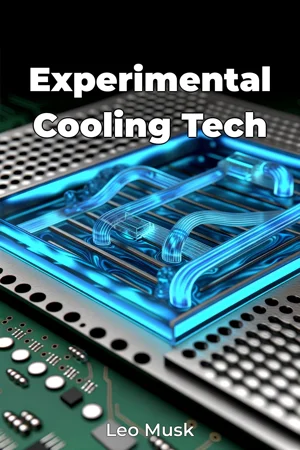
"Experimental Cooling Tech" confronts one of computing and industry's most pressing challenges: managing heat in increasingly powerful systems. As processors become more compact and data centers expand, traditional cooling methods are reaching their physical limits, necessitating innovative solutions for thermal management. The book presents three fundamental approaches to modern cooling technology: phase-change materials, microfluidic systems, and quantum cooling techniques. These methods represent significant departures from conventional air and liquid cooling systems, offering potential solutions for applications ranging from quantum computers to hypersonic aircraft. Building on foundational thermodynamics principles, the text examines the evolution of cooling technology from early mechanical systems to current-generation solutions. Readers will benefit from a basic understanding of heat transfer and fluid dynamics, though the book provides necessary context for technical concepts. The central thesis argues that breakthrough cooling methods must integrate multiple approaches, combining molecular-level heat management with system-wide thermal design. This integration is essential for meeting the demands of next-generation technology while maintaining energy efficiency. The content progresses through three main sections: First, it analyzes current cooling challenges in various industries, supported by case studies from major technology companies and research institutions. Second, it explores emerging cooling technologies, including detailed technical specifications and performance data. The final section presents implementation strategies and future directions. Research evidence includes thermal imaging data, computational fluid dynamics simulations, and results from laboratory testing at leading research facilities. The book incorporates findings from recent papers in thermal management journals and previously unpublished industrial research. The work connects with multiple disciplines, including materials science through the development of new thermal interface materials, electrical engineering in power management systems, and environmental science regarding energy efficiency and sustainability. The book's distinctive approach lies in its systematic evaluation of cooling technologies across different scales, from nanoscale heat transfer to facility-wide thermal management systems. It provides quantitative comparisons of various cooling methods, supported by original research and industry data. Written in a technical yet accessible style, the text balances theoretical foundations with practical applications. While maintaining scientific rigor, it employs clear explanations and relevant examples to convey complex concepts. The primary audience includes thermal engineers, system designers, and technology professionals responsible for managing heat in various applications. Graduate students in related fields will find it valuable for understanding current challenges and solutions in thermal management. Following technical writing conventions, the book includes detailed diagrams, thermal models, and design guidelines. Each chapter contains practical examples and implementation considerations. While focusing on cutting-edge cooling technologies, the book acknowledges current limitations in materials, cost constraints, and scaling challenges. It addresses ongoing debates about the sustainability of different cooling approaches and their environmental impact. Practical applications span multiple sectors, from optimizing data center cooling systems to designing thermal management for electric vehicles. The book provides design methodologies and selection criteria for implementing various cooling solutions. The work addresses contemporary discussions about the energy efficiency of different cooling methods and their role in sustainable technology development, presenting balanced perspectives on competing approaches. This comprehensive examination of modern cooling technology serves as both a reference guide for practitioners and a roadmap for future developments in thermal management systems.
"Experimental Cooling Tech" confronts one of computing and industry's most pressing challenges: managing heat in increasingly powerful systems. As processors become more compact and data centers expand, traditional cooling methods are reaching their physical limits, necessitating innovative solutions for thermal management. The book presents three fundamental approaches to modern cooling technology: phase-change materials, microfluidic systems, and quantum cooling techniques. These methods represent significant departures from conventional air and liquid cooling systems, offering potential solutions for applications ranging from quantum computers to hypersonic aircraft. Building on foundational thermodynamics principles, the text examines the evolution of cooling technology from early mechanical systems to current-generation solutions. Readers will benefit from a basic understanding of heat transfer and fluid dynamics, though the book provides necessary context for technical concepts. The central thesis argues that breakthrough cooling methods must integrate multiple approaches, combining molecular-level heat management with system-wide thermal design. This integration is essential for meeting the demands of next-generation technology while maintaining energy efficiency. The content progresses through three main sections: First, it analyzes current cooling challenges in various industries, supported by case studies from major technology companies and research institutions. Second, it explores emerging cooling technologies, including detailed technical specifications and performance data. The final section presents implementation strategies and future directions. Research evidence includes thermal imaging data, computational fluid dynamics simulations, and results from laboratory testing at leading research facilities. The book incorporates findings from recent papers in thermal management journals and previously unpublished industrial research. The work connects with multiple disciplines, including materials science through the development of new thermal interface materials, electrical engineering in power management systems, and environmental science regarding energy efficiency and sustainability. The book's distinctive approach lies in its systematic evaluation of cooling technologies across different scales, from nanoscale heat transfer to facility-wide thermal management systems. It provides quantitative comparisons of various cooling methods, supported by original research and industry data. Written in a technical yet accessible style, the text balances theoretical foundations with practical applications. While maintaining scientific rigor, it employs clear explanations and relevant examples to convey complex concepts. The primary audience includes thermal engineers, system designers, and technology professionals responsible for managing heat in various applications. Graduate students in related fields will find it valuable for understanding current challenges and solutions in thermal management. Following technical writing conventions, the book includes detailed diagrams, thermal models, and design guidelines. Each chapter contains practical examples and implementation considerations. While focusing on cutting-edge cooling technologies, the book acknowledges current limitations in materials, cost constraints, and scaling challenges. It addresses ongoing debates about the sustainability of different cooling approaches and their environmental impact. Practical applications span multiple sectors, from optimizing data center cooling systems to designing thermal management for electric vehicles. The book provides design methodologies and selection criteria for implementing various cooling solutions. The work addresses contemporary discussions about the energy efficiency of different cooling methods and their role in sustainable technology development, presenting balanced perspectives on competing approaches. This comprehensive examination of modern cooling technology serves as both a reference guide for practitioners and a roadmap for future developments in thermal management systems.
"Experimental Cooling Tech" tackles the critical challenge of heat management in modern technology, offering a comprehensive exploration of cutting-edge cooling solutions for increasingly powerful and compact systems. The book uniquely integrates three groundbreaking approaches: phase-change materials, microfluidic systems, and quantum cooling techniques, presenting them as alternatives to conventional cooling methods that are reaching their limits. Through a blend of theoretical foundations and practical applications, it demonstrates how combining molecular-level heat management with system-wide thermal design is crucial for next-generation technology. The book's progression takes readers through three key sections, beginning with an analysis of current cooling challenges backed by real-world case studies. It then delves into emerging cooling technologies with detailed technical specifications, before concluding with implementation strategies and future outlook. Particularly valuable are its quantitative comparisons of various cooling methods, supported by thermal imaging data and computational fluid dynamics simulations from leading research facilities. What sets this work apart is its systematic evaluation of cooling technologies across multiple scales, from nanoscale heat transfer to facility-wide systems. While maintaining technical accuracy, it remains accessible to a broad audience of thermal engineers, system designers, and technology professionals. The book effectively bridges theoretical concepts with practical applications, offering clear explanations and relevant examples in areas ranging from data center cooling to thermal management in electric vehicles, making it an essential resource for both practitioners and graduate students in the field.
Book Details
ISBN
9788233939182
Publisher
Publifye AS
Your Licenses
You don't own any licenses for this book
Purchase a license below to unlock this book and download the EPUB.
Purchase License
Select a tier to unlock this book
Need bulk licensing?
Contact us for enterprise agreements.