
About This Book
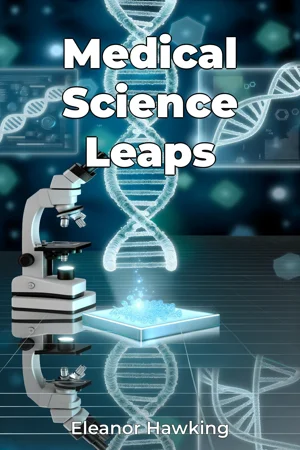
"Medical Science Leaps" examines how recent technological and scientific breakthroughs are reshaping healthcare delivery and patient outcomes in the 21st century. From the development of CRISPR gene editing to artificial intelligence-driven diagnostics, this comprehensive analysis explores the intersection of cutting-edge research and practical medical applications. The book focuses on three primary areas: genomic medicine, artificial intelligence in healthcare, and regenerative medicine. These fields represent the foundation of a medical revolution that is transforming treatment approaches and patient care protocols. Through detailed examination of clinical trials, research data, and case studies, readers gain insight into how these advances are moving from laboratory settings to everyday medical practice. The narrative begins with historical context, tracing the evolution of medical technology from the discovery of antibiotics to today's precision medicine. This foundation helps readers understand the accelerating pace of medical innovation and its implications for future healthcare delivery. The book then systematically explores each breakthrough, examining both the underlying science and its practical applications. In the genomic medicine section, readers learn about personalized treatment protocols based on individual genetic profiles, including targeted cancer therapies and inherited disease interventions. The artificial intelligence chapter covers machine learning applications in medical imaging, diagnostic accuracy, and treatment planning. The regenerative medicine portion examines tissue engineering, stem cell therapies, and bioprinting technologies. The research presented draws from peer-reviewed studies, clinical trial data, and interviews with leading scientists and physicians. This evidence-based approach ensures readers receive accurate, current information about medical advances and their implementation. The book includes insights from multiple disciplines, including molecular biology, computer science, and bioengineering, demonstrating how interdisciplinary collaboration drives medical innovation. What distinguishes this work is its focus on practical applications and real-world implementation. Rather than simply describing new technologies, it examines how these advances are being integrated into healthcare systems, addressing challenges such as cost, accessibility, and regulatory compliance. The book maintains a balanced perspective, acknowledging both the potential and limitations of each breakthrough. Written in a clear, methodical style, the content is accessible to healthcare professionals, students, and informed general readers interested in medical advancement. Technical concepts are explained thoroughly but approachably, with relevant examples and case studies illustrating key points. The book addresses ongoing debates in the medical community regarding the ethical implications of genetic editing, AI decision-making in healthcare, and the equitable distribution of advanced treatments. It presents multiple viewpoints while maintaining an objective, evidence-based perspective. Particular attention is given to the integration of these technologies into existing healthcare systems, including practical considerations for implementation, cost management, and staff training. The book concludes with a forward-looking analysis of emerging trends and their potential impact on healthcare delivery over the next decade. This work serves as both a comprehensive overview of current medical breakthroughs and a practical guide for healthcare professionals seeking to understand and implement new technologies. It provides essential knowledge for medical practitioners, healthcare administrators, and policy makers while remaining accessible to interested general readers. The scope encompasses major medical advances of the past decade while focusing on developments with immediate or near-term clinical applications. This targeted approach ensures the content remains relevant and practical for current healthcare challenges while pointing toward future developments in the field.
"Medical Science Leaps" examines how recent technological and scientific breakthroughs are reshaping healthcare delivery and patient outcomes in the 21st century. From the development of CRISPR gene editing to artificial intelligence-driven diagnostics, this comprehensive analysis explores the intersection of cutting-edge research and practical medical applications. The book focuses on three primary areas: genomic medicine, artificial intelligence in healthcare, and regenerative medicine. These fields represent the foundation of a medical revolution that is transforming treatment approaches and patient care protocols. Through detailed examination of clinical trials, research data, and case studies, readers gain insight into how these advances are moving from laboratory settings to everyday medical practice. The narrative begins with historical context, tracing the evolution of medical technology from the discovery of antibiotics to today's precision medicine. This foundation helps readers understand the accelerating pace of medical innovation and its implications for future healthcare delivery. The book then systematically explores each breakthrough, examining both the underlying science and its practical applications. In the genomic medicine section, readers learn about personalized treatment protocols based on individual genetic profiles, including targeted cancer therapies and inherited disease interventions. The artificial intelligence chapter covers machine learning applications in medical imaging, diagnostic accuracy, and treatment planning. The regenerative medicine portion examines tissue engineering, stem cell therapies, and bioprinting technologies. The research presented draws from peer-reviewed studies, clinical trial data, and interviews with leading scientists and physicians. This evidence-based approach ensures readers receive accurate, current information about medical advances and their implementation. The book includes insights from multiple disciplines, including molecular biology, computer science, and bioengineering, demonstrating how interdisciplinary collaboration drives medical innovation. What distinguishes this work is its focus on practical applications and real-world implementation. Rather than simply describing new technologies, it examines how these advances are being integrated into healthcare systems, addressing challenges such as cost, accessibility, and regulatory compliance. The book maintains a balanced perspective, acknowledging both the potential and limitations of each breakthrough. Written in a clear, methodical style, the content is accessible to healthcare professionals, students, and informed general readers interested in medical advancement. Technical concepts are explained thoroughly but approachably, with relevant examples and case studies illustrating key points. The book addresses ongoing debates in the medical community regarding the ethical implications of genetic editing, AI decision-making in healthcare, and the equitable distribution of advanced treatments. It presents multiple viewpoints while maintaining an objective, evidence-based perspective. Particular attention is given to the integration of these technologies into existing healthcare systems, including practical considerations for implementation, cost management, and staff training. The book concludes with a forward-looking analysis of emerging trends and their potential impact on healthcare delivery over the next decade. This work serves as both a comprehensive overview of current medical breakthroughs and a practical guide for healthcare professionals seeking to understand and implement new technologies. It provides essential knowledge for medical practitioners, healthcare administrators, and policy makers while remaining accessible to interested general readers. The scope encompasses major medical advances of the past decade while focusing on developments with immediate or near-term clinical applications. This targeted approach ensures the content remains relevant and practical for current healthcare challenges while pointing toward future developments in the field.
"Medical Science Leaps" offers a compelling exploration of how revolutionary technological breakthroughs are transforming modern healthcare, focusing on three pivotal areas: genomic medicine, artificial intelligence in healthcare, and regenerative medicine. The book skillfully traces the evolution of medical innovation from basic antibiotic discoveries to today's sophisticated precision medicine approaches, providing readers with essential context for understanding current advancements. Through a methodical examination of clinical trials, research data, and real-world case studies, the book illuminates how groundbreaking technologies like CRISPR gene editing and AI-driven diagnostics are moving from experimental laboratories into everyday medical practice. Particularly fascinating is the discussion of personalized treatment protocols based on individual genetic profiles and the application of machine learning in medical imaging, which demonstrates how these innovations are already improving patient outcomes and transforming traditional healthcare approaches. What sets this book apart is its practical, balanced perspective on implementing these advances within existing healthcare systems. Rather than simply celebrating new technologies, it thoroughly addresses critical challenges such as cost management, accessibility, and ethical considerations. Written in clear, accessible language, the book serves as an invaluable resource for healthcare professionals while remaining engaging for general readers interested in medical advancement. The integration of peer-reviewed research and expert interviews ensures a comprehensive, evidence-based understanding of how these breakthrough technologies are reshaping the future of medicine.
Book Details
ISBN
9788233938987
Publisher
Publifye AS
Your Licenses
You don't own any licenses for this book
Purchase a license below to unlock this book and download the EPUB.
Purchase License
Select a tier to unlock this book
Need bulk licensing?
Contact us for enterprise agreements.