
About This Book
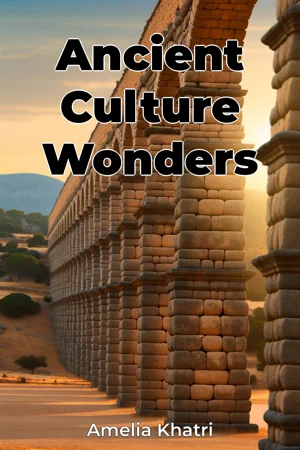
"Ancient Culture Wonders" examines how past civilizations achieved technological and cultural milestones that continue to influence modern society. Through archaeological evidence and historical records, this comprehensive study reveals the sophisticated methods and innovative solutions developed by ancient peoples across continents. The book focuses on three primary areas: architectural engineering achievements, agricultural innovations, and early scientific discoveries. These interconnected themes demonstrate how ancient societies developed complex systems to overcome environmental challenges and establish thriving communities. From the precise astronomical calculations of the Maya to the advanced water management systems of the Indus Valley, readers discover how early civilizations laid the groundwork for many modern practices. The central thesis argues that ancient cultures possessed sophisticated knowledge systems that were often lost and later rediscovered. Through detailed analysis of archaeological findings, written records, and recent scientific studies, the book demonstrates how ancient societies developed solutions to universal human challenges that remain relevant today. Structured in three main sections, the work begins with an examination of architectural achievements, including the construction methods of the Egyptian pyramids and the engineering principles of Roman aqueducts. The second section explores agricultural developments, from the terraced farming of the Inca to the irrigation systems of Mesopotamia. The final section details scientific and mathematical discoveries, including early astronomy, medicine, and mathematical concepts. The research draws from recent archaeological discoveries, translated historical documents, and advanced scientific analysis methods. Modern technologies such as ground-penetrating radar and chemical composition studies provide new insights into ancient construction techniques and materials. The book connects multiple disciplines, including archaeology, engineering, and environmental science. These intersections reveal how ancient peoples integrated various knowledge domains to create sustainable solutions. The analysis employs current scientific methodologies to understand and verify historical achievements, bridging past and present understanding. Written in an analytical style that balances academic rigor with accessibility, the book presents complex technical information through clear explanations and relevant examples. Each chapter includes detailed diagrams, maps, and photographs that illustrate key concepts and findings. The target audience includes historians, archaeologists, engineers, and educated general readers interested in understanding how ancient societies developed and implemented advanced solutions. The book serves as both a scholarly reference and an engaging exploration of human innovation. The work addresses ongoing debates in the field, including discussions about the methods used to construct megalithic structures and the accuracy of ancient astronomical observations. It presents multiple theories where historical evidence remains inconclusive, encouraging readers to consider various perspectives. The scope encompasses civilizations from 3000 BCE to 500 CE across multiple continents, focusing on verified archaeological evidence rather than speculation. While acknowledging the limitations of available historical records, the book emphasizes factual findings and substantiated theories. Practical applications include insights into sustainable architecture, efficient resource management, and agricultural techniques that remain relevant in addressing current global challenges. The book demonstrates how ancient solutions can inform modern approaches to similar problems. This comprehensive examination of ancient achievements provides readers with a deeper understanding of human innovation and the enduring relevance of historical knowledge to contemporary challenges.
"Ancient Culture Wonders" examines how past civilizations achieved technological and cultural milestones that continue to influence modern society. Through archaeological evidence and historical records, this comprehensive study reveals the sophisticated methods and innovative solutions developed by ancient peoples across continents. The book focuses on three primary areas: architectural engineering achievements, agricultural innovations, and early scientific discoveries. These interconnected themes demonstrate how ancient societies developed complex systems to overcome environmental challenges and establish thriving communities. From the precise astronomical calculations of the Maya to the advanced water management systems of the Indus Valley, readers discover how early civilizations laid the groundwork for many modern practices. The central thesis argues that ancient cultures possessed sophisticated knowledge systems that were often lost and later rediscovered. Through detailed analysis of archaeological findings, written records, and recent scientific studies, the book demonstrates how ancient societies developed solutions to universal human challenges that remain relevant today. Structured in three main sections, the work begins with an examination of architectural achievements, including the construction methods of the Egyptian pyramids and the engineering principles of Roman aqueducts. The second section explores agricultural developments, from the terraced farming of the Inca to the irrigation systems of Mesopotamia. The final section details scientific and mathematical discoveries, including early astronomy, medicine, and mathematical concepts. The research draws from recent archaeological discoveries, translated historical documents, and advanced scientific analysis methods. Modern technologies such as ground-penetrating radar and chemical composition studies provide new insights into ancient construction techniques and materials. The book connects multiple disciplines, including archaeology, engineering, and environmental science. These intersections reveal how ancient peoples integrated various knowledge domains to create sustainable solutions. The analysis employs current scientific methodologies to understand and verify historical achievements, bridging past and present understanding. Written in an analytical style that balances academic rigor with accessibility, the book presents complex technical information through clear explanations and relevant examples. Each chapter includes detailed diagrams, maps, and photographs that illustrate key concepts and findings. The target audience includes historians, archaeologists, engineers, and educated general readers interested in understanding how ancient societies developed and implemented advanced solutions. The book serves as both a scholarly reference and an engaging exploration of human innovation. The work addresses ongoing debates in the field, including discussions about the methods used to construct megalithic structures and the accuracy of ancient astronomical observations. It presents multiple theories where historical evidence remains inconclusive, encouraging readers to consider various perspectives. The scope encompasses civilizations from 3000 BCE to 500 CE across multiple continents, focusing on verified archaeological evidence rather than speculation. While acknowledging the limitations of available historical records, the book emphasizes factual findings and substantiated theories. Practical applications include insights into sustainable architecture, efficient resource management, and agricultural techniques that remain relevant in addressing current global challenges. The book demonstrates how ancient solutions can inform modern approaches to similar problems. This comprehensive examination of ancient achievements provides readers with a deeper understanding of human innovation and the enduring relevance of historical knowledge to contemporary challenges.
"Ancient Culture Wonders" offers a fascinating exploration of technological and cultural achievements from ancient civilizations that continue to shape our world today. Through meticulous examination of archaeological evidence and historical records, the book reveals how early societies developed sophisticated solutions to universal challenges, from architectural marvels to agricultural innovations and scientific discoveries. The book's three main sections showcase the remarkable ingenuity of ancient peoples, beginning with architectural engineering feats like the Egyptian pyramids and Roman aqueducts. It then delves into agricultural developments, highlighting innovative farming techniques such as the Inca's terraced agriculture and Mesopotamian irrigation systems. The final section examines groundbreaking scientific and mathematical discoveries, including early astronomical calculations by the Maya and advanced medical practices across various civilizations. What sets this work apart is its integration of modern scientific analysis with historical investigation, using cutting-edge technologies like ground-penetrating radar to unlock the secrets of ancient innovations. The book's comprehensive approach, covering civilizations from 3000 BCE to 500 CE, demonstrates how ancient societies developed sustainable solutions that remain relevant for contemporary challenges. Through clear explanations and detailed illustrations, readers gain valuable insights into how our ancestors' ingenuity continues to influence modern practices in engineering, agriculture, and science.
Book Details
ISBN
9788233938840
Publisher
Publifye AS
Your Licenses
You don't own any licenses for this book
Purchase a license below to unlock this book and download the EPUB.
Purchase License
Select a tier to unlock this book
Need bulk licensing?
Contact us for enterprise agreements.